
Navigating the Electrical Labyrinth: Understanding Tripping Breakers in Alabama
In the heart of the American South, where the summers are long and the humidity is a constant companion, homeowners across Alabama often find themselves in a familiar, frustrating predicament: the sudden, unwelcome click of a circuit breaker tripping. Whether you’re in the bustling urban landscape of Birmingham, the innovative aerospace hub of Huntsville, or the historic capital city of Montgomery, the question, “Why does my circuit breaker keep tripping?” echoes through countless households. This isn’t just a minor inconvenience; it’s a critical signal from your home’s electrical system, a silent guardian preventing potential hazards like electrical fires and equipment damage.
This ultimate guide delves deep into the intricate world of circuit breakers, offering Alabama residents a comprehensive understanding of why these essential devices trip, how to diagnose common issues, and when to seek professional help. We’ll explore the unique challenges posed by Alabama’s climate and infrastructure, providing localized insights that go beyond generic advice. Our aim is to empower you with the knowledge to maintain a safe, efficient, and uninterrupted power supply in your cherished Alabama home.
The Unsung Hero: A Technical Deep Dive into Why Your Circuit Breaker Keeps Tripping
Before we can truly understand why your circuit breaker keeps tripping, it’s crucial to appreciate the ingenious simplicity and vital role of this device. Far from being just a switch, a circuit breaker is a sophisticated safety mechanism designed to protect your home’s electrical wiring and appliances from damage caused by overcurrents. When an electrical fault occurs, the breaker acts as an automatic, resettable fuse, interrupting the flow of electricity to prevent overheating and potential disaster.
How Does a Circuit Breaker Work? The Science Behind the Click
At its core, a circuit breaker operates on fundamental principles of electromagnetism and thermal expansion. Most residential circuit breakers utilize one of two primary mechanisms, or a combination thereof, to detect and respond to dangerous electrical conditions:
1.Thermal Trip Unit: This component consists of a bimetallic strip, typically made of two different metals bonded together. When excessive current flows through the circuit, it generates heat. As the bimetallic strip heats up, the two metals expand at different rates, causing the strip to bend. This bending action physically unlatches a spring-loaded contact, breaking the circuit and cutting off power. This mechanism is particularly effective at protecting against sustained overloads, where current exceeds safe levels for an extended period.
2.Magnetic Trip Unit: This unit employs an electromagnet. When a sudden, large surge of current (characteristic of a short circuit or severe ground fault) passes through the circuit, it creates a powerful magnetic field. This magnetic field is strong enough to instantly pull a lever, which in turn unlatches the circuit breaker’s contacts, tripping it almost instantaneously. The magnetic trip unit provides rapid protection against instantaneous, high-current faults.
Both mechanisms are designed to respond automatically and quickly, often within milliseconds, to prevent damage. Once tripped, the breaker’s handle moves to an intermediate or “off” position, visually indicating the fault. To restore power, the handle must first be pushed fully to the “off” position before being reset to “on.”
The Electrical Panel: The Brains of Your Home’s Power System
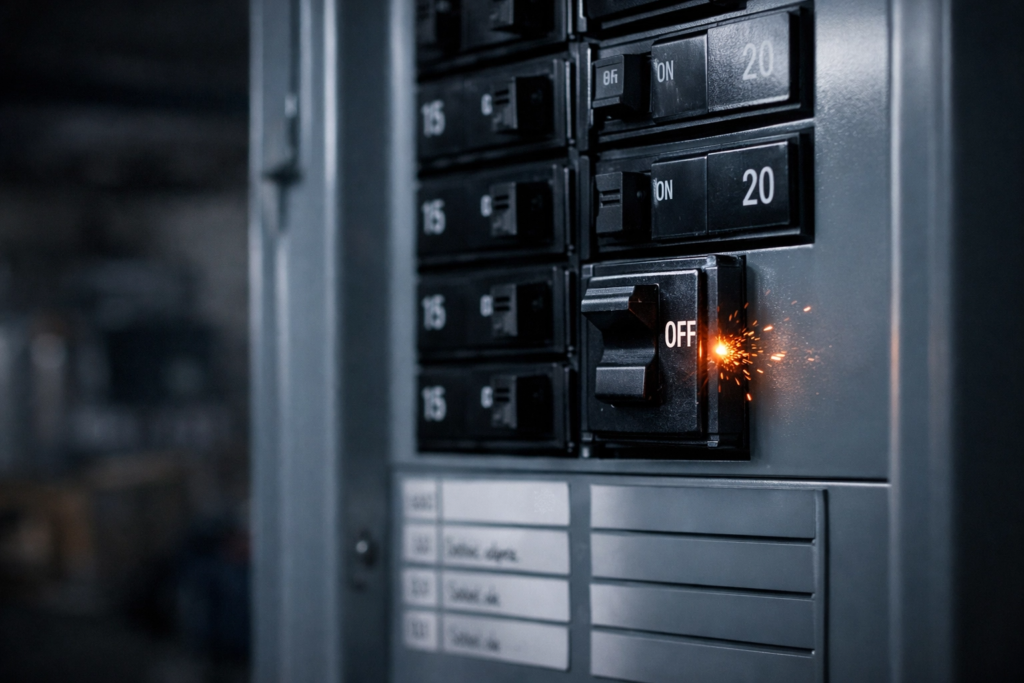
Your home’s electrical panel, often located in a basement, garage, or utility closet, is the central distribution point for electricity. It houses all the circuit breakers, each protecting a specific circuit or group of circuits within your home. Understanding its layout is key to diagnosing a tripping breaker. Each breaker is typically labeled, indicating which areas or appliances it serves. In older homes, these labels might be faded or inaccurate, adding another layer of complexity to troubleshooting.
Alabama’s Unique Electrical Challenges: Why Does My Circuit Breaker Keep Tripping Here?
While the fundamental reasons for a circuit breaker tripping are universal, Alabama’s specific geographical and climatic conditions introduce unique factors that can exacerbate electrical issues. From the Gulf Coast to the Appalachian foothills, our state presents a distinct set of challenges for residential electrical systems.
The Relentless Summer Heat and Humidity: A Breaker’s Worst Enemy
•Air Conditioning Overload: Summers in Alabama are notoriously hot and humid. Air conditioning units, especially older or undersized ones, work tirelessly for months on end. This constant, high electrical demand can easily lead to circuit overloads, particularly if multiple AC units or other high-power appliances are on the same circuit. Homeowners in Birmingham and Montgomery often experience this as their primary AC units struggle to keep up with the oppressive heat, drawing more current than the circuit can safely handle.
•Humidity and Corrosion: High humidity levels, prevalent across Alabama, can contribute to the corrosion of electrical connections over time. Corroded connections increase resistance, leading to heat buildup and potential arcing, which can trigger circuit breakers. This is a subtle yet significant factor in why your circuit breaker keeps tripping in our climate.
Severe Weather and Its Impact on Electrical Systems
Alabama is no stranger to severe weather, including thunderstorms, tornadoes, and tropical storms. These events can have a profound impact on your home’s electrical integrity:
•Lightning Strikes: Direct or nearby lightning strikes can cause massive power surges that overwhelm electrical systems, tripping breakers or even damaging appliances. While breakers offer some protection, extreme surges can still cause significant harm.
•Wind Damage: Strong winds from storms can cause tree branches to fall on power lines, leading to short circuits or power outages that affect your home’s incoming electrical supply. Even minor fluctuations can sometimes trigger sensitive breakers.
•Water Intrusion: Heavy rainfall and flooding can lead to water entering electrical conduits, outlets, or even the main electrical panel. Water is an excellent conductor of electricity, and its presence can instantly cause ground faults or short circuits, leading to immediate breaker trips. This is a particular concern in low-lying areas or homes with inadequate drainage.
Aging Infrastructure: A Legacy of Electrical Demands
Many of Alabama’s charming homes, particularly in established areas of Montgomery and Birmingham, boast rich histories. However, this often means they were built with electrical systems designed for a bygone era, long before the advent of modern appliances, home offices, and extensive entertainment systems. These older homes frequently feature:
•Outdated Wiring: Knob-and-tube or aluminum wiring, while once standard, may not be able to safely handle the electrical load of today’s households. Such wiring can degrade over time, becoming brittle or prone to overheating, leading to frequent breaker trips.
•Insufficient Amperage: Older electrical panels might have a lower amperage capacity (e.g., 60 or 100 amps) compared to the 150-200 amps common in newer constructions. This limited capacity means that even a moderate increase in electrical demand can quickly lead to an overloaded main breaker, causing the entire house to lose power.
•Lack of Modern Safety Devices: Older panels often lack essential safety features like Ground Fault Circuit Interrupters (GFCIs) and Arc Fault Circuit Interrupters (AFCIs), which are now standard requirements in modern electrical codes. These devices are specifically designed to prevent the types of faults that cause breakers to trip and can significantly enhance safety.
In Huntsville, while many homes are newer due to the city’s rapid growth, older neighborhoods still face similar challenges. Understanding the age and capacity of your home’s electrical system is a crucial step in diagnosing persistent breaker issues.
The Local Lens: Why Does My Circuit Breaker Keep Tripping in Birmingham, Huntsville, and Montgomery?
While the overarching reasons for breaker trips apply statewide, each of Alabama’s major cities presents its own nuances and common scenarios.
Birmingham: The Industrial Heart’s Electrical Pulse
As Alabama’s largest city and a historical industrial powerhouse, Birmingham boasts a diverse housing stock. Many homes in areas like Five Points South, Forest Park, or Highland Park are decades old, with electrical systems that have seen significant wear and tear. Common reasons for breakers tripping in Birmingham include:
•Renovation-Related Overloads: As residents renovate older homes, they often add modern appliances and expand living spaces without adequately upgrading their electrical panels, leading to frequent overloads.
•Aging Appliance Demands: The charm of older homes often comes with older appliances. If not properly maintained, these can draw excessive current, causing trips.
•Commercial District Strain: In commercial areas, businesses might experience trips due to heavy equipment usage or insufficient dedicated circuits.
Huntsville: Rocket City’s High-Tech Demands
Huntsville, known as the “Rocket City” due to its strong ties to space and technology, has seen rapid growth and an influx of new construction. However, even in this modern city, breakers can trip. Unique factors in Huntsville include:
•High-Tech Equipment Loads: Homes with extensive home offices, server setups, or advanced entertainment systems can place significant demands on circuits, leading to overloads.
•New Construction Faults: While less common, even new homes can have electrical issues due to installation errors or faulty components, leading to early and unexpected breaker trips.
•Research Facility Demands: For those living near or working in research facilities, power fluctuations in the grid can sometimes impact residential circuits.
Montgomery: The Capital’s Historic Electrical Needs
Montgomery, the state capital, is rich in history and features many beautiful, well-preserved homes. The electrical systems in these historic properties often require special attention. Common issues in Montgomery leading to tripping breakers include:
•Preservation Challenges: Upgrading electrical systems in historic homes can be complex, balancing modern safety with historical preservation. This can sometimes lead to compromises that result in more frequent trips.
•Humidity-Induced Corrosion: Given Montgomery’s location and climate, corrosion in outdoor electrical components or even within the panel itself can be a persistent issue.
•Seasonal Demands: The seasonal use of outdoor lighting, pool pumps, and other recreational electrical equipment can lead to unexpected overloads.
20 Hidden Reasons Why Your Circuit Breaker Keeps Tripping in Alabama
When you ask, “Why does my circuit breaker keep tripping?”, the answer is rarely a simple “it’s broken.” In Alabama, a tripping breaker is a symptom of a deeper conversation between your home’s electrical demands and its capacity. While overloads and short circuits are the usual suspects, there are numerous, often overlooked reasons why you might find yourself frequently visiting the electrical panel in your Birmingham, Huntsville, or Montgomery home.
Let’s dive into 20 specific, actionable reasons why your breaker might be tripping, categorized for easier troubleshooting.
Category 1: The Appliance Culprits (The Heavy Lifters)
1.The Aging HVAC System: In Montgomery’s sweltering summers, an older air conditioning unit works overtime. As compressors age, they draw more “startup” current (inrush current). If this surge exceeds the breaker’s rating, it trips. This is a classic reason why your circuit breaker keeps tripping during the hottest months.
2.Space Heaters on Shared Circuits: During a rare Huntsville cold snap, plugging a 1500-watt space heater into a circuit already running a TV and lamps is a guaranteed recipe for an overload trip.
3.The Hidden Kitchen Overload: Modern kitchens in Birmingham are power-hungry. Running a microwave, toaster oven, and coffee maker simultaneously on a single 15-amp or 20-amp circuit will almost certainly trip the breaker.
4.Faulty Refrigerator Compressors: A refrigerator that is failing or has dirty coils works harder, drawing more sustained current and potentially tripping its dedicated breaker.
5.Hair Dryers and Curling Irons: These high-wattage devices are notorious for tripping bathroom breakers, especially if the bathroom shares a circuit with another room (common in older Alabama homes).
Category 2: Wiring and Infrastructure Issues (The Hidden Dangers)
1.Loose Connections in Outlets or Switches: Over time, the constant expansion and contraction of wires (due to temperature changes and electrical current) can loosen connections. Loose wires create resistance, which generates heat and trips the breaker.
2.Damaged Wire Insulation: Rodents in the attic or accidental nail punctures during a DIY project in your Birmingham home can strip wire insulation, leading to intermittent short circuits.
3.Outdated Knob-and-Tube Wiring: Found in historic Montgomery homes, this antiquated wiring system lacks a ground wire and is highly susceptible to damage and overloads, frequently causing breaker trips.
4.Aluminum Wiring Oxidation: Homes built in the 1960s and 70s across Alabama may have aluminum wiring. Aluminum oxidizes more easily than copper, creating high-resistance connections that overheat and trip breakers.
5.Undersized Electrical Panels: A 100-amp panel in a modern Huntsville home with multiple smart devices, an EV charger, and a robust HVAC system is simply insufficient. The main breaker will trip to protect the overloaded system.
Category 3: Environmental and External Factors (The Alabama Elements)
1.Moisture and Ground Faults: Alabama’s high humidity and frequent rain can lead to moisture entering outdoor outlets or poorly sealed junction boxes, causing ground faults that trip GFCI breakers.
2.Lightning-Induced Surges: Even a distant lightning strike during a Birmingham thunderstorm can send a surge through the power lines, tripping sensitive breakers or damaging electronics.
3.Tree Branches on Power Lines: Wind storms can cause branches to brush against the service drop (the lines connecting your home to the utility pole), causing momentary shorts that trip the main breaker.
4.Utility Grid Fluctuations: Sometimes, the issue isn’t in your home. Voltage drops or spikes from the local utility provider can cause sensitive equipment or breakers to trip protectively.
5.Corrosion in the Electrical Panel: High humidity, especially in coastal or low-lying areas of Alabama, can cause the bus bars or breaker contacts within the panel to corrode, increasing resistance and causing trips.
Category 4: The Breakers Themselves (The Aging Guardians)
1.Weak or Worn-Out Breakers: Circuit breakers are mechanical devices with a lifespan (typically 15-30 years). Over time, the internal springs and bimetallic strips weaken, causing the breaker to trip at lower currents than it should.
2.Federal Pacific Electric (FPE) or Zinsco Panels: These older panel brands, common in some Alabama neighborhoods, are notorious for failing to trip when they should, or tripping erratically. They are considered significant fire hazards and should be replaced.
3.Incorrect Breaker Size: If a previous owner installed a 20-amp breaker on a wire rated only for 15 amps (a dangerous DIY mistake), the wire could overheat before the breaker trips, or the breaker might trip erratically if the load fluctuates.
4.Nuisance Tripping of AFCI Breakers: Arc Fault Circuit Interrupters (AFCIs) are highly sensitive to arcing. Sometimes, the normal operation of certain motors (like vacuum cleaners or treadmills) can mimic an arc and cause a “nuisance trip.”
5.Defective GFCI Outlets or Breakers: Ground Fault Circuit Interrupters (GFCIs) can fail over time. A faulty GFCI might trip constantly even when there is no actual ground fault present.
City-Specific Responses: How Birmingham, Huntsville, and Montgomery Handle Tripping Breakers
The approach to solving “Why does my circuit breaker keep tripping?” can vary slightly depending on where you live in Alabama, due to differences in housing stock, local codes, and environmental factors.
Birmingham: Upgrading the Industrial Legacy
In Birmingham, the focus is often on modernizing older infrastructure.
•The Challenge: Many homes in historic districts like Highland Park have original wiring or undersized panels that cannot handle modern loads.
•The Solution: Electricians in Birmingham frequently perform heavy-ups (upgrading the service panel to 200 amps or more) and rewiring projects to replace knob-and-tube or aluminum wiring. They also focus heavily on installing dedicated circuits for high-draw appliances in renovated kitchens and bathrooms.
Huntsville: Securing the High-Tech Hub
In Huntsville, the emphasis is on protecting sensitive electronics and managing high-tech loads.
•The Challenge: The proliferation of home offices, server racks, and smart home technology creates complex, continuous electrical demands.
•The Solution: Huntsville electricians often recommend whole-home surge protection to guard against grid fluctuations and lightning. They also frequently install dedicated, isolated ground circuits for sensitive computer equipment to prevent nuisance tripping and data loss.
Montgomery: Preserving History While Ensuring Safety
In Montgomery, the goal is to balance historical preservation with modern electrical safety standards.
•The Challenge: Updating electrical systems in historic homes without damaging the architectural integrity is a delicate process. High humidity also exacerbates corrosion issues.
•The Solution: Electricians in Montgomery specialize in minimally invasive rewiring techniques. They also prioritize the installation of AFCI and GFCI protection to bring older homes up to current safety codes without requiring complete tear-downs. Regular inspections for corrosion in outdoor panels are also a staple service.
This first part of our guide has laid the groundwork, explaining the mechanics of circuit breakers and highlighting the specific environmental and infrastructural factors that contribute to electrical issues in Alabama. In the next section, we will delve into a more exhaustive list of specific causes for tripping breakers, offering detailed diagnostic steps and solutions tailored for the Alabama homeowner. Stay tuned to uncover the deeper mysteries of your home’s electrical system and learn how to keep the lights on, safely and reliably, across Birmingham, Huntsville, and Montgomery.
Proactive Solutions: Keeping Your Alabama Home Electrically Sound
Understanding why your circuit breaker keeps tripping is half the battle; the other half is implementing proactive measures to prevent future occurrences and ensure the long-term safety and efficiency of your home’s electrical system. For homeowners in Alabama, particularly in areas like Birmingham, Huntsville, and Montgomery, a strategic approach to electrical maintenance is not just advisable—it’s essential.
Comprehensive Electrical Maintenance Checklist for Alabama Homes
Regular maintenance can significantly reduce the likelihood of a tripping breaker. Consider these steps as your annual electrical health check-up:
1.Annual Electrical Inspection: Schedule a professional electrical inspection every 3-5 years, or annually for older homes. A licensed electrician can identify potential issues like loose connections, corroded wiring, or an overloaded panel before they lead to a tripping breaker. This is especially crucial in Montgomery where historic homes might have hidden electrical vulnerabilities.
2.Panel Assessment: Ensure your electrical panel is adequately sized for your home’s electrical demands. If you’ve added major appliances (like a new HVAC system in Birmingham or an EV charger in Huntsville), your panel might need an upgrade (a “heavy-up”).
3.GFCI and AFCI Testing: Regularly test your Ground Fault Circuit Interrupter (GFCI) and Arc Fault Circuit Interrupter (AFCI) outlets and breakers. These devices are your first line of defense against severe electrical hazards. Simply press the “Test” button; the breaker should trip. Press “Reset” to restore power. If it doesn’t trip, it needs replacement.
4.Appliance Management: Be mindful of how many high-wattage appliances you run on a single circuit. Distribute loads across different circuits where possible. For example, avoid running a space heater and a vacuum cleaner on the same circuit simultaneously.
5.Inspect Cords and Outlets: Periodically check electrical cords for fraying or damage. Ensure outlets are not discolored or warm to the touch, which can indicate loose connections or overheating.
6.Clear the Panel Area: Keep the area around your electrical panel clear of obstructions. This ensures proper ventilation and easy access in case of an emergency.
7.Address Moisture Issues: In Alabama’s humid climate, ensure outdoor outlets are weather-rated and properly sealed. Address any leaks or moisture intrusion around electrical components promptly.
Navigating Electrical Codes and Regulations in Alabama
Electrical safety is governed by the National Electrical Code (NEC), which is adopted and often modified by states and local jurisdictions. In Alabama, adherence to these codes is paramount for new construction and major renovations. Understanding the basics can help you ensure your home is up to standard:
•State Adoption: Alabama typically adopts the NEC, with local amendments. This means that while the core safety standards are consistent, specific requirements might vary slightly between Birmingham, Huntsville, and Montgomery.
•Permits and Inspections: For any significant electrical work (e.g., panel upgrades, new circuit installations), permits are required, and inspections by local authorities are mandatory. This ensures the work complies with safety codes and is performed by qualified professionals.
•GFCI/AFCI Requirements: Modern codes mandate GFCI protection in all wet locations (bathrooms, kitchens, garages, outdoors) and AFCI protection for most living areas to prevent arc faults. If your older Alabama home lacks these, an upgrade is highly recommended.
•Dedicated Circuits: High-demand appliances (like refrigerators, washing machines, and HVAC units) often require dedicated circuits to prevent overloads. An electrician can advise if your appliances meet these requirements.
Always consult with a licensed Alabama electrician for detailed information on local codes and to ensure any electrical work in your home is compliant and safe.
Frequently Asked Questions: Your Circuit Breaker Conundrums Answered
Even with a thorough understanding, questions often arise. Here, we address some of the most common inquiries homeowners in Alabama have about their circuit breakers.
Q1: My circuit breaker keeps tripping, but nothing is plugged in. What could be wrong?
A: This is a strong indicator of a more serious underlying issue, such as a short circuit or ground fault within the wiring itself, or a faulty breaker. It could also be an issue with a permanently wired appliance (like a ceiling fan or light fixture). Do not ignore this; it requires immediate attention from a licensed electrician in Birmingham, Huntsville, or Montgomery.
Q2: How do I know if my electrical panel is too old or undersized?
A: Signs include frequent breaker trips, flickering lights, burning smells, or if your home is over 20-30 years old and hasn’t had an electrical upgrade. An electrician can perform a load calculation to determine if your panel can safely meet your current electrical demands.
Q3: Can I replace a circuit breaker myself?
A: While it might seem straightforward, replacing a circuit breaker involves working with live electricity and can be extremely dangerous if not done correctly. It’s always recommended to have a licensed electrician perform any breaker replacements or electrical panel work to ensure safety and compliance with codes.
Q4: What’s the difference between a GFCI and an AFCI breaker?
A: A GFCI (Ground Fault Circuit Interrupter) protects against severe electrical shocks by detecting imbalances in current flow (ground faults), often caused by water. An AFCI (Arc Fault Circuit Interrupter) protects against electrical fires by detecting dangerous electrical arcs in wiring. Both are crucial safety devices, especially in Alabama homes.
Q5: My lights flicker sometimes. Is this related to my circuit breaker tripping?
A: Flickering lights can be a symptom of several electrical issues, including loose wiring connections, an overloaded circuit, or even problems with your utility provider’s supply. While not always directly related to a tripping breaker, it’s a warning sign that warrants investigation by an electrician.
Q6: How can I tell which appliance is causing my breaker to trip?
A: When a breaker trips, unplug all devices from that circuit. Reset the breaker. Then, plug in devices one by one until the breaker trips again. The last device plugged in is likely the culprit. If the breaker trips immediately upon reset with nothing plugged in, the issue is likely with the wiring or the breaker itself.
Q7: Are there any specific electrical concerns for historic homes in Montgomery?
A: Yes, historic homes often have outdated wiring (e.g., knob-and-tube, aluminum) and undersized electrical panels. They may also lack modern safety features like GFCIs and AFCIs. Upgrading these systems while preserving the home’s character requires specialized expertise from electricians familiar with historic properties.
Q8: What should I do if I smell burning or see sparks from my electrical panel?
A: Immediately turn off the main power to your home if safe to do so, and evacuate. Then, call 911 and a licensed electrician. This indicates a severe electrical fault and a potential fire hazard.
Q9: How often should I test my GFCI and AFCI outlets/breakers?
A: Manufacturers typically recommend testing GFCI and AFCI devices monthly. This ensures they are functioning correctly and will provide protection when needed.
Q10: Can severe weather in Alabama cause my breakers to trip?
A: Absolutely. Lightning strikes, strong winds causing power line damage, and water intrusion from heavy rains can all lead to surges, short circuits, or ground faults that cause breakers to trip. Whole-home surge protectors can offer additional defense.
Conclusion: Empowering Alabama Homeowners with Electrical Safety
Navigating the complexities of your home’s electrical system can seem daunting, but understanding why your circuit breaker keeps tripping is a crucial step towards a safer, more efficient home. From the humid summers that challenge HVAC systems in Montgomery to the high-tech demands of Huntsville and the historic infrastructure of Birmingham, Alabama homeowners face unique electrical considerations.
By recognizing the signs, understanding the underlying causes, and implementing proactive maintenance, you can significantly reduce the frustration and potential dangers associated with tripping breakers. Remember, while DIY troubleshooting can address minor issues, persistent or unexplained trips always warrant the expertise of a licensed Alabama electrician. They possess the knowledge, tools, and experience to diagnose complex problems, ensure compliance with local codes, and provide lasting solutions, keeping your home powered safely and reliably for years to come.
Don’t let a tripping breaker leave you in the dark. Take control of your home’s electrical health today.
Local Service Areas:
•Birmingham, AL (Serving Jefferson & Shelby Counties)
•Huntsville, AL (Serving Madison & Limestone Counties)
•Montgomery, AL (Serving Montgomery & Autauga Counties)
•Statewide Alabama Electrical Support
SEO Keywords: Why does my circuit breaker keep tripping, circuit breaker tripping causes, electrical safety Alabama, Birmingham electrician, Huntsville electrical repair, Montgomery home maintenance, tripped breaker solutions, electrical panel upgrade Alabama, GFCI AFCI testing, Alabama electrical codes, home electrical safety guide.
Proactive Solutions: Keeping Your Alabama Home Electrically Sound
Understanding why your circuit breaker keeps tripping is half the battle; the other half is implementing proactive measures to prevent future occurrences and ensure the long-term safety and efficiency of your home’s electrical system. For homeowners in Alabama, particularly in areas like Birmingham, Huntsville, and Montgomery, a strategic approach to electrical maintenance is not just advisable—it’s essential.
Comprehensive Electrical Maintenance Checklist for Alabama Homes
Regular maintenance can significantly reduce the likelihood of a tripping breaker. Consider these steps as your annual electrical health check-up:
1.Annual Electrical Inspection: Schedule a professional electrical inspection every 3-5 years, or annually for older homes. A licensed electrician can identify potential issues like loose connections, corroded wiring, or an overloaded panel before they lead to a tripping breaker. This is especially crucial in Montgomery where historic homes might have hidden electrical vulnerabilities.
2.Panel Assessment: Ensure your electrical panel is adequately sized for your home’s electrical demands. If you’ve added major appliances (like a new HVAC system in Birmingham or an EV charger in Huntsville), your panel might need an upgrade (a “heavy-up”).
3.GFCI and AFCI Testing: Regularly test your Ground Fault Circuit Interrupter (GFCI) and Arc Fault Circuit Interrupter (AFCI) outlets and breakers. These devices are your first line of defense against severe electrical hazards. Simply press the “Test” button; the breaker should trip. Press “Reset” to restore power. If it doesn’t trip, it needs replacement.
4.Appliance Management: Be mindful of how many high-wattage appliances you run on a single circuit. Distribute loads across different circuits where possible. For example, avoid running a space heater and a vacuum cleaner on the same circuit simultaneously.
5.Inspect Cords and Outlets: Periodically check electrical cords for fraying or damage. Ensure outlets are not discolored or warm to the touch, which can indicate loose connections or overheating.
6.Clear the Panel Area: Keep the area around your electrical panel clear of obstructions. This ensures proper ventilation and easy access in case of an emergency.
7.Address Moisture Issues: In Alabama’s humid climate, ensure outdoor outlets are weather-rated and properly sealed. Address any leaks or moisture intrusion around electrical components promptly.
Navigating Electrical Codes and Regulations in Alabama
Electrical safety is governed by the National Electrical Code (NEC), which is adopted and often modified by states and local jurisdictions. In Alabama, adherence to these codes is paramount for new construction and major renovations. Understanding the basics can help you ensure your home is up to standard:
•State Adoption: Alabama typically adopts the NEC, with local amendments. This means that while the core safety standards are consistent, specific requirements might vary slightly between Birmingham, Huntsville, and Montgomery.
•Permits and Inspections: For any significant electrical work (e.g., panel upgrades, new circuit installations), permits are required, and inspections by local authorities are mandatory. This ensures the work complies with safety codes and is performed by qualified professionals.
•GFCI/AFCI Requirements: Modern codes mandate GFCI protection in all wet locations (bathrooms, kitchens, garages, outdoors) and AFCI protection for most living areas to prevent arc faults. If your older Alabama home lacks these, an upgrade is highly recommended.
•Dedicated Circuits: High-demand appliances (like refrigerators, washing machines, and HVAC units) often require dedicated circuits to prevent overloads. An electrician can advise if your appliances meet these requirements.
Always consult with a licensed Alabama electrician for detailed information on local codes and to ensure any electrical work in your home is compliant and safe.
Frequently Asked Questions: Your Circuit Breaker Conundrums Answered
Even with a thorough understanding, questions often arise. Here, we address some of the most common inquiries homeowners in Alabama have about their circuit breakers.
Q1: My circuit breaker keeps tripping, but nothing is plugged in. What could be wrong?
A: This is a strong indicator of a more serious underlying issue, such as a short circuit or ground fault within the wiring itself, or a faulty breaker. It could also be an issue with a permanently wired appliance (like a ceiling fan or light fixture). Do not ignore this; it requires immediate attention from a licensed electrician in Birmingham, Huntsville, or Montgomery.
Q2: How do I know if my electrical panel is too old or undersized?
A: Signs include frequent breaker trips, flickering lights, burning smells, or if your home is over 20-30 years old and hasn’t had an electrical upgrade. An electrician can perform a load calculation to determine if your panel can safely meet your current electrical demands.
Q3: Can I replace a circuit breaker myself?
A: While it might seem straightforward, replacing a circuit breaker involves working with live electricity and can be extremely dangerous if not done correctly. It’s always recommended to have a licensed electrician perform any breaker replacements or electrical panel work to ensure safety and compliance with codes.
Q4: What’s the difference between a GFCI and an AFCI breaker?
A: A GFCI (Ground Fault Circuit Interrupter) protects against severe electrical shocks by detecting imbalances in current flow (ground faults), often caused by water. An AFCI (Arc Fault Circuit Interrupter) protects against electrical fires by detecting dangerous electrical arcs in wiring. Both are crucial safety devices, especially in Alabama homes.
Q5: My lights flicker sometimes. Is this related to my circuit breaker tripping?
A: Flickering lights can be a symptom of several electrical issues, including loose wiring connections, an overloaded circuit, or even problems with your utility provider’s supply. While not always directly related to a tripping breaker, it’s a warning sign that warrants investigation by an electrician.
Q6: How can I tell which appliance is causing my breaker to trip?
A: When a breaker trips, unplug all devices from that circuit. Reset the breaker. Then, plug in devices one by one until the breaker trips again. The last device plugged in is likely the culprit. If the breaker trips immediately upon reset with nothing plugged in, the issue is likely with the wiring or the breaker itself.
Q7: Are there any specific electrical concerns for historic homes in Montgomery?
A: Yes, historic homes often have outdated wiring (e.g., knob-and-tube, aluminum) and undersized electrical panels. They may also lack modern safety features like GFCIs and AFCIs. Upgrading these systems while preserving the home’s character requires specialized expertise from electricians familiar with historic properties.
Q8: What should I do if I smell burning or see sparks from my electrical panel?
A: Immediately turn off the main power to your home if safe to do so, and evacuate. Then, call 911 and a licensed electrician. This indicates a severe electrical fault and a potential fire hazard.
Q9: How often should I test my GFCI and AFCI outlets/breakers?
A: Manufacturers typically recommend testing GFCI and AFCI devices monthly. This ensures they are functioning correctly and will provide protection when needed.
Q10: Can severe weather in Alabama cause my breakers to trip?
A: Absolutely. Lightning strikes, strong winds causing power line damage, and water intrusion from heavy rains can all lead to surges, short circuits, or ground faults that cause breakers to trip. Whole-home surge protectors can offer additional defense.
Conclusion: Empowering Alabama Homeowners with Electrical Safety
Navigating the complexities of your home’s electrical system can seem daunting, but understanding why your circuit breaker keeps tripping is a crucial step towards a safer, more efficient home. From the humid summers that challenge HVAC systems in Montgomery to the high-tech demands of Huntsville and the historic infrastructure of Birmingham, Alabama homeowners face unique electrical considerations.
By recognizing the signs, understanding the underlying causes, and implementing proactive maintenance, you can significantly reduce the frustration and potential dangers associated with tripping breakers. Remember, while DIY troubleshooting can address minor issues, persistent or unexplained trips always warrant the expertise of a licensed Alabama electrician. They possess the knowledge, tools, and experience to diagnose complex problems, ensure compliance with local codes, and provide lasting solutions, keeping your home powered safely and reliably for years to come.
Don’t let a tripping breaker leave you in the dark. Take control of your home’s electrical health today.
Local Service Areas:
•Birmingham, AL (Serving Jefferson & Shelby Counties)
•Huntsville, AL (Serving Madison & Limestone Counties)
•Montgomery, AL (Serving Montgomery & Autauga Counties)
•Statewide Alabama Electrical Support
SEO Keywords: Why does my circuit breaker keep tripping, circuit breaker tripping causes, electrical safety Alabama, Birmingham electrician, Huntsville electrical repair, Montgomery home maintenance, tripped breaker solutions, electrical panel upgrade Alabama, GFCI AFCI testing, Alabama electrical codes, home electrical safety guide.