
Hey there, Montgomery neighbor! If you’re reading this, you’re probably sitting in your living room in Old Cloverdale, maybe near the Shakespeare Festival, or perhaps out in the newer developments of Pike Road, and you’ve noticed something… off. Maybe it’s a light that flickers every time the AC kicks on to fight that brutal Alabama humidity. Maybe it’s an outlet in your kitchen that smells faintly of toasted marshmallows (and not the good kind). Or maybe you’re just a proactive homeowner who knows that in the “Birthplace of the Civil Rights Movement,” our homes have history—and history often comes with outdated wiring.
Look, I’ve been in the electrical game for a long time, and I’ve seen it all in the River Region. From the grand historic mansions on Perry Street to the cozy bungalows in Capitol Heights, every home has a heartbeat, and that heartbeat is its electrical system. When that system starts to fail, it’s not just an inconvenience; it’s a safety risk for your family. In this massive, 6,000-word deep dive, I’m going to be your personal Montgomery electrical consultant. We’re going to cover every nut, bolt, and wire of home electrical repair in Montgomery, Alabama.
1. Expert Solutions for Home Electrical Repair in Montgomery, Alabama: What Every Homeowner Needs to Know
In my years of serving the Montgomery community, I’ve realized that most homeowners are incredibly resilient. We handle 100-degree summers and sudden thunderstorms like pros. But that resilience sometimes leads to “waiting and seeing” when it comes to electrical issues. In Alabama, that’s a dangerous game.
The Danger of “Waiting and Seeing” in the Deep South
Our weather is unique. We have high humidity, intense heat, and sudden, violent electrical storms. These factors accelerate the wear and tear on your home’s electrical components. A small spark in January can become a house fire by July when your HVAC system is pulling maximum amperage. If you live in Garden District, your wiring might be decades old, making it even more susceptible to failure.
Flickering Lights: It’s Not a Ghost, It’s an Overload
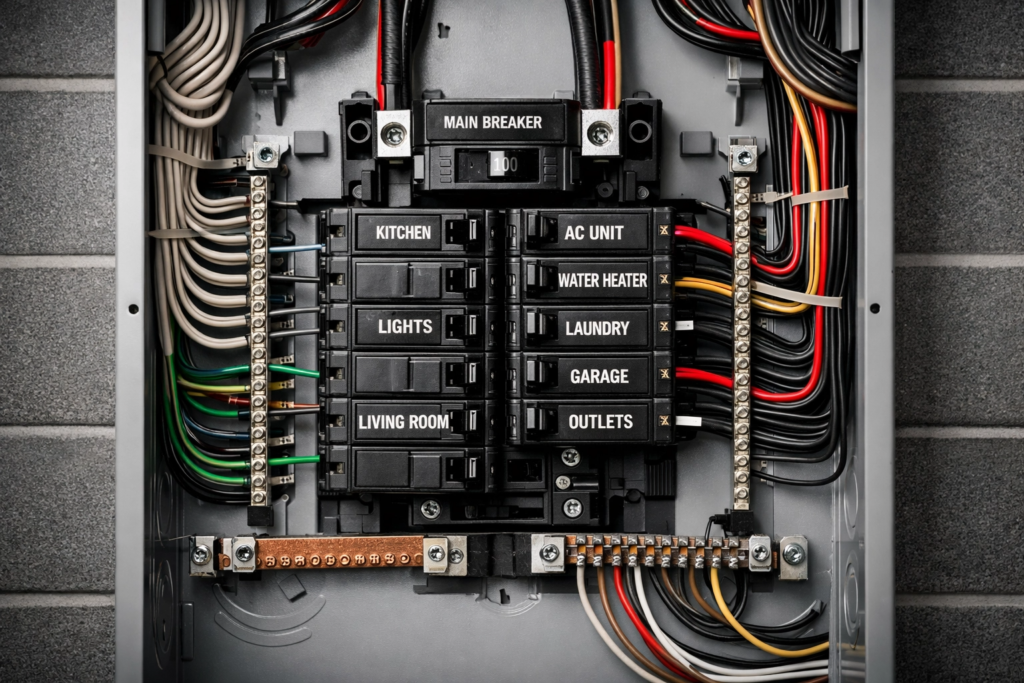
Do your lights dim when the refrigerator compressor kicks in? This is a classic sign of a “voltage drop.” It means your home’s electrical panel is struggling to distribute power. In many older Montgomery homes, the service is only 100 amps, which was fine in 1950 but is nowhere near enough for a modern home with three TVs, two computers, and a high-efficiency AC unit.
The “Marshmallow” Smell: Burning Plastic and Your Safety
If you ever smell something like burning plastic or ozone near an outlet or your breaker box, stop reading this and go flip the main breaker. I’m serious. This is the smell of insulation melting. In neighborhoods like Dalraida, we often find that old outlets have become loose over time, creating “arcing”—where electricity jumps through the air, creating intense heat.
Buzzing, Humming, and Sizzling Sounds
Your electrical system should be silent. If you hear a buzzing sound behind a wall or inside your panel, it’s usually a sign of a loose connection or a breaker that is failing to trip. This is a common repair we see in the McGehee Estates area, where homes built in the 60s and 70s are reaching that “mid-life crisis” for their electrical systems.
Warm Outlets and Discolored Faceplates
Touch your outlets. They should be cool to the touch. If an outlet feels warm, or if you see a brownish tint on the plastic faceplate, that outlet is overloaded or failing. This is especially common in older homes in Forest Park where the original outlets weren’t designed for high-wattage modern appliances.
2. Navigating the Unique Electrical DNA of Montgomery Neighborhoods
One of the things I love most about Montgomery is the diversity of our architecture. But from an electrician’s perspective, each neighborhood presents a unique set of challenges.
The Historic Soul: Old Cloverdale and Capitol Heights
These are the crown jewels of Montgomery, but electrically, they can be a nightmare. Many of these homes still have Knob and Tube (K&T) wiring hidden behind those beautiful plaster walls. K&T isn’t inherently dangerous if it’s in perfect condition, but it was never designed to be covered by modern blown-in insulation, which causes it to overheat. If you’re buying or renovating in these areas, a full electrical inspection is your first priority.
The Suburban Sprawl: Eastchase, Deer Creek, and Taylor Lakes
On the east side of town, we have much newer infrastructure. However, “new” doesn’t always mean “perfect.” During the housing booms, some builders used lower-quality components to save costs. We frequently see “builder-grade” outlets that wear out after just 5-10 years, or panels that were poorly balanced, leading to frequent tripped breakers in these growing communities.
The Mid-Century Challenge: McGehee Estates and Ridgecrest
Homes built between 1965 and 1975 in Montgomery often have a hidden danger: Aluminum Wiring. During the Vietnam War, copper prices skyrocketed, and builders switched to aluminum. The problem? Aluminum expands and contracts more than copper, leading to loose connections and fires. If your Montgomery home has aluminum wiring, you don’t necessarily need a full rewire, but you do need “AlumiConn” connectors or pigtailing to make it safe.
The Impact of the Alabama Climate on Exterior Electrical
Our humidity is relentless. In areas near the Alabama River, we see a lot of corrosion in meter bases and outdoor disconnects. If moisture gets into your main service entrance cable, it can actually “wick” down into your indoor panel, causing the breakers to rust from the inside out. This is a specialized repair that requires a pro who understands the local Montgomery environment.
Storm Preparedness in the River Region
Montgomery is in a prime spot for lightning. I’ve seen homes in Wyndridge have their entire smart home system fried by a single strike nearby. Whole-home surge protection isn’t a luxury in Alabama; it’s an essential part of your home’s defense system.
3. The Comprehensive Montgomery Home Electrical Repair Checklist
I always tell my clients that being a homeowner is like being a ship captain—you need to do regular “hull inspections.” Here is the checklist I recommend for every Montgomery resident.
The Monthly GFCI Test
Ground Fault Circuit Interrupters (GFCIs) are those outlets with the “Test” and “Reset” buttons. They are designed to save your life by cutting power in milliseconds if they detect water contact. In our humid Montgomery bathrooms and kitchens, these can fail. Press the test button once a month. If it doesn’t click and cut power, it needs to be replaced immediately.
The 6-Month Breaker Exercise
Did you know breakers can “seize” if they aren’t moved for years? Every six months, go to your panel and flip your breakers off and back on. This keeps the mechanical parts moving freely. (Just make sure your computers are off first!)
Inspecting for “Zinsco” and “Federal Pacific” Panels
If you open your panel door and see the name Federal Pacific (FPE) or Zinsco, you have a problem. These panels were installed in thousands of Montgomery homes in the 70s and 80s. They are famous for “no-trip” failures, meaning they won’t shut off even during a short circuit. Most insurance companies in Alabama are now refusing to cover homes with these panels.
Grounding Rod Inspections
Go outside and look for a copper rod driven into the ground near your meter. Is the wire still attached? In some older parts of Montgomery, these connections get corroded or even accidentally cut by landscapers. Without a good ground, your surge protector is useless.
Smoke Detector Synchronization
In Alabama, code requires smoke detectors to be hardwired and interconnected. If a fire starts in your kitchen in Brentwood, the detector in your upstairs bedroom needs to go off too. If yours are just battery-operated “stick-ons,” it’s time for an upgrade.
4. Decoding Montgomery Electrical Permits, Codes, and Inspections
This is the part that bores most homeowners, but it’s the part that saves you the most money in the long run. The City of Montgomery takes electrical safety seriously.
When Do You Actually Need a Permit?
If you’re just swapping a light fixture or a single outlet, you usually don’t need a permit. But if you’re adding a new circuit for a hot tub in Taylor Lakes, upgrading your panel, or doing a renovation in Hampstead, the City of Montgomery requires a permit. Why? Because it ensures a third-party inspector checks the work to make sure your house is safe.
The National Electrical Code (NEC) 2026 Standards
Alabama typically follows the National Electrical Code. The latest updates have huge requirements for AFCI (Arc Fault Circuit Interrupters). These are like GFCIs but for fires. They are now required in almost every room of the house. If your Montgomery electrician isn’t talking about AFCIs, they aren’t up to date on the code.
The “DIY” Trap and Home Resale Value
I’ve seen so many sales fall through in Cloverdale because a homeowner did their own wiring, and the buyer’s inspector flagged it as unpermitted work. It costs twice as much to have a pro come in and “certify” or redo your DIY work than it does to just have it done right the first time.
Working with the Montgomery Building Inspections Department
The inspectors at the City of Montgomery are there to protect you. If you’re hiring a contractor, make sure they are pulling the permit in their name, not yours. If they ask you to pull the “homeowner permit,” it’s a red flag that they might not be licensed in the State of Alabama.
Insurance and Licensed Electrical Work
If an electrical fire happens in your home and the fire marshal determines the cause was unlicensed work, your insurance company in Alabama may have grounds to deny your claim. It’s simply not worth the risk.
5. Choosing the Right Montgomery Electrician: Professionalism vs. The “Handyman”
We’ve all seen the flyers on the telephone poles or the ads on Facebook. “Handyman Dan: I do it all!” But when it comes to the wires that keep your family safe, you need to be picky.
The State of Alabama Electrical License
In Alabama, there is a big difference between a “handyman” and a “Licensed Electrical Contractor.” A contractor has passed rigorous state exams, carries massive liability insurance, and is bonded. Always ask to see their card—it should have a “Master Electrician” or “Contractor” designation.
The Value of Local Expertise in the River Region
A “big box” company from out of state doesn’t know the specific soil conditions in Montgomery or the quirks of the historic homes in Old Cloverdale. You want someone who has spent years in these crawlspaces and attics.
Upfront Pricing vs. Hourly Rates
I hate “surprise” bills, and I bet you do too. The best Montgomery electrical repair companies offer Flat-Rate Pricing. They look at the job, give you a price, and that’s what you pay, regardless of how long it takes. This protects you from paying for someone to “learn on the job” at your expense.
Emergency Services: Who Answers at 3 AM?
Electrical emergencies don’t happen on a Tuesday at 10 AM. They happen during a Saturday night thunderstorm. Make sure your preferred electrician has a dedicated emergency line for the Montgomery area.
Checking Reviews in the Montgomery Community
Don’t just look at the stars. Read the comments. Are they respectful of the home? Do they wear floor protectors (booties) in your house? In Montgomery, word of mouth is everything. Ask your neighbors in Pike Road or Deer Creek who they trust.
6. Modernizing Your Montgomery Home: Repairs that Pay for Themselves
Electrical repair isn’t just about fixing broken stuff; it’s about bringing your home into the 21st century.
EV Charger Installation: The New Montgomery Standard
With more and more folks in East Montgomery driving electric vehicles, a standard 120V outlet just doesn’t cut it. Installing a Level 2 (240V) charger is one of the most popular “repairs” we do. It requires a dedicated circuit and often a panel balance, but it adds significant value to your home.
Smart Home Integration and Troubleshooting
If your smart doorbell keeps disconnecting or your smart lights are flickering, it’s often an electrical issue, not a Wi-Fi issue. Modern smart devices are very sensitive to “dirty power” (voltage fluctuations). A pro can clean up your power delivery so your tech works flawlessly.
Whole-Home Surge Protection: Your Best Investment
I can’t stress this enough for Montgomery residents. For about the cost of a nice dinner out, you can protect every single electronic device in your home from external surges and internal spikes (like when your AC turns on). It’s the cheapest insurance you’ll ever buy.
LED Lighting Retrofits and Alabama Power Savings
We all know how high those summer power bills can get. Replacing old incandescent or halogen recessed lights with modern LED retrofits doesn’t just look better—it drastically reduces the heat load on your house and lowers your monthly bill.
Panel Upgrades for the Modern Lifestyle
If you’re planning on adding a “man cave,” a craft room, or a hot tub in your Montgomery backyard, you’re going to need more power. Upgrading from a 100-amp to a 200-amp service is a standard repair that gives your home the “breathing room” it needs for modern life.
Final Thoughts: Keeping the “River Region” Safe and Bright
Montgomery is more than just a city; it’s a community of neighbors who look out for each other. Whether you’re preserving a piece of history in Old Cloverdale or building a future in Pike Road, your home’s electrical system is what makes modern life possible.
Don’t ignore the small signs. That flickering light or that warm outlet is your home’s way of asking for help. By staying proactive, respecting the local Montgomery codes, and working with licensed professionals, you can ensure your home remains a safe haven for generations to come.
Stay safe, stay bright, and keep Montgomery shining!
Note: This guide is for informational purposes. Always consult with a licensed Alabama Electrical Contractor before performing any repairs on your home’s electrical system.