
Int The Mystery of the Missing Doorbell Power
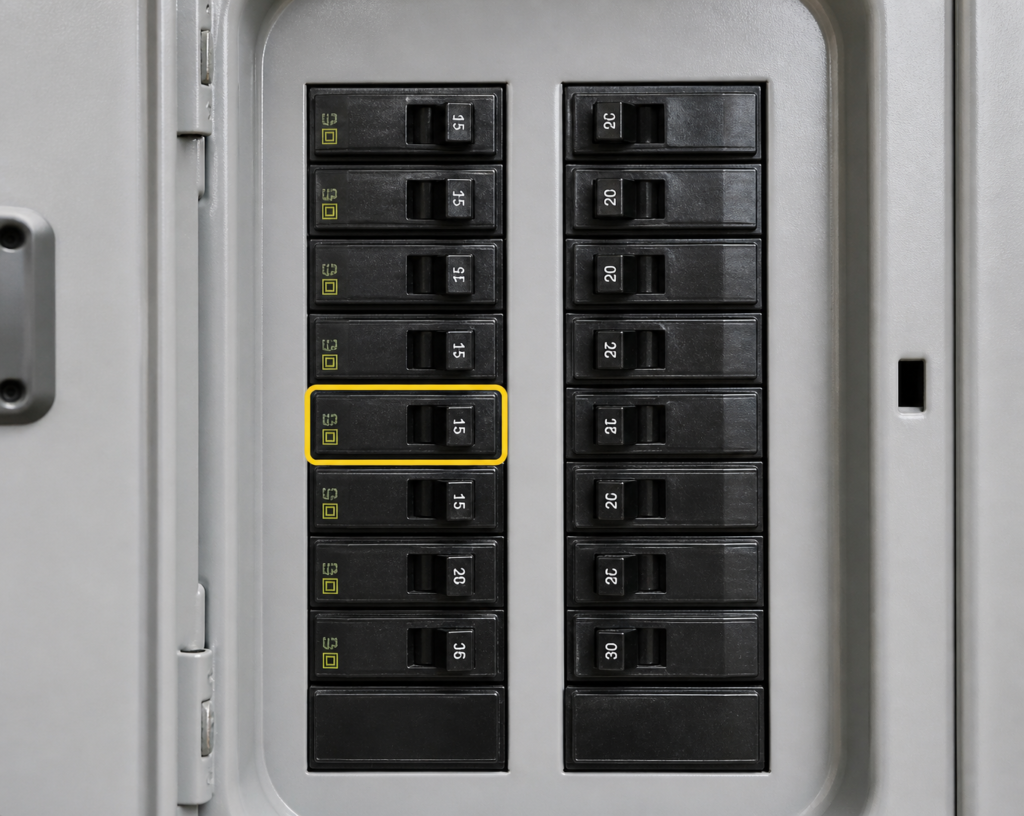
You’re standing at your front door, pressing the doorbell button for the tenth time, and nothing happens. No chime, no ding-dong, no fancy electronic melody—just silence. Or maybe your doorbell stopped working after you flipped a breaker during a renovation and now you can’t figure out which one controls it. So the question becomes urgent: what circuit breaker would a doorbell be on?
I’m a licensed electrician who’s spent years troubleshooting doorbell issues in homes across the United States—from historic brownstones in Philadelphia to modern subdivisions in Texas. I’ve crawled through attics hunting for transformers, traced wires through finished basements, and explained to countless homeowners why their doorbell shares a circuit with their hallway lights or bathroom outlets. This guide is going to answer every aspect of what circuit breaker would a doorbell be on, plus a whole lot more you didn’t know you needed to know.
Whether you’re trying to fix a broken doorbell, planning a renovation and need to shut off the power safely, installing a new video doorbell like Ring or Nest, or just curious about how your home’s electrical system works, this article has you covered. By the end, you’ll know exactly how to locate your doorbell’s circuit breaker, understand why it’s wired the way it is, and troubleshoot common problems like a pro.
What Circuit Breaker Would a Doorbell Be On? The Short Answer
Let’s start with the answer most people are looking for. What circuit breaker would a doorbell be on? In most American homes, a doorbell is powered by a low-voltage transformer (usually 16-24 volts) that’s connected to a standard 120-volt household circuit. That means the doorbell itself doesn’t have its own dedicated breaker—instead, it shares a breaker with whatever circuit the transformer is tapped into.
Common circuits that doorbell transformers connect to include:
- Hallway lighting circuits
- Entryway or foyer lighting
- Front porch or exterior lighting
- Bathroom GFCI circuits (less common but happens)
- Spare bedroom or closet lighting
- Utility room or laundry room circuits
The transformer is typically a small metal box mounted on or inside the electrical panel, on a junction box near the panel, or sometimes tucked away in an attic, basement, or closet. It steps down the 120-volt household power to the low voltage needed by the doorbell chime and button.
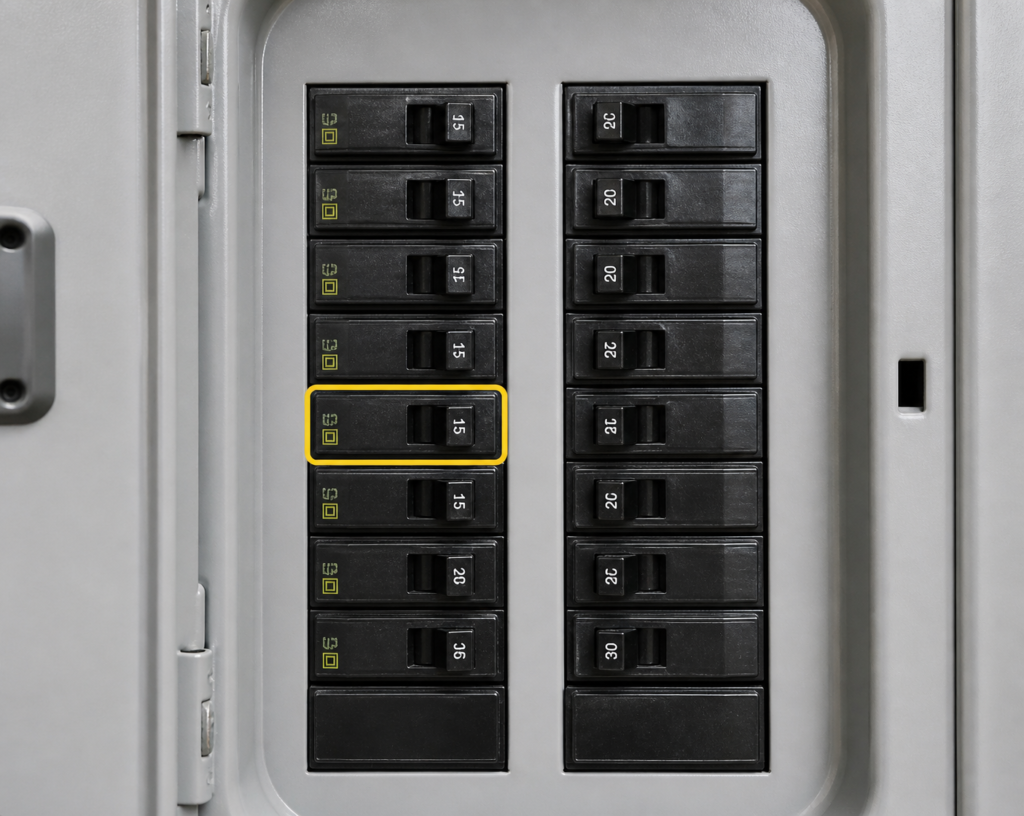
So when you’re trying to find what circuit breaker would a doorbell be on, you’re really looking for the breaker that powers the transformer, not a breaker labeled “doorbell”—because that almost never exists.
How Doorbell Electrical Systems Actually Work
To fully understand what circuit breaker would a doorbell be on, you need to understand how a doorbell system is wired. It’s different from most things in your house, and that’s what makes it confusing.
The Three Main Components
Every traditional wired doorbell system has three parts:
- The Button: Mounted outside your door. When pressed, it completes a low-voltage circuit.
- The Transformer: Steps down 120V to 16-24V AC. This is the component actually connected to your household circuit breaker.
- The Chime: The box inside your house that makes the sound. It receives low-voltage power from the transformer when the button is pressed.
The Wiring Path
Here’s how electricity flows in a doorbell system:
- Power leaves your electrical panel through a 120-volt circuit (shared with lights or outlets).
- That power goes to the transformer, which reduces it to low voltage.
- Low-voltage wires run from the transformer to the chime, and from the chime to the button.
- When someone presses the button, the circuit completes, and the chime sounds.
This means the doorbell button and chime are on low-voltage wiring that doesn’t go through your panel at all. Only the transformer connects to a household circuit breaker. That’s why you won’t find “doorbell” on any breaker label.
Why Low Voltage?
Doorbells use low voltage for safety and practicality. Running 120 volts to your front porch would be dangerous—especially in wet weather. Low voltage (under 30 volts) is considered safe for exposed wiring and simple installations. It also allows for thinner, cheaper wire and simpler components.
The transformer is the critical bridge between your high-voltage household system and the doorbell’s low-voltage system. Understanding this is key to answering what circuit breaker would a doorbell be on.
Where to Find Your Doorbell Transformer
Since the transformer is what actually connects to a circuit breaker, finding it is the first step in determining what circuit breaker would a doorbell be on. Transformers can be hidden in several places, and builders have different preferences depending on when and where your home was built.
On or Near the Electrical Panel
The most common location for a doorbell transformer is on or near the main electrical panel. It might be:
- Mounted directly on the side of the panel enclosure
- Inside the panel, attached to a knockout
- On a junction box right next to the panel
- On a separate junction box in the utility room where the panel is located
If your home was built after 1980, there’s a good chance the transformer is somewhere near the panel. Look for a small metal box about the size of a deck of cards with two or three low-voltage wires coming out of it.
In the Attic
In warmer climates, especially in the southern United States, builders often mount doorbell transformers in attics to keep them away from living spaces and reduce wall clutter. This can make them tricky to find, especially if your attic is full of insulation.
If your transformer is in the attic, it’s usually near the attic access hatch or close to where the doorbell wires drop down to the chime. Look for a small metal box screwed to a rafter or joist.
In the Basement or Crawl Space
In older homes in the northern United States, transformers are often found in basements or crawl spaces. They might be mounted on a floor joist, a wall stud, or an electrical box near the basement stairs.
Basement locations are common in homes built before 1970, when builders weren’t as consistent about panel-adjacent placement.
In a Closet or Utility Room
Some builders tuck transformers into hall closets, linen closets, or utility rooms. This keeps them accessible but out of sight. I’ve found them in coat closets, behind water heaters, and even inside HVAC return air plenums (which isn’t code-compliant but happens).
Hidden Behind the Chime
In some installations—particularly in condos, apartments, and retrofits—the transformer is mounted right behind the doorbell chime on the wall. This is common when a doorbell system was added after the home was built, and the installer didn’t want to run wires all the way back to the panel.
If you remove the chime cover, you might see the transformer mounted in the wall cavity behind it.
Inside the Doorbell Button Housing
Very rarely, especially with wireless doorbell retrofits or some older systems, a tiny transformer might be built into the doorbell button housing or a nearby junction box. This is more common in commercial applications than residential.
How to Identify the Correct Circuit Breaker
Now that you know where the transformer might be hiding, let’s talk about how to actually find what circuit breaker would a doorbell be on. There are several methods, ranging from simple observation to systematic testing.
Method 1: Visual Inspection at the Panel
Start at your electrical panel. Look for:
- A small transformer mounted on the side or top of the panel
- Any junction boxes adjacent to the panel that might contain a transformer
- Low-voltage wires (usually thinner than household wiring) exiting the panel area
If you find the transformer, trace the 120-volt wires feeding it. They should connect to a circuit in the panel. Look at which breaker those wires are connected to. That breaker controls your doorbell.
Method 2: The Breaker Label Method
Check your panel’s breaker labels. While most panels won’t have a “doorbell” label, look for clues:
- “Front lights” or “porch lights”
- “Hallway” or “entry”
- “Utility” or “mechanical”
- Any circuit that seems like it might power something near the front door
If your panel was labeled by a previous homeowner or electrician, they might have noted the doorbell circuit, even if they didn’t use the word “doorbell.” I’ve seen labels like “trans,” “bell,” “chime,” or “16V” that indicate the doorbell transformer circuit.
Method 3: The Process of Elimination
If you can’t find the transformer visually, you’ll need to test each breaker. Here’s how:
- Have someone stand at the doorbell button.
- Press the button and confirm the chime works.
- Go to the panel and turn off one breaker at a time.
- After each breaker, have your helper press the doorbell button again.
- When the doorbell stops working, you’ve found your breaker.
Important safety note: Only flip breakers that control lighting and small appliances. Avoid turning off breakers for HVAC systems, refrigerators, medical equipment, or anything critical. Also, be aware that turning off certain breakers might reset clocks, electronics, or computers.
Method 4: Use a Circuit Breaker Finder
A circuit breaker finder (also called a breaker tracer) is a tool that can help you identify which breaker controls a specific outlet or junction box. Here’s how to use it for a doorbell transformer:
- Plug the transmitter into an outlet on the same circuit as the transformer (if you can identify one).
- Or, if the transformer is in a junction box, you may need an electrician to connect the transmitter properly.
- Use the receiver at the panel to scan breakers until you find the one that beeps.
This method works best when the transformer is on a circuit that also has an accessible outlet. If the transformer is on a dedicated lighting circuit with no outlets, a standard breaker finder won’t help unless you can access the wiring.
Method 5: The Multimeter Method
If you’re comfortable using a multimeter and can safely access the transformer:
- Set your multimeter to measure AC voltage.
- Test the output side of the transformer (the low-voltage terminals). You should read 16-24 volts.
- Have a helper turn off breakers one by one while you watch the multimeter.
- When the voltage drops to zero, you’ve found the breaker.
Warning: Only attempt this if you know how to use a multimeter safely and can avoid touching live 120-volt components. The low-voltage side is safe, but the input side is not.
Why Doorbells Share Circuits (And Why That’s Okay)
A common question I get when explaining what circuit breaker would a doorbell be on is: “Why doesn’t the doorbell have its own breaker?” The answer comes down to electrical code, practicality, and cost.
National Electrical Code (NEC) Requirements
The NEC doesn’t require doorbells to have dedicated circuits. A doorbell transformer draws very little power—typically 5 to 20 watts, depending on the transformer and chime type. That’s less than most LED light bulbs. It doesn’t make sense from a code or practical standpoint to dedicate an entire 15-amp or 20-amp circuit to something that uses less than 1% of its capacity.
The NEC does require that the transformer be properly protected by an overcurrent device (breaker or fuse) appropriate for the circuit it’s on. As long as the transformer is on a general lighting or receptacle circuit with proper breaker protection, it’s code-compliant.
Practical Wiring Considerations
When builders wire a house, they try to be efficient. Running a separate circuit for a doorbell would require:
- Additional wire
- Additional breaker space in the panel
- Additional labor
- Additional cost
For a device that uses almost no power, this is wasteful. It’s much more practical to tap into an existing circuit near the front of the house—typically a hallway or entryway lighting circuit.
The Transformer as a “Parasitic” Load
Think of the doorbell transformer as a parasitic load. It’s always drawing a tiny bit of power (usually less than 1 watt in standby), waiting for someone to press the button. It doesn’t affect the circuit’s capacity in any meaningful way. A 15-amp lighting circuit can easily handle a few light fixtures plus a doorbell transformer without any risk of overloading.
Common Doorbell Circuit Configurations in American Homes
Depending on when your home was built and where you live, your doorbell might be on different types of circuits. Understanding these configurations helps answer what circuit breaker would a doorbell be on in your specific situation.
1950s-1970s Homes
In older homes, doorbell transformers were often connected to:
- Hallway lighting circuits (most common)
- Front porch light circuits
- Bathroom lighting (in smaller homes)
- Basement utility circuits
Transformers in this era were frequently mounted in basements, attics, or utility closets. The wiring was often cloth-insulated or early PVC, and the transformers were larger and heavier than modern ones.
1980s-1990s Homes
This era saw more standardization. Doorbell transformers were commonly:
- Mounted on the side of the electrical panel
- Connected to entryway or foyer lighting circuits
- Sometimes connected to exterior outlet circuits (GFCI-protected)
Builders started using smaller, more efficient transformers, and panel-adjacent mounting became the norm.
2000s-Present Homes
Modern homes typically have:
- Transformers mounted directly on or inside the panel
- Connection to hallway or entryway lighting circuits
- Sometimes dedicated doorbell transformer modules built into smart panels
- Integration with smart home systems that might use different power configurations
In new construction, some builders now install transformers with built-in surge protection or even battery backup for video doorbells.
Retrofit and Renovation Scenarios
If your home has been renovated, the doorbell circuit might have been moved or modified:
- A previous owner might have relocated the transformer during a basement finish
- A smart doorbell installation might have added a new transformer or power kit
- An addition might have put the transformer on a different circuit than originally planned
I’ve seen cases where a doorbell transformer was moved three times over 50 years of home renovations, ending up on a completely different circuit than the original installation. This is why what circuit breaker would a doorbell be on can be surprisingly complicated in older homes.
Video Doorbells: A New Twist on an Old Question
The rise of video doorbells like Ring, Nest, Arlo, and Eufy has changed the landscape of doorbell wiring—and sometimes complicates the question of what circuit breaker would a doorbell be on.
Power Requirements for Video Doorbells
Traditional doorbells use very little power. Video doorbells need more:
- Ring Video Doorbell: 8-24 VAC, requires 10-40 VA transformer
- Nest Hello: 16-24 VAC, requires 10 VA minimum
- Arlo Video Doorbell: 16-24 VAC, 10-30 VA
This means older transformers (especially those under 10 VA) might need replacement when upgrading to a video doorbell.
Power Kits and Bypass Modules
Many video doorbell installations require a “power kit” or “bypass module” installed at the chime. This device:
- Ensures consistent voltage to the video doorbell
- Prevents the chime from drawing power that the video doorbell needs
- Might change how the circuit behaves when breakers are turned off
If you have a video doorbell and you’re trying to find what circuit breaker would a doorbell be on, be aware that the power kit adds complexity. The breaker still controls the transformer, but the wiring between transformer, chime, and button might be different than a traditional setup.
Battery vs. Wired Video Doorbells
Some homeowners opt for battery-powered video doorbells to avoid wiring complications. These don’t connect to your electrical system at all, so the question of what circuit breaker would a doorbell be on becomes irrelevant—until the battery dies in the middle of winter and you’re climbing a ladder to swap it out.
Hardwired Video Doorbell Installations
For a clean, permanent installation, hardwiring is best. This usually means:
- Using the existing doorbell wires (if they’re in good condition)
- Replacing the transformer with a higher-capacity one (if needed)
- Installing the power kit at the chime
- Connecting to the same circuit breaker that powered the original transformer
If you’re installing a video doorbell yourself and need to turn off power, you’ll still need to know what circuit breaker would a doorbell be on—and that answer hasn’t changed.
Troubleshooting: When the Breaker Isn’t the Problem
Sometimes you think you need to find what circuit breaker would a doorbell be on, but the problem isn’t the breaker at all. Here are common scenarios where the breaker is fine, but the doorbell still doesn’t work.
Transformer Failure
Transformers can fail, especially if they’re old or undersized for a modern video doorbell. Signs of transformer failure:
- Doorbell doesn’t work even when the correct breaker is on
- Transformer feels very hot or makes a buzzing sound
- Low or no voltage output when tested with a multimeter
- Visible burn marks or melted casing
If the transformer has failed, replacing it is usually straightforward. Just make sure you turn off the correct breaker first—which means you still need to know what circuit breaker would a doorbell be on.
Chime Problems
The chime unit itself can fail. Mechanical chimes can get stuck, have broken plungers, or worn-out solenoids. Electronic chimes can have circuit board failures. If pressing the button produces a faint hum or click at the chime but no sound, the chime might be the problem.
Button Failure
Doorbell buttons are exposed to weather, wear, and corrosion. The contacts inside can oxidize or break. If the button light (if there is one) doesn’t work, or if pressing the button feels different than usual, try replacing the button first—it’s the cheapest and easiest fix.
Wiring Issues
Low-voltage doorbell wiring can be damaged by:
- Rodents chewing through wires in attics or walls
- Nails or screws puncturing wires during renovations
- Corrosion at connection points
- Loose wire nuts or terminals
Finding wiring problems can be challenging because low-voltage wiring isn’t always run through accessible areas. An electrician can use a tone generator and probe to trace wires and find breaks.
GFCI Tripping
If your doorbell transformer is on a GFCI-protected circuit (bathroom, exterior, garage), a GFCI trip will cut power to the transformer even if the breaker hasn’t tripped. This is a common cause of “mysterious” doorbell failures. Check GFCI outlets in bathrooms, garages, and exterior locations if your doorbell stops working.
Safety Considerations When Working on Doorbell Circuits
Even though doorbells are low-voltage devices, there are safety considerations when troubleshooting or repairing them. Since the transformer connects to 120-volt household power, you need to respect that side of the system.
Always Turn Off the Breaker
Before working on any doorbell component, turn off the breaker that powers the transformer. This means you absolutely must know what circuit breaker would a doorbell be on. Working on a live transformer is dangerous and unnecessary.
Test for Power
Even after turning off a breaker, verify that power is actually off. Use a non-contact voltage tester on the transformer input wires before touching anything. Breaker labels can be wrong, especially in older homes or after DIY work.
Respect the Low-Voltage Side
While doorbell voltage (16-24 volts) isn’t dangerous in most situations, it can still give you a surprising shock, especially if you’re working with bare wires and wet hands. Treat all electrical work with respect.
Know When to Call a Pro
If you can’t find the transformer, can’t identify the correct breaker, or encounter unexpected wiring conditions, call a licensed electrician. Doorbell systems are relatively simple, but they’re part of a larger electrical system that demands proper training to work on safely.
Upgrading Your Doorbell System: When and Why
Sometimes finding what circuit breaker would a doorbell be on is just the first step in a larger upgrade project. Here are common reasons homeowners upgrade their doorbell systems and what that means for circuit planning.
Upgrading to a Video Doorbell
As mentioned earlier, video doorbells often need more power than traditional transformers can provide. An upgrade typically involves:
- Identifying the current transformer and its VA rating
- Determining if the existing circuit can handle a larger transformer
- Installing a new transformer (usually 16V 30VA or 24V 40VA)
- Adding a power kit at the chime
- Ensuring the breaker and wiring are adequate
If your current transformer is on a heavily loaded circuit, you might need to move it to a different breaker or add a dedicated circuit—though this is rare for residential doorbells.
Adding Multiple Buttons or Chimes
Larger homes might have front door, back door, and side door buttons, plus multiple chimes in different areas. These systems might need:
- Larger transformers to handle the additional load
- More complex wiring configurations
- Potential circuit adjustments if the transformer is overloaded
Smart Home Integration
Modern smart doorbells integrate with home automation systems, security systems, and voice assistants. Some installations require:
- Constant internet connectivity (WiFi)
- Adequate power for always-on cameras and two-way audio
- Potential battery backup systems
- Professional installation for complex integrations
Whole-House Electrical Upgrades
If you’re already upgrading your electrical panel or service, it’s a good time to evaluate your doorbell system. A new panel might offer:
- Better transformer mounting locations
- Surge protection for sensitive electronics
- Smart panel monitoring that can detect transformer issues
- More space for future expansion
The Cost of Doorbell Repairs and Upgrades
Money matters, so let’s talk about what you might spend when dealing with what circuit breaker would a doorbell be on and related issues.
Simple Breaker Identification
If you just need an electrician to identify which breaker controls your doorbell, expect to pay:
- Service call fee: $75-$150
- Diagnostic time: $0-$75 (often included in service call)
- Total: $75-$225
This is a quick job if the transformer is accessible and the panel is properly labeled.
Transformer Replacement
Replacing a failed transformer typically costs:
- Transformer: $15-$50
- Labor: $100-$250
- Total: $115-$300
If the transformer is in a hard-to-reach location (attic, crawl space), labor costs will be higher.
Video Doorbell Installation
Professional installation of a video doorbell:
- Basic installation (existing wiring adequate): $100-$250
- With transformer upgrade: $200-$400
- With new wiring (no existing doorbell): $300-$600
- Smart home integration: $400-$800+
DIY installation is possible for handy homeowners and can save $100-$200, but you still need to know what circuit breaker would a doorbell be on to work safely.
Full Doorbell System Replacement
If your entire system is old or damaged:
- New transformer, chime, button, and wiring: $300-$800
- With video doorbell: $400-$1,000+
- Multi-button/multi-chime systems: $600-$1,500+
Panel Work (If Needed)
If your doorbell issues reveal larger panel problems:
- Breaker replacement: $150-$300
- Circuit relocation: $300-$600
- Panel upgrade: $1,500-$3,500
Regional Variations in Doorbell Wiring Across the United States
Where you live can affect how your doorbell is wired and where the transformer is located. Here are some regional trends I’ve observed in my electrical work.
Northeast and Midwest
Older homes in cities like Boston, Philadelphia, Chicago, and Detroit often have:
- Transformers in basements or utility rooms
- Doorbells on hallway or porch light circuits
- Original transformers from the 1950s-1970s that may need replacement
- Cloth-insulated low-voltage wiring that should be inspected
In these regions, finding what circuit breaker would a doorbell be on often involves investigating older, less standardized installations.
Southern States
Homes in Florida, Texas, Georgia, and the Carolinas typically have:
- Transformers in attics (to avoid humid basements)
- Connection to hallway or entryway circuits
- More recent installations with panel-adjacent transformers in newer homes
- Higher rates of video doorbell adoption due to security concerns
The attic location can make transformer access challenging, especially in summer heat.
Western States
California, Arizona, Nevada, and Pacific Northwest homes often feature:
- Panel-mounted transformers in newer construction
- Integration with smart home and solar systems
- Strict code enforcement requiring proper transformer installation
- Higher labor costs for electrical work
In California especially, Title 24 energy codes affect how doorbells and other low-voltage systems are installed.
Rural Areas
Rural homes across the country might have:
- Longer wire runs from transformer to button
- Transformers on utility or outbuilding circuits
- Less standardized installations
- Higher likelihood of DIY or non-professional wiring
In rural areas, voltage drop over long wire runs can be an issue, requiring larger transformers or thicker low-voltage wire.
Smart Panels and the Future of Doorbell Power
The electrical industry is evolving, and smart panels are changing how we think about circuits—including the ones that power doorbells.
Integrated Transformer Modules
Some smart panels now include built-in low-voltage transformer modules for doorbells, security systems, and thermostats. These modules:
- Are monitored by the smart panel system
- Can alert you to transformer failures
- Provide clean, consistent power
- Eliminate the need for separate wall-mounted transformers
With these systems, what circuit breaker would a doorbell be on becomes a software question—you can check the panel’s app or interface to see which circuit powers the doorbell module.
Circuit-Level Monitoring
Smart panels with circuit-level monitoring can track the tiny power draw of a doorbell transformer. This allows homeowners to:
- See when the transformer is drawing power (indicating the button is pressed)
- Detect abnormal power draws that might indicate a failing transformer
- Receive alerts if the doorbell circuit loses power
Battery Backup and Power Management
Some advanced systems include battery backup for critical low-voltage circuits. This means your doorbell could keep working during a power outage—something traditional transformer-based systems can’t do.
Integration with Home Security
Modern doorbells are security devices as much as they’re communication tools. Smart panels can integrate doorbell power with:
- Security system power management
- Surge protection for cameras and electronics
- Automated responses to power outages or transformer failures
Real Stories from the Field: Finding the Elusive Doorbell Breaker
Let me share some real-world experiences that illustrate the challenges and solutions when figuring out what circuit breaker would a doorbell be on.
The Philadelphia Row House
I got a call from a homeowner in South Philly whose doorbell had stopped working after a basement renovation. The previous contractor had “cleaned up” the electrical panel and relabeled everything—but the labels were wrong. The homeowner had spent two hours flipping breakers trying to find the doorbell circuit with no luck.
When I arrived, I found the transformer mounted inside a junction box behind the panel, completely hidden from view. It was connected to what was labeled “Basement Lights” but was actually a hallway circuit. The contractor had crossed some wires during the renovation. Once I traced the correct circuit, the fix was simple—but finding it took professional tools and experience.
The Arizona Desert Home
A client in Phoenix wanted to install a Ring Video Doorbell but couldn’t find the transformer anywhere. We looked in the attic, garage, utility room, and behind the chime—nothing. Finally, I noticed a small access panel in the master bedroom closet that the homeowner had never opened. Behind it was the transformer, mounted on a stud and connected to the bedroom lighting circuit. The builder had hidden it there during construction in 1995.
The transformer was only 10 VA, so we upgraded it to a 30 VA model on the same circuit and installed the video doorbell successfully. The homeowner was amazed that something so important had been hidden for 25 years.
The Michigan Lake House
A family in northern Michigan had a doorbell that worked intermittently—sometimes it chimed, sometimes it didn’t. They’d replaced the button and chime with no improvement. When I investigated, I found the transformer in the crawl space, mounted on a damp floor joist. The transformer was corroded, and the connections were loose.
But the real problem was the circuit: the transformer was connected to a GFCI-protected bathroom circuit. Whenever the GFCI tripped—which happened occasionally due to an aging outlet—the doorbell lost power. The intermittent doorbell failures corresponded exactly with GFCI trips. We moved the transformer to a non-GFCI hallway circuit and solved the problem permanently.
The Texas Smart Home
A homeowner in Dallas had a brand-new smart panel with integrated low-voltage modules. But their video doorbell kept losing connection. The smart panel app showed the doorbell circuit was fine, but the doorbell itself was rebooting constantly.
After investigation, we discovered that the smart panel’s doorbell module was providing 24V, but the video doorbell was rated for 16-24V with a preferred 16V input. The higher voltage was causing the doorbell’s internal regulator to overheat and shut down. We added a voltage regulator between the panel module and the doorbell, and everything worked perfectly. Even smart systems need proper voltage matching.
Frequently Asked Questions About Doorbell Circuits
Here are the questions I hear most often when homeowners are trying to figure out what circuit breaker would a doorbell be on.
Does a doorbell have its own circuit breaker?
No, almost never. A doorbell transformer connects to an existing household circuit—usually a lighting circuit—and shares that breaker’s protection. The transformer steps down the voltage for the doorbell system.
Can a doorbell be on a GFCI circuit?
Yes, though it’s not ideal. If the GFCI trips, the doorbell loses power. If your doorbell is on a GFCI circuit and stops working, check all GFCI outlets in bathrooms, garages, and exterior locations.
Why does my doorbell work sometimes but not others?
Intermittent operation usually indicates loose connections, a failing transformer, or a GFCI that’s tripping occasionally. It could also be a wiring issue where movement or temperature changes affect connectivity.
How much power does a doorbell transformer use?
Very little. A typical transformer draws 1-5 watts in standby and up to 20-40 watts when the button is pressed. This is negligible compared to most household loads.
Can I move my doorbell transformer to a different circuit?
Yes, but it should be done by a licensed electrician. The transformer can be relocated to any properly protected circuit that has adequate capacity.
What VA rating transformer do I need?
For traditional doorbells: 10-16 VA is usually sufficient. For video doorbells: 16-30 VA is recommended, with 30-40 VA for multiple buttons or long wire runs.
Is doorbell voltage dangerous?
The low-voltage side (16-24 volts) is generally considered safe. However, the transformer input side connects to 120-volt household power, which is dangerous. Always turn off the breaker before working on doorbell components.
Why can’t I find my doorbell transformer?
It’s probably hidden in an attic, basement, closet, or behind the chime. Builders aren’t always consistent about transformer placement, especially in older homes.
Will a doorbell work without a transformer?
No. Traditional wired doorbells require a transformer to step down household voltage. Battery-powered wireless doorbells don’t need transformers, but hardwired ones always do.
Can I install a video doorbell myself?
Yes, if you’re comfortable with basic electrical work and can identify what circuit breaker would a doorbell be on. However, professional installation ensures proper voltage, safe wiring, and warranty compliance.
Conclusion: Knowledge Is Power (And Safety)
So, what circuit breaker would a doorbell be on? The answer is: the one that powers the transformer, which is almost always a hallway, entryway, or porch lighting circuit—not a dedicated doorbell breaker. The transformer steps down household voltage to the low voltage your doorbell needs, and it shares protection with whatever circuit it’s connected to.
Finding that breaker might require some detective work. You might need to trace wires from a hidden transformer, test breakers one by one, or use specialized tools. But once you know which breaker controls your doorbell, you have the power to safely repair, upgrade, or modify your system.
As a licensed electrician who’s tracked down doorbell circuits in every kind of home imaginable, I can tell you that patience and methodical testing usually win the day. Start with visual inspection, use the process of elimination if needed, and don’t hesitate to call a professional if you get stuck or uncomfortable.
Your doorbell might seem like a small thing, but it’s an important part of your home’s functionality and security. Whether you’re fixing a broken chime, upgrading to a video doorbell, or just satisfying your curiosity about how your house works, understanding your doorbell’s electrical system is time well spent.
Stay safe, stay curious, and remember: when in doubt, turn the breaker off and call a pro.
This article is for informational purposes only and does not constitute professional electrical advice. Always consult a licensed electrician for work on your electrical system. Electrical work can be dangerous and should only be performed by qualified professionals.