
Straight Talk About What You’ll Actually Pay in 2026
I’ve been pulling permits and swapping out panels for over fifteen years now, and if there’s one question that comes up on every single job site, it’s this: how much to replace a residential electrical panel? Homeowners want a straight number. They want to know if they’re looking at a few hundred bucks or a few thousand. They want to budget. They want to know if they’re getting ripped off when a contractor quotes them.
So let me give it to you straight, the way I’d tell a neighbor over a cup of coffee. There’s no single answer that fits every house, but there are real numbers, real ranges, and real factors that drive the price up or down. By the end of this, you’ll know exactly what to expect when you pick up the phone to call an electrician.
The Short Answer: What Most Homeowners Actually Pay
Let’s cut to the chase. In 2026, across the United States, the average homeowner spends somewhere between $1,300 and $3,000 to replace a standard residential electrical panel . That’s the sweet spot where most jobs land. Some simple swaps come in closer to $1,000, and complex upgrades with full service entrance work can push past $4,500 or even hit $5,500 in certain markets .
But here’s the thing—those numbers mean almost nothing without context. A panel replacement in a 1995 ranch house in Ohio where the existing panel is right there in the garage, easily accessible, with modern wiring already in place? That’s going to be on the low end. A panel replacement in a 1920s brick rowhouse in Philadelphia where the panel is buried in a closet, the wiring is knob-and-tube, and the utility company needs to upgrade the service line from the pole? That’s a completely different animal, and the price reflects it.
According to 2026 data from Angi, the national average sits right around $1,341, with a typical range from $519 on the low end to $2,184 for standard replacements, and up to $4,500 when you factor in breaker box replacement, moving the panel, or upgrading amperage . NerdWallet puts the average at $1,342, noting costs can swing from as low as $125 for minor repairs to $4,500 for full upgrades .
So when someone asks me how much to replace a residential electrical panel, my first response is always: It depends on your house, your existing setup, and what you’re trying to achieve.
Breaking Down the Cost by Panel Amperage
The biggest factor that determines your price is the amperage of the new panel. Think of amperage like the width of a highway—more amps means more lanes for electricity to flow through your house. Most homes in America today fall into one of three categories: 100-amp, 200-amp, or 400-amp service.
100-Amp Panels: The Budget Option (But Often Not Enough)
A 100-amp panel replacement typically runs between $800 and $2,500 installed . The panel itself is relatively cheap—you’re looking at $100 to $200 for the breaker box alone . Labor is where most of the cost lives, because even a “simple” panel swap requires shutting down power, disconnecting every circuit, removing the old panel, mounting the new one, reconnecting everything, and getting it inspected.
Here’s my honest take: a 100-amp panel was fine in 1985. It was the standard for decades. But in 2026? It’s barely enough for a small home without central air conditioning, an electric dryer, or an EV charger. I’ve had homeowners call me six months after a 100-amp replacement because they bought a Tesla and now the breaker trips every time they plug it in. If you’re replacing your panel anyway, think hard about whether 100 amps will serve you for the next twenty years.
200-Amp Panels: The Modern Standard
This is what I recommend for 90% of the homes I work in. A 200-amp panel upgrade typically costs between $1,200 and $4,500, with most homeowners landing around $2,500 to $3,500 . The panel itself runs $250 to $350 for parts , but the total cost includes the service cable upgrade, potential meter replacement, permits, and labor.
Why 200 amps? Because it handles modern life. Central air, electric range, dryer, dishwasher, microwave, coffee maker, gaming PC, home office setup, and yes—an EV charger—all running without the lights dimming or breakers tripping. It’s future-proofing your house for the next decade or two .
In my experience, if you’re upgrading from an old 100-amp service to 200 amps, you’re looking at the higher end of that range because the utility company often needs to get involved. The service line from the street to your house might need upgrading. The meter base might need replacement. That coordination adds time and money.
150-Amp Panels: The Middle Ground
Not as common, but worth mentioning. A 150-amp panel falls between $1,800 and $2,500 installed . It’s suitable for medium-sized homes with moderate electrical demands. I don’t see these requested often because the price difference between 150 and 200 amps is small enough that most homeowners just go for the 200 and call it done.
300 to 400-Amp Panels: The Heavy Hitters
If you’ve got a large home—say, over 3,500 square feet—or you’re running a home business with commercial-grade equipment, or you’ve got multiple EV chargers, a pool, a hot tub, and a workshop, you might need 300 or 400 amps. These upgrades run $4,000 to $8,000 or more . The panel alone can cost $500 to $2,000 just for the unit , and the installation complexity goes way up.
I’ve only done a handful of 400-amp residential jobs in my career. They’re usually for custom homes or serious hobbyists who need serious power. For the average family, 200 amps is plenty.
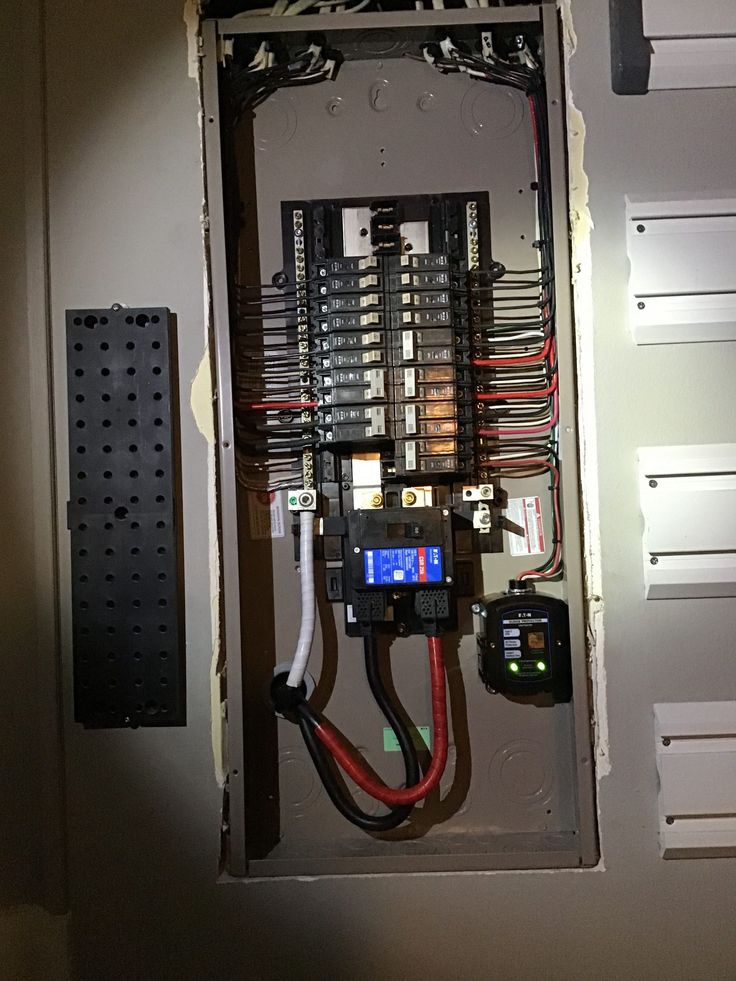
What Drives the Price Up? The Hidden Factors
When I give a quote for a panel replacement, I’m not just looking at the panel. I’m looking at the whole system. Here are the factors that can turn a $1,500 job into a $4,500 job real fast.
Labor Costs: Where Most of Your Money Goes
Electricians in the United States charge between $50 and $150 per hour depending on location, experience, and whether they’re union or non-union . A standard panel replacement takes 4 to 8 hours for one electrician. But if the job involves rewiring, moving the panel, or working in cramped conditions, that can stretch to 20 or 30 hours .
In the Northeast—places like Boston, New York, Philadelphia—unionized labor rates and stricter code requirements push costs 40% to 60% higher than in Southern states . I’ve heard quotes from colleagues in California that make my Midwest prices look like a bargain. Location matters.
The Age of Your Home and Existing Wiring
This is the big one that homeowners often don’t see coming. If your house was built before 1960 and still has 60-amp service with knob-and-tube wiring, a panel replacement isn’t just a panel replacement. It’s a full electrical overhaul. You’re looking at $4,000 to $8,000 for the panel upgrade alone, and mandatory rewiring can add $10,000 to $30,000 on top of that .
Knob-and-tube wiring isn’t just outdated—it’s a fire hazard. No licensed electrician will install a new panel and leave old knob-and-tube in place. It has to go. And that means opening walls, running new Romex, installing grounded outlets throughout the house. It’s a massive job.
Even homes from the 1960s to 1980s with aluminum wiring present challenges. Aluminum expands and contracts more than copper, leading to loose connections and fire risks. Working with aluminum requires special connectors and expertise, which adds to labor time and material costs .
Panel Location and Accessibility
Where your panel lives matters. A panel in an unfinished basement with clear access on an exterior wall? Easy. A panel buried in a finished closet behind drywall? That’s demo and repair work. A panel that needs to be moved from inside the house to outside to meet current firefighter safety codes? That’s $1,500 to $4,000 extra .
I’ve crawled through attics, worked in sweltering garages, and squeezed into utility closets that weren’t designed for human occupancy. Every complication adds time, and time is money.
Permits and Inspections
Every panel replacement requires a permit from your local municipality. Permit fees range from $50 to $300 . Some jurisdictions are straightforward—file online, pay the fee, schedule the inspection. Others require detailed plans, multiple inspections, and weeks of waiting. I always handle permits for my clients because navigating that bureaucracy is part of the job, but it’s a cost that gets factored into the quote.
Utility Coordination
When you’re upgrading amperage—especially going from 100 to 200 amps—the utility company often needs to upgrade the service line running from the transformer to your house. They might need to replace the meter, upgrade the weatherhead, or even swap out the transformer if your neighborhood infrastructure is old. This coordination can add $200 to $1,000 and extend the timeline by weeks or even months .
I’ve had jobs where the utility company showed up the next day and jobs where we waited six weeks. It’s out of the electrician’s control, but it’s a reality you need to be prepared for.
Additional Components and Upgrades
Sometimes the panel itself isn’t the only thing that needs attention:
- Subpanel installation: If your main panel is full and you need more circuits for an addition, basement, or garage, a subpanel costs $400 to $2,000 .
- Meter box replacement: If the existing meter base is corroded or incompatible with the new panel, replacement runs $100 to $650 .
- GFCI/AFCI breakers: Modern code requires these safety breakers in many circuits. They’re $30 to $100 each compared to $5 to $20 for standard breakers . In a full panel, that difference adds up.
- Surge protection: Whole-house surge protectors are a smart add-on that runs $200 to $500 installed.
- Drywall repair: If we have to open walls to run new wiring or relocate the panel, drywall repair adds $1.50 to $3 per square foot .
Repair vs. Replace: When Can You Save Money?
Not every panel problem requires a full replacement. Sometimes you can get away with a repair, and that’s worth exploring before you commit to a full upgrade.
When Repair Makes Sense
If your panel is less than 25 years old and generally in good shape, minor issues can often be repaired. A single faulty breaker switch replacement costs $100 to $200 . Cleaning corrosion, reseating breakers, and replacing a couple of worn components might run $300 to $900 . According to Angi, basic panel repair labor starts around $548 to $661 per panel in early 2026 .
If your issue is just a lack of space, tandem or “twin” breakers can fit two circuits into one slot, giving you more capacity without replacing the whole panel. That’s a $20 to $40 parts fix.
When Replacement Is the Only Safe Option
Here’s where I draw the line as a professional:
- Your panel is over 25 years old. Components wear out. Breakers become unreliable. The bus bars inside can corrode. At some point, repair is just throwing good money after bad.
- You have a recalled or obsolete panel. Federal Pacific Stab-Lok panels and Zinsco panels are known fire hazards. Insurance companies won’t cover homes with them. Replacement isn’t optional—it’s mandatory for safety.
- You’re using fuses instead of circuit breakers. Fuse boxes belong in museums, not homes. They offer none of the safety features of modern breakers.
- The repair estimate exceeds $1,000. At that point, you’re halfway to a replacement cost, and a new panel gives you decades of reliability .
- Your panel can’t handle your home’s electrical load. No amount of repair can increase amperage. If you’re tripping breakers regularly, you need more capacity.
Smart Panels: The New Kid on the Block
There’s a relatively new option worth mentioning because it’s changing the conversation around how much to replace a residential electrical panel. Smart panels—like those from Span, Schneider Electric, or other manufacturers—cost $3,000 to $5,000 installed . That’s comparable to a standard 200-amp upgrade.
What makes them “smart”? They have built-in load management systems that monitor your electrical usage in real-time and can shed non-essential loads automatically. This means a home with 100-amp service might be able to add an EV charger without upgrading to 200 amps because the smart panel manages when that charger draws power.
I’ve installed a few of these, and they’re impressive technology. But they’re not for everyone. If your existing panel is unsafe or obsolete, a smart panel is a great option. If you just need more space for circuits, a standard panel is more cost-effective.
Regional Cost Differences: Where You Live Matters
I mentioned this briefly, but it’s worth expanding on. The cost to replace an electrical panel isn’t uniform across the country.
High-cost markets (Northeast, West Coast, major metropolitan areas): Expect to pay 40% to 60% more than national averages. Union labor, higher permit fees, stricter codes, and expensive real estate all drive prices up. A $2,500 job in Ohio might cost $4,000 in Boston .
Mid-cost markets (Midwest, Mid-Atlantic, Texas): These tend to align closely with national averages. My market falls in this range, and it’s where most of my experience comes from.
Lower-cost markets (Rural South, parts of the Southwest): Labor rates are lower, permits are cheaper, and competition among electricians keeps prices down. You might get a standard replacement for $1,200 to $1,500.
Always get multiple quotes from licensed electricians in your area. Prices can vary significantly even within the same city depending on the contractor’s overhead, experience, and current workload.
DIY vs. Professional Installation: Don’t Even Think About It
I need to address this because I know some homeowners will wonder. Can you replace your own electrical panel and save on labor?
Technically, yes. Legally, maybe—some jurisdictions allow homeowners to pull permits for their own work. Practically? Absolutely not.
Your electrical panel is the heart of your home’s power system. It feeds 240 volts of electricity capable of killing you instantly. Working inside a live panel, even for a moment, is Russian roulette. Disconnecting the wrong wire, grounding something improperly, or making a loose connection can start a fire hours or days later when you’re asleep in bed.
Beyond the immediate safety risk, improper installation voids your homeowner’s insurance. If your house burns down because of a DIY panel job, your insurance company will deny the claim. You’ll also fail inspection, which means you can’t legally sell the house until it’s redone by a professional .
Hiring a licensed electrician isn’t just recommended—it’s non-negotiable. The $1,000 to $2,000 you spend on professional labor is buying you safety, code compliance, insurance protection, and peace of mind.
How to Budget and Plan for Your Panel Replacement
If you’re reading this because you suspect your panel needs attention, here’s my advice for moving forward:
Step 1: Get an inspection. Call a licensed electrician to evaluate your current panel. Many offer free or low-cost inspections. They’ll tell you whether you need repair or replacement, what amperage you should target, and whether there are any red flags with your existing wiring.
Step 2: Get three quotes. Don’t go with the first number you hear. Get quotes from at least three licensed electricians. Make sure each quote includes the same scope of work so you’re comparing apples to apples.
Step 3: Ask about timing. If you need utility coordination, ask each electrician how they handle that process and what their typical timeline looks like. Some have better relationships with local utilities than others.
Step 4: Consider future needs. Are you planning a kitchen remodel? Adding central air? Buying an EV? Installing solar? Tell your electrician about your plans. It’s cheaper to size the panel correctly now than to upgrade again in five years.
Step 5: Check for rebates and incentives. Some states and utilities offer rebates for electrical upgrades, especially if you’re preparing for EV charging or heat pump installation. It never hurts to ask.
Real-World Cost Examples from My Experience
Let me share a few actual jobs I’ve done (with locations generalized) to give you concrete examples:
Job 1: Simple swap in a 2004 suburban home
- Existing 200-amp panel, brand recalled by manufacturer
- New 200-amp panel, same location, no wiring changes
- Cost: $1,800
- Time: 6 hours
Job 2: 100-amp to 200-amp upgrade in a 1978 ranch
- New panel, new service cable, new meter base
- Utility coordination required
- Cost: $3,200
- Time: 2 days
Job 3: Full overhaul in a 1920s bungalow
- 60-amp fuse box to 200-amp breaker panel
- Knob-and-tube rewiring throughout house
- Panel relocated from basement to exterior wall
- Cost: $18,500
- Time: 3 weeks
These three jobs show the full spectrum. Your house will fall somewhere on that spectrum, and an in-person inspection is the only way to know exactly where.
The Warning Signs Your Panel Needs Attention
Before you even start thinking about how much to replace a residential electrical panel, you need to know whether replacement is actually necessary. Here are the red flags I tell every homeowner to watch for:
Flickering or dimming lights when appliances turn on. This means your panel is struggling to distribute power evenly.
Frequent breaker trips. An occasional trip is normal. Tripping multiple times a month is not. It means your circuits are overloaded or your breakers are failing.
Burning smell or scorch marks around the panel. This is an emergency. Call an electrician immediately. Do not wait.
Buzzing or humming sounds from the panel. Electrical panels should be silent. Any noise means something is loose or arcing inside.
The panel feels warm to the touch. Warmth indicates resistance, and resistance creates heat. Heat creates fires.
You’re still using a fuse box. If your home has screw-in fuses instead of circuit breakers, you need an upgrade. Period.
Your panel is Federal Pacific, Zinsco, or Challenger. These brands have documented safety issues. Insurance companies often refuse to write policies for homes with them.
You’re adding major appliances and have no space left in the panel. A full panel can’t accommodate new circuits without risky workarounds.
Your home is over 40 years old and the panel has never been replaced. Components degrade over time. Even if everything seems fine, an old panel is a ticking time bomb.
If any of these apply to your home, call a licensed electrician for an inspection. Don’t wait for a problem to force your hand.
What Happens During a Panel Replacement? The Step-by-Step Process
A lot of homeowners are nervous about what actually happens during a panel replacement. Let me walk you through the process so you know what to expect.
Day 1: The electrician arrives and confirms the scope. They’ll review the work order, verify the new panel specs, and confirm the power shutoff time with the utility if needed.
Power shutoff. The electrician coordinates with the utility or shuts off the main breaker to de-energize the panel. This is the point where your house goes dark. Plan accordingly.
Disconnect all circuits. Every circuit breaker is removed, and every wire is carefully labeled. This is tedious work, but it’s critical. Mislabel a circuit and someone gets a surprise when they flip what they think is the bedroom breaker and the kitchen goes dark.
Remove the old panel. The old panel is unbolted from the wall and removed. If it’s mounted on drywall, the mounting screws come out cleanly. If it’s on concrete or brick, masonry anchors need to be drilled out.
Prepare the new panel. The new panel is mounted on the wall, leveled, and secured. The main lugs are prepared for the service entrance cables.
Reconnect all circuits. Every labeled wire is connected to the appropriate breaker in the new panel. This is where experience matters most. A sloppy connection here can cause arcing, overheating, or fire.
Install safety breakers. Modern code requires AFCI and GFCI breakers in many locations. These are installed now.
Grounding verification. The electrician verifies that the grounding system is intact and properly bonded. This is non-negotiable for safety.
Utility reconnection. If the utility was involved, they reconnect power to the new panel. If not, the electrician turns the main breaker back on.
Testing. Every circuit is tested with a multimeter and load tester. Breakers are tripped and reset to verify proper function.
Cleanup and walkthrough. The work area is cleaned, and the electrician walks you through the new panel, explaining what each breaker controls and how to reset a tripped breaker.
Inspection scheduling. The electrician schedules the municipal inspection. In most jurisdictions, the work can’t be considered complete until it passes inspection.
The whole process typically takes one to two days for a standard replacement. Complex jobs with rewiring or relocation can take a week or more.
Insurance and Resale: Why Your Panel Matters Beyond Today
Here’s something a lot of homeowners don’t think about until it’s too late: your electrical panel affects your homeowner’s insurance and your home’s resale value.
Insurance implications: Many insurance companies now require a 4-point inspection before writing or renewing a policy on older homes. One of the four points is electrical. If your panel is obsolete, recalled, or insufficient for your home’s square footage, the insurance company may refuse coverage or charge a premium. I’ve had clients call me in a panic because their insurance company gave them 30 days to replace their Federal Pacific panel or lose coverage.
Resale value: A modern, properly sized electrical panel is a selling point. Buyers’ home inspectors flag old panels. A 200-amp panel with modern breakers tells buyers they won’t need to budget for an electrical upgrade. An old fuse box tells them they’re looking at a $3,000 to $5,000 expense right after closing. Which house do you think sells faster and for more money?
When you ask how much to replace a residential electrical panel, factor in the cost of not replacing it. An insurance denial or a lost sale can cost you far more than the panel replacement itself.
Financing Your Panel Replacement
A panel replacement isn’t cheap, and not everyone has $3,000 sitting in their checking account. Here are the financing options I see homeowners use most often:
Home equity line of credit (HELOC): If you have equity in your home, a HELOC typically offers the lowest interest rates. Interest may also be tax-deductible.
Personal loan: Unsecured personal loans are available from banks and online lenders. Rates are higher than HELOCs but there’s no collateral required.
Credit cards: Only use this if you can pay it off quickly. Credit card interest rates will turn a $3,000 job into a $5,000 job fast.
Utility financing programs: Some utilities offer low-interest financing for electrical upgrades, especially if you’re preparing for energy-efficient improvements.
Contractor financing: Some electrical contractors partner with financing companies to offer payment plans. Read the terms carefully—some have high interest rates.
Home improvement grants: Check with your state energy office or local community development office. Some programs offer grants for safety upgrades in older homes.
I always tell homeowners: don’t let cost be the reason you delay a necessary panel replacement. A faulty panel is a fire hazard, and fires don’t wait for you to save up. Explore your financing options and get the work done.
Choosing the Right Electrician for the Job
Not all electricians are created equal, and this is not the job to shop by price alone. Here’s what I recommend looking for:
License and insurance: Verify that the electrician is licensed in your state and carries both general liability and workers’ compensation insurance. Ask for proof. A legitimate contractor will provide it without hesitation.
Experience with panel replacements: Panel work is specialized. Ask how many panel replacements they’ve done in the past year. You want someone who does this regularly, not someone who mostly installs ceiling fans and happens to own a panel.
References and reviews: Ask for references from recent panel replacement clients. Check online reviews on Google, Yelp, and the Better Business Bureau. Look for patterns—consistent complaints about scheduling, cleanliness, or communication are red flags.
Detailed written quote: A professional electrician provides a detailed, itemized quote that breaks down materials, labor, permits, and any additional work. Vague quotes lead to surprise charges later.
Permit handling: The electrician should handle permits and inspections as part of the job. If they tell you to pull your own permit, that’s a red flag. It often means they’re not licensed or they’re trying to avoid scrutiny.
Warranty: Ask about warranties on both materials and labor. A reputable electrician stands behind their work.
Communication: Do they return calls promptly? Do they explain things in plain English? Do they show up when they say they will? Professionalism matters, especially on a job this important.
Get at least three quotes, but don’t automatically choose the cheapest. The lowest bid often means corners are being cut—cheaper materials, unlicensed labor, skipped permits. The middle bid is usually the sweet spot.
Final Thoughts: The Real Cost of Waiting
Here’s something I tell every homeowner who hesitates because of the price: the cost of replacing your panel on your schedule is always less than the cost of replacing it on an emergency schedule.
When a panel fails catastrophically—burned bus bars, melted breakers, arcing connections—you’re not just paying for the panel anymore. You’re paying for emergency service rates (25% to 50% premium) . You’re paying for damage to surrounding walls. You’re paying for temporary power solutions if your house goes dark. And worst case, you’re paying for fire damage.
Electrical fires cause over 51,000 incidents per year according to the Electrical Safety Foundation International . Many of those start in outdated, overloaded panels. The $2,500 you spend today on a proper panel replacement is an investment in your home’s safety for the next 25 to 40 years.
So when you ask how much to replace a residential electrical panel, remember that you’re not just buying a metal box with breakers. You’re buying capacity for modern life. You’re buying safety for your family. You’re buying compliance with codes that protect you. And you’re buying the ability to plug in whatever the future throws at you—EVs, heat pumps, solar batteries, smart home systems—without worrying whether your house can handle it.
Get the inspection. Get the quotes. Make the investment. And sleep better knowing your home’s electrical heart is strong, modern, and safe.
This article is for informational purposes only. Always hire a licensed electrician for electrical panel work and follow all local building codes and permit requirements.
About the Author: I’m a licensed master electrician with over fifteen years of hands-on experience in residential electrical work across the United States. I’ve replaced panels in everything from brand-new construction to century-old homes, and I believe every homeowner deserves honest, practical information about the systems that keep their house running.