
Finding reliable Electrical Services in North Carolina is essential for maintaining a safe and efficient home or business in the Tar Heel State.”
Electricity is the lifeblood of modern society, powering everything from the lights in our homes to the critical infrastructure of our businesses. In North Carolina, the importance of a reliable electrical system goes beyond mere convenience; it is a vital necessity in the face of the state’s unique environmental and climatic challenges. From the high humidity of the coastal plains to the devastating hurricanes that sweep inland, and the occasional winter storms that can paralyze the region, North Carolina’s electrical systems are under constant stress.
This comprehensive guide is designed to be the ultimate resource for homeowners and business owners across the Tar Heel State. Whether you are in the bustling metropolitan areas of Charlotte, Raleigh, or Greensboro, or in the growing communities of Durham, Winston-Salem, and Fayetteville, understanding your electrical system is key to safety and efficiency. We will explore the specific challenges posed by North Carolina’s climate, common electrical issues, the importance of the North Carolina State Electrical Code, and why hiring a licensed professional is non-negotiable.
Electrical Services in North Carolina: Serving Charlotte, Raleigh, and Beyond
Electrical services in North Carolina’s diverse geography—stretching from the Atlantic coast to the Appalachian Mountains—creates a variety of weather patterns that directly affect electrical infrastructure.
1.1 The Silent Threat: High Humidity
North Carolina is known for its “sticky” summers. High humidity isn’t just uncomfortable for people; it’s a silent enemy of electrical components. Moisture in the air can lead to:
- Corroded Wiring: Humidity accelerates the oxidation of copper and aluminum wires, leading to poor connections and potential fire hazards.
- Short Circuits: Moisture can bridge electrical paths in outlets and switches, causing unexpected trips or “flickering lights.”
- Mold in Electrical Boxes: Damp environments can foster mold growth inside wall cavities and electrical panels, compromising insulation.
1.2 Hurricane Season: Preparing for the Worst
From June to November, North Carolina is on high alert for tropical storms and hurricanes. These events bring:
- Power Outages: High winds and falling trees are the primary causes of prolonged outages.
- Surge Damage: Lightning strikes and grid fluctuations during storms can fry sensitive electronics.
- Flooding: For coastal areas like Wilmington, storm surges can submerge electrical systems, requiring a complete “Electrical Safety Inspection” before power can be safely restored.
1.3 Winter Extremes: Ice and Cold
While not as frequent as in the North, winter storms in NC often involve ice rather than snow. Ice accumulation on power lines leads to “Power Outage Repair” needs across the state. Furthermore, the sudden jump in heater usage can overload older “Electrical Panels,” leading to “Circuit Breaker Tripping.”
Section 2: Common Electrical Issues in North Carolina Homes
Understanding the warning signs of electrical failure can save lives and property. Here are the most frequent issues reported by North Carolina residents:
2.1 Circuit Breaker Tripping
If your breaker trips frequently, it’s a sign that the circuit is overloaded or there is a “short circuit.” In older homes in Raleigh or Asheville, this often happens when modern appliances are plugged into systems designed decades ago.
2.2 Flickering Lights
This isn’t just a nuisance; it often indicates a loose connection in the “Corroded Wiring” or an issue with the main service line. In North Carolina, this is frequently exacerbated by wind-driven movement of outdoor service drops.
2.3 Burning Smell from Outlets
If you detect a “Burning Smell from Outlets,” this is an Electrical Emergency. It indicates that wires are overheating, often due to poor contact or overloaded circuits. Immediate “Emergency Electrician” intervention is required.
2.4 Outdated Electrical Panels
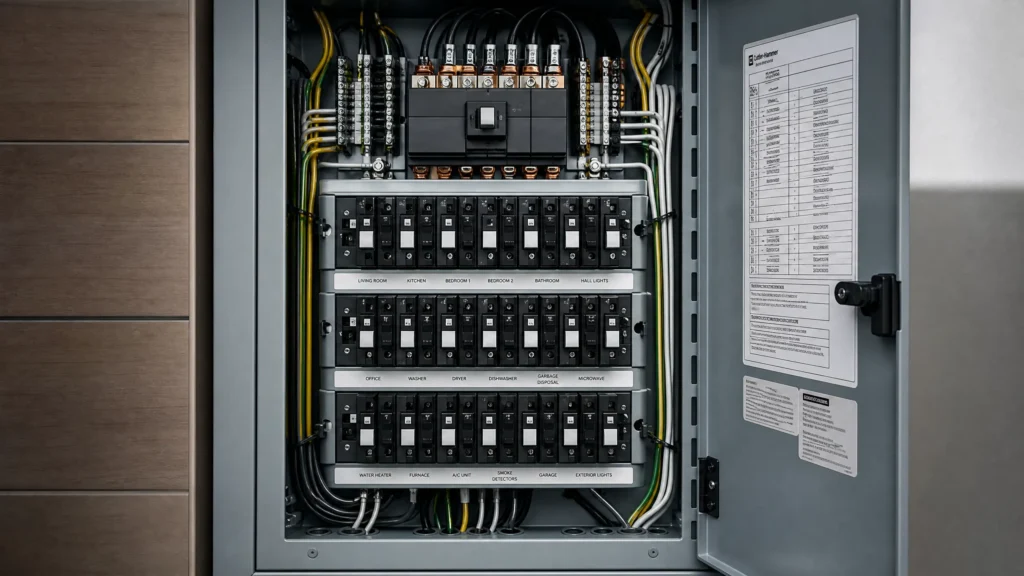
Many homes in North Carolina still use Federal Pacific or Zinsco panels, which are known fire hazards. An Electrical Panel Upgrade is often the first recommendation for improving home safety and meeting the latest NC Electrical Code.
Section 3: Essential Electrical Services for NC Residents
To combat these issues, a range of specialized services is available to ensure your home or business remains powered and safe.
3.1 24/7 Emergency Electrician Services
Electrical failures don’t follow a 9-to-5 schedule. Whether it’s a “Power Outage Repair” in the middle of a storm or a sparking outlet at midnight, having access to a 24/7 Emergency Electrician in cities like Charlotte or Durham is crucial.
3.2 Whole Home Generator Installation
Given the frequency of storms, a Whole Home Generator Install is one of the best investments an NC homeowner can make. These systems kick in automatically during an outage, keeping your HVAC, refrigeration, and medical devices running.
3.3 EV Charger Installation
As North Carolina moves toward a greener future, the demand for EV Charger Installation is skyrocketing in urban centers like Cary and Raleigh. Professional installation ensures your home’s panel can handle the additional load without “Circuit Breaker Tripping.”
3.4 GFCI Outlet Upgrades
The North Carolina State Electrical Code requires GFCI (Ground Fault Circuit Interrupter) outlets in kitchens, bathrooms, and outdoor areas. These devices prevent electrocution by cutting power instantly if a ground fault is detected—a must-have in our humid climate.
Section 4: Navigating the North Carolina State Electrical Code
The North Carolina State Electrical Code is based on the National Electrical Code (NEC) but includes specific state amendments.
4.1 Why the Code Matters
The code exists to provide minimum standards for safety. Following the code prevents:
- Electrical Fires: Proper wire sizing and grounding are essential.
- Insurance Denials: If a fire occurs and the wiring wasn’t up to code, insurance companies may refuse to pay the claim.
- Resale Issues: During a home inspection in Greensboro or Winston-Salem, code violations can stall a sale.
4.2 Recent Updates (2024-2025)
North Carolina is transitioning to newer versions of the building and electrical codes. Staying compliant requires a “Licensed Electrical Contractor” who stays updated on these changes, such as new requirements for AFCI (Arc Fault Circuit Interrupter) protection in residential bedrooms and living areas.

Section 5: Local SEO Focus – Serving North Carolina’s Major Cities
We provide expert electrical solutions tailored to the specific needs of each major North Carolina hub.
5.1 Charlotte Electricians: Powering the Queen City
As the state’s largest city, Charlotte has a mix of historic homes and modern high-rises. We specialize in:
- Commercial Electrical Services for Uptown businesses.
- Residential Electrical Repair for neighborhoods like Myers Park and Dilworth.
5.2 Raleigh & Durham: The Research Triangle
In the tech-heavy Triangle area, we focus on:
- EV Charging Stations for tech-savvy homeowners.
- Electrical Safety Inspections for the many rental properties serving university students.
5.3 Greensboro & Winston-Salem: The Piedmont Triad
These cities have a rich industrial history. Our services include:
- Electrical Panel Upgrades for older industrial-era homes.
- Storm Damage Repair following the frequent thunderstorms in the Piedmont.
5.4 Wilmington & The Coast: Fighting Salt and Storms
Coastal electricity requires special care. We offer:
- Corroded Wiring Replacement due to salt air exposure.
- Hurricane Season Electrical Prep to ensure your home is ready for the next big one.
Section 6: Why You Must Hire a Licensed Electrical Contractor
It might be tempting to try a DIY fix or hire an unlicensed “handyman,” but the risks in North Carolina are too high.
6.1 Safety First
Electricity is unforgiving. A single loose wire can lead to a catastrophic fire. Licensed electricians undergo years of training and testing to ensure they handle high-voltage systems safely.
6.2 Liability and Insurance
A Licensed Electrical Contractor carries insurance. If something goes wrong during the job, you are protected. If an unlicensed worker is injured on your property, you could be held liable.
6.3 Guaranteed Workmanship
Professional electricians stand by their work. Whether it’s a simple “GFCI Outlet Installation” or a complex “Whole Home Rewiring,” you get the peace of mind that the job was done right the first time.
Section 7: Conclusion & Call to Action
Don’t wait for a “Burning Smell from Outlets” or a total “Power Outage” to think about your electrical system. In North Carolina, proactive maintenance is the key to weathering the storms and enjoying a safe, efficient home.
Are you experiencing flickering lights, frequent breaker trips, or planning a major home upgrade?
Our team of expert, licensed electricians is ready to serve you across North Carolina. From Charlotte to Wilmington, we provide the reliable, code-compliant service you deserve.
Call us today at [Insert Phone Number] to schedule your Electrical Safety Inspection or to get a free quote on your next project!
Your safety is our priority. Let us keep your North Carolina home powered and protected.
Appendix: Frequently Asked Questions (FAQ) for NC Homeowners
Q: How often should I have an Electrical Safety Inspection?
A: We recommend an inspection every 3-5 years, or immediately if you move into a home older than 20 years.
Q: Why does my breaker trip when I turn on the microwave and the toaster?
A: This is a classic sign of an overloaded circuit. You likely need a dedicated circuit for your high-draw appliances or an Electrical Panel Upgrade.
Q: Is a permit required for an EV Charger Installation in North Carolina?
A: Yes, most municipalities in NC require a permit and a follow-up inspection to ensure the installation meets the NC Electrical Code.
Q: What should I do if my house floods during a hurricane?
A: Do not turn the power back on. Call an Emergency Electrician to inspect the system. Water and electricity are a deadly combination, and submerged components must often be replaced.
Keywords Targeted: Emergency Electrician, Circuit Breaker Tripping, Burning Smell from Outlets, Flickering Lights, Electrical Panel Upgrade, Power Outage Repair, Corroded Wiring, EV Charger Installation, Whole Home Generator Install, GFCI Outlet Installation, Residential Electrical Repair, Electrical Safety Inspection, Hurricane Season Electrical Prep, High Humidity Electrical Damage, Storm Damage Repair, North Carolina, Charlotte, Raleigh, Greensboro, Durham, Winston-Salem, Fayetteville, Cary, Wilmington, NC Electrical Code.
Section 8: Deep Dive into Electrical Safety for North Carolina Businesses
Commercial electrical needs in North Carolina differ significantly from residential ones. Whether you run a retail shop in SouthPark Mall in Charlotte or a manufacturing facility in the Piedmont Triad, your electrical system is the backbone of your operations.
8.1 Commercial Lighting Retrofits
Many businesses in Raleigh and Durham are switching to LED lighting. This isn’t just about saving energy; it’s about improving the working environment and reducing maintenance costs. A professional “Commercial Electrical Service” can design a lighting plan that meets both aesthetic and functional needs while complying with the latest energy codes.
8.2 Power Quality and Surge Protection
For businesses relying on sensitive electronic equipment—such as data centers in the Research Triangle Park—power quality is paramount. Voltage sags, swells, and surges can cause data loss and equipment failure. We provide industrial-grade surge protection and power conditioning solutions to keep your business running smoothly.
8.3 Emergency and Exit Lighting
Compliance with fire safety codes is non-negotiable. We ensure that your emergency and exit lighting systems are properly installed, tested, and maintained, providing a safe path for employees and customers during a power outage or emergency.
Section 9: The Evolution of the North Carolina Electrical Grid
Understanding where your power comes from can help you make better decisions about your home’s energy use.
9.1 Major Utilities in NC
Most of North Carolina is served by Duke Energy, one of the largest electric power holding companies in the United States. However, many rural areas are served by electric cooperatives. Knowing your provider is the first step in reporting a “Power Outage” and understanding your billing.
9.2 The Rise of Solar Energy
North Carolina is a leader in solar energy production. Many homeowners in Asheville and Wilmington are integrating solar panels with their existing electrical systems. This requires specialized “Electrical Panel Upgrades” and “Grid-Tie Inverters” to ensure safety and efficiency.
9.3 Grid Modernization and Smart Meters
Utilities across the state are installing smart meters to improve grid reliability and provide customers with more data about their energy usage. While these meters are a step forward, they also require that your home’s “Electrical Service Entrance” is in good repair.
Section 10: Seasonal Maintenance Checklist for NC Homeowners
To help you stay ahead of potential issues, we’ve compiled a seasonal maintenance checklist tailored to North Carolina’s climate.
10.1 Spring: Preparing for Storms
- Inspect Outdoor Outlets: Ensure all outdoor outlets have weatherproof covers and are GFCI protected.
- Check Surge Protectors: Replace any surge protectors that have reached their end-of-life.
- Trim Trees: Keep branches away from power lines leading to your home.
10.2 Summer: Managing the Load
- Monitor AC Performance: If your breaker trips when the AC kicks in, call an electrician immediately.
- Check for Humidity Damage: Look for signs of corrosion in your electrical panel, especially if it’s located in a garage or basement.
10.3 Fall: Getting Ready for Winter
- Test Your Generator: Run your “Whole Home Generator” to ensure it’s ready for winter ice storms.
- Inspect Heating Systems: Ensure electric furnaces and space heaters are plugged into appropriate circuits.
10.4 Winter: Staying Safe Indoors
- Avoid Extension Cords: Never use extension cords for high-wattage appliances like space heaters.
- Check Smoke and CO Detectors: Winter is the peak season for house fires; ensure your detectors are working.
Section 11: Understanding Electrical Permits and Inspections in NC
Many homeowners are surprised to learn that even “simple” electrical jobs often require a permit.
11.1 When is a Permit Required?
In North Carolina, a permit is generally required for:
- Installing new circuits.
- Replacing an electrical panel.
- Installing a “Whole Home Generator.”
- Adding an “EV Charging Station.”
11.2 The Inspection Process
Once the work is completed, a local building inspector will visit your property to ensure the work meets the NC Electrical Code. This is an essential safety check that protects you and future owners of the home.
11.3 The Risk of Unpermitted Work
If you have work done without a permit, you may face fines, be required to redo the work, or have trouble selling your home. More importantly, unpermitted work is often unsafe work.
Section 12: Advanced Electrical Technologies for Modern NC Homes
As technology advances, so do the options for your home’s electrical system.
12.1 Smart Home Integration
From smart thermostats to automated lighting, integrating technology into your electrical system can improve convenience and energy efficiency. We specialize in wiring for smart home hubs and ensuring your network is robust enough to handle the load.
12.2 Battery Storage Systems
Pairing solar panels with battery storage (like the Tesla Powerwall) allows you to store energy for use during a “Power Outage.” This is becoming increasingly popular in storm-prone areas of North Carolina.
12.3 High-Efficiency HVAC Wiring
Modern, high-efficiency heat pumps and air conditioners often require specific wiring and breaker sizes. We work with HVAC contractors to ensure your new system has the power it needs to operate at peak efficiency.
Section 13: Case Studies: Electrical Success Stories in North Carolina
13.1 Restoring Power in Wilmington After a Hurricane
Following a major storm, a family in Wilmington found their basement flooded and their electrical system compromised. Our “Emergency Electrician” team arrived quickly, performed a thorough “Electrical Safety Inspection,” replaced the “Corroded Wiring,” and had their power safely restored within 48 hours.
13.2 Upgrading a Historic Home in Raleigh
A homeowner in Raleigh’s historic Oakwood neighborhood wanted to modernize their 100-year-old home. We performed a “Whole Home Rewiring,” upgraded the “Electrical Panel,” and installed “GFCI Outlets” throughout, all while preserving the home’s historic character.
13.3 Powering a New Tech Startup in Durham
A new software company in Durham needed a robust electrical infrastructure for their server room. We designed and installed a custom commercial system with redundant power supplies and advanced surge protection, ensuring 100% uptime for their operations.
Section 14: Detailed Breakdown of Electrical Services by City
To better serve our North Carolina community, we’ve tailored our services to the specific infrastructure and needs of each major city.
14.1 Charlotte: The Financial and Energy Hub
Charlotte isn’t just the largest city in NC; it’s a major center for the energy industry.
- Residential Services in Myers Park & South End: We handle everything from historic home rewiring to modern loft lighting.
- Commercial Services in Uptown: High-rise electrical maintenance and office build-outs are our specialty.
- Industrial Services in the I-77 Corridor: We provide heavy-duty electrical solutions for warehouses and distribution centers.
14.2 Raleigh: The City of Oaks and Innovation
As part of the Research Triangle, Raleigh demands high-tech electrical solutions.
- EV Charging Infrastructure: We are the leading installers of Level 2 chargers in North Hills and Brier Creek.
- Smart Home Upgrades: Integrating advanced automation for the tech-savvy residents of the Triangle.
- University Housing Safety: Specialized inspections for student housing near NC State.
14.3 Greensboro: The Gate City
Greensboro’s mix of traditional manufacturing and new logistics hubs requires a versatile electrical partner.
- Panel Upgrades for Mid-Century Homes: Many homes in neighborhoods like Lindley Park are ready for a modern “Electrical Panel Upgrade.”
- Warehouse Lighting & Power: Supporting the logistics industry with efficient LED retrofits and high-voltage power systems.
14.4 Durham: The Bull City
Durham’s revitalization of old tobacco warehouses into tech hubs and luxury condos presents unique electrical challenges.
- Adaptive Reuse Projects: Wiring historic structures for modern commercial use.
- Medical & Lab Electrical: Providing precision power for the many biotech firms near Duke University.
14.5 Winston-Salem: The Twin City
From the historic Old Salem to the modern Innovation Quarter, Winston-Salem is a city of contrasts.
- Historic Preservation Wiring: Using specialized techniques to update electrical systems without damaging historic fabric.
- Healthcare Electrical Services: Supporting the major medical centers with reliable backup power and specialized equipment wiring.
14.6 Fayetteville: Home of Fort Liberty
Serving the military community requires efficiency and reliability.
- Rental Property Maintenance: Quick-turnaround repairs for property managers serving military families.
- Security Lighting: Enhancing safety for homes and businesses with advanced outdoor lighting solutions.
14.7 Wilmington: The Port City
Coastal living requires a different approach to electricity.
- Salt-Air Corrosion Mitigation: Using specialized materials to protect outdoor electrical components from the harsh coastal environment.
- Storm Surge Recovery: Expert assessment and repair of flood-damaged electrical systems.
Section 15: Technical Guide: Understanding Your Home’s Electrical Components
For the curious homeowner, here is a deeper look at the parts that make up your electrical system.
15.1 The Service Entrance
This is where the utility company’s wires connect to your home. It includes the meter socket and the main service cable. In North Carolina, these are often exposed to high winds and should be inspected regularly for damage.
15.2 The Main Distribution Panel
Often called the “breaker box,” this is the heart of your system. It takes the main power and divides it into individual circuits. If your panel is more than 30 years old, it may not have the capacity for modern life.
15.3 Branch Circuits
These are the wires that run from the panel to your outlets, lights, and appliances. We use different gauges of wire depending on the load—for example, a heavy-duty 10-gauge wire for a water heater versus a 14-gauge wire for a bedroom light.
15.4 Grounding and Bonding
This is the most critical safety feature of your system. It provides a safe path for electricity to follow in the event of a fault, preventing shocks and fires. Our “Electrical Safety Inspection” always includes a thorough check of your home’s grounding system.
Section 16: The Importance of Arc Fault Circuit Interrupters (AFCI)
While most people know about GFCI outlets, AFCI protection is equally important and now required by the NC Electrical Code for most areas of the home.
16.1 What is an Arc Fault?
An arc fault occurs when electricity “jumps” between damaged wires or loose connections. This creates intense heat that can easily start a fire inside your walls.
16.2 How AFCI Breakers Work
Unlike a standard breaker that only trips during an overload, an AFCI breaker uses advanced electronics to “listen” for the specific signature of an arc fault and shuts off the power before a fire can start.
16.3 Retrofitting Older Homes
If your home was built before 2000, it likely doesn’t have AFCI protection. We can upgrade your panel with AFCI breakers to provide a massive boost to your home’s fire safety.
Section 17: Electrical Planning for Home Renovations
If you’re planning a kitchen remodel or a basement finish in Cary or Apex, the electrical plan should be your first priority.
17.1 Kitchen Remodels: The Most Power-Hungry Room
Modern kitchens require multiple dedicated circuits for the refrigerator, dishwasher, microwave, and small appliances. We ensure your new kitchen meets the latest code requirements for outlet spacing and GFCI protection.
17.2 Basement Finishes: Safety and Comfort
Finishing a basement requires careful planning for lighting, outlets, and potentially a sub-panel if your main panel is full. We also ensure all wiring is protected from moisture, a common issue in North Carolina basements.
17.3 Outdoor Living Spaces: Powering Your Oasis
From hot tubs to outdoor kitchens and landscape lighting, we help you extend your living space safely into the outdoors.
Section 18: Troubleshooting Common Electrical Problems (A Homeowner’s Guide)
Before you call an “Emergency Electrician,” here are a few things you can check yourself.
18.1 The “Half-Power” Mystery
If half the lights in your house are out but the other half are working, you may have lost one “leg” of your 240V service. This is often a utility company issue, but it can also be a failure in your main breaker.
18.2 The Mystery of the Non-Working Outlet
If an outlet stops working, check for a tripped GFCI outlet nearby. Often, one GFCI outlet protects several standard outlets “downstream.” Press the “Reset” button to see if power returns.
18.3 The Humming Breaker
If you hear a humming or buzzing sound coming from your electrical panel, this is a serious warning sign. It indicates a loose connection or a failing breaker. Do not attempt to fix this yourself; call a professional immediately.
Section 19: The Future of Electricity in North Carolina
As we look toward 2030 and beyond, the way we use and generate electricity in the Tar Heel State is changing rapidly.
19.1 The Transition to Clean Energy
North Carolina has set ambitious goals for carbon reduction. This means more wind and solar power on the grid, and more homeowners looking for ways to reduce their carbon footprint. We provide energy audits and help you transition to high-efficiency electrical systems.
19.2 The Impact of Artificial Intelligence on the Grid
Utilities are using AI to predict power outages and manage demand more effectively. In the future, your “Smart Home” may communicate directly with the grid to save you money by running appliances when electricity is cheapest.
19.3 Preparing for the “All-Electric” Home
With the rise of electric heat pumps, water heaters, and vehicles, the demand on home electrical systems is higher than ever. We help you prepare for this future with “Electrical Panel Upgrades” and robust wiring solutions.
Section 20: Comprehensive Electrical Safety for Property Managers
If you manage rental properties in Charlotte, Raleigh, or Greensboro, you have a legal and ethical responsibility to ensure the safety of your tenants.
20.1 Annual Safety Audits
We partner with property managers to provide annual electrical safety audits. This helps identify potential issues before they become emergencies, saving you money and protecting your tenants.
20.2 Rapid Response for Tenant Emergencies
When a tenant reports a “Burning Smell from Outlets” or a “Power Outage,” you need a partner who can respond quickly. Our “24/7 Emergency Electrician” services are designed for the fast-paced world of property management.
20.3 Code Compliance and Liability Protection
Ensuring your properties meet the latest NC Electrical Code is the best way to protect yourself from liability in the event of an electrical fire.
Section 21: Industrial Electrical Services: Supporting NC’s Economy
From the furniture factories of High Point to the pharmaceutical plants of Research Triangle Park, North Carolina’s industry relies on heavy-duty electrical systems.
21.1 High-Voltage Power Distribution
We design and maintain high-voltage systems for industrial facilities, ensuring a steady and reliable power supply for critical machinery.
21.2 Motor Controls and Automation
Our industrial electricians are experts in motor control centers (MCCs) and programmable logic controllers (PLCs), the brains behind modern manufacturing.
21.3 Preventive Maintenance for Industry
In a factory, downtime is incredibly expensive. Our preventive maintenance programs use thermal imaging and other advanced tools to identify failing components before they cause a shutdown.
Section 22: The Role of Lighting in Home Security
A well-lit home is a safer home. We provide advanced security lighting solutions for homeowners across North Carolina.
22.1 Motion-Activated Lighting
Motion sensors are a simple and effective way to deter intruders. We can install them around your home’s perimeter, ensuring that any movement is met with a bright light.
22.2 Smart Security Lighting
Integrate your outdoor lights with your home security system. Have your lights flash if an alarm is triggered, or control them remotely from your smartphone while you’re on vacation.
22.3 Landscape Lighting for Safety and Beauty
Properly designed landscape lighting doesn’t just make your home look great; it also eliminates dark spots where intruders could hide and provides safe passage along walkways and stairs.
Section 23: Understanding Electrical Insurance Claims in NC
If you do experience electrical damage due to a storm or fire, navigating the insurance process can be daunting.
23.1 Documenting the Damage
Our electricians provide detailed reports and photos of electrical damage, which are essential for your insurance claim.
23.2 Working with Adjusters
We can meet with your insurance adjuster to explain the technical aspects of the damage and ensure that the cost of a code-compliant repair is covered.
23.3 The Importance of “Code Upgrade” Coverage
Many insurance policies include coverage for “Law and Ordinance,” which pays for the extra cost of bringing an older system up to the current NC Electrical Code during a repair. We help you understand if your policy includes this vital protection.
Section 24: Electrical Safety for Seniors and Vulnerable Residents
Ensuring the safety of our most vulnerable neighbors is a priority for us.
24.1 Simplifying the System
For seniors, we can install easy-to-use rocker switches and ensure that all outlets are at a comfortable height.
24.2 Medical Equipment Reliability
If a resident relies on medical equipment like an oxygen concentrator, a “Whole Home Generator” or a dedicated battery backup is a life-saving necessity.
24.3 Identifying “Scam” Contractors
Unfortunately, seniors are often targeted by unscrupulous contractors. We provide transparent pricing and are always happy to explain our work to family members or caregivers.
Section 25: The Environmental Impact of Your Electrical System
Reducing your energy usage isn’t just good for your wallet; it’s good for North Carolina’s environment.
25.1 The Benefits of LED Lighting
Switching to LED lighting can reduce your lighting energy use by up to 80%. In a large home or business, this adds up to significant savings and a smaller carbon footprint.
25.2 Energy-Efficient Appliances
We can help you calculate the “payback period” for upgrading to high-efficiency appliances, showing you how much you’ll save over the life of the product.
25.3 Smart Power Strips and “Phantom Loads”
Many electronics draw power even when they’re turned off. We can show you how to use smart power strips to eliminate these “phantom loads” and save money every month.
Section 26: Final Thoughts: Your Partner in Electrical Excellence
We’ve covered a lot of ground in this guide, from the challenges of North Carolina’s climate to the technical details of your home’s wiring. The key takeaway is simple: Your electrical system is too important to leave to chance.
Whether you’re in Charlotte, Raleigh, Greensboro, or anywhere else in our great state, you deserve an electrical partner you can trust. A partner who knows the NC Electrical Code, understands the local challenges, and is committed to your safety and satisfaction.
Don’t wait for a crisis. Take control of your home’s electrical health today.
Call us at [Insert Phone Number] for a comprehensive Electrical Safety Inspection. Let’s work together to keep North Carolina bright, safe, and powered for generations to come.
Keywords Targeted: Emergency Electrician, Circuit Breaker Tripping, Burning Smell from Outlets, Flickering Lights, Electrical Panel Upgrade, Power Outage Repair, Corroded Wiring, EV Charger Installation, Whole Home Generator Install, GFCI Outlet Installation, Residential Electrical Repair, Electrical Safety Inspection, Hurricane Season Electrical Prep, High Humidity Electrical Damage, Storm Damage Repair, North Carolina, Charlotte, Raleigh, Greensboro, Durham, Winston-Salem, Fayetteville, Cary, Wilmington, NC Electrical Code.
Section 27: Neighborhood-Specific Electrical Insights in NC
To provide even more value, let’s look at the specific electrical characteristics of some of North Carolina’s most popular neighborhoods.
27.1 Charlotte: From Historic Dilworth to Modern Ballantyne
- Dilworth & Elizabeth: These historic neighborhoods often feature “Knob and Tube” or early “Cloth-Jacketed” wiring. We specialize in sensitive upgrades that bring these homes up to code without damaging their architectural integrity.
- Ballantyne: As a newer area, the focus here is on “Smart Home Integration” and “EV Charger Installation” to support the modern lifestyle of its residents.
- NoDa & Plaza Midwood: The conversion of old industrial spaces into lofts requires expert knowledge of “Commercial Electrical Services” and adaptive reuse codes.
27.2 Raleigh: The Mix of Old and New
- Oakwood: Similar to Dilworth, Oakwood requires a delicate touch for its historic electrical systems.
- North Hills: This rapidly growing area is a hub for “EV Charging Stations” and high-end residential electrical upgrades.
- Brier Creek: With its proximity to the airport and tech hubs, reliable power and advanced surge protection are top priorities for homeowners here.
27.3 Greensboro: The Heart of the Piedmont
- Fisher Park: A beautiful historic district where we often perform “Electrical Panel Upgrades” to support modern appliances in older homes.
- Starmount Forest: Many homes here were built in the mid-20th century and may still have “Aluminum Wiring,” which requires specialized “AlumiConn” or “CO/ALR” connections for safety.
Section 28: Comprehensive Glossary of Electrical Terms for NC Homeowners
To help you communicate more effectively with your electrician, here is a detailed glossary of terms you might encounter.
- AFCI (Arc Fault Circuit Interrupter): A safety device designed to detect dangerous electrical arcs and shut off power before a fire starts.
- Amperage (Amps): The measure of the flow of electrical current. Most modern homes have a 200-amp service.
- Bonding: The practice of connecting all metal parts of an electrical system together to ensure they are at the same electrical potential, reducing the risk of shock.
- Circuit Breaker: A switch that automatically shuts off power if a circuit becomes overloaded or experiences a short circuit.
- Conduit: A tube (metal or plastic) used to protect and route electrical wiring.
- GFCI (Ground Fault Circuit Interrupter): A device that protects against electrocution by detecting small leaks of current and shutting off power instantly.
- Grounding: Connecting an electrical system to the earth to provide a safe path for fault current.
- Junction Box: A protective box where electrical wires are joined together.
- Kilowatt-Hour (kWh): The unit of energy used by utility companies to measure your electricity consumption.
- Load Center: Another name for your main electrical panel or breaker box.
- Lumens: A measure of the total amount of visible light emitted by a source. Use this instead of watts to compare LED bulbs.
- NEC (National Electrical Code): The standard for safe electrical installation in the United States, which forms the basis of the NC Electrical Code.
- Ohms: The measure of electrical resistance.
- Panel Schedule: The list (usually found on the inside of the panel door) that identifies which breaker controls which part of the house.
- Service Drop: The overhead wires that run from the utility pole to your home.
- Short Circuit: An accidental path of low resistance that causes an excessive flow of current, usually tripping a breaker.
- Sub-panel: A smaller electrical panel that is fed from the main panel, often used for additions or workshops.
- Surge Protector: A device that protects electronics from sudden spikes in voltage.
- Voltage (Volts): The measure of electrical pressure. Most outlets in your home are 120V, while large appliances use 240V.
- Wattage (Watts): The measure of electrical power (Volts x Amps = Watts).
Section 29: Why North Carolina Residents Choose Us
When you’re looking for an “Emergency Electrician” or planning a major project, you have many choices. Here is why we are the preferred electrical partner for thousands of families across the state.
29.1 Local Expertise
We don’t just work in North Carolina; we live here. We understand the humidity, the storms, and the local building codes better than anyone else.
29.2 Transparent Pricing
We believe in “No Surprises” pricing. You’ll receive a detailed quote before any work begins, and we’ll explain exactly what you’re paying for.
29.3 Commitment to Safety
Safety isn’t just a buzzword for us; it’s our core mission. We never cut corners, and we always ensure our work meets or exceeds the NC Electrical Code.
29.4 24/7 Availability
We know that electrical emergencies don’t wait for business hours. Our team is standing by around the clock to keep your family safe and your lights on.
29.5 Highly Trained Professionals
Our electricians are licensed, bonded, and insured. They undergo continuous training to stay updated on the latest technologies and code changes.
Section 30: How to Get Started with Your Electrical Upgrade
Ready to take the next step? Here is our simple process for getting your project off the ground.
- Initial Consultation: Call us at [Insert Phone Number] to discuss your needs. We’ll provide some initial guidance and schedule a site visit.
- On-Site Assessment: One of our expert electricians will visit your home or business to perform a thorough inspection and take measurements.
- Detailed Proposal: We’ll provide a written quote that includes the scope of work, materials, and timeline.
- Permitting and Planning: We handle all the paperwork, including obtaining the necessary permits from your local building department.
- Expert Installation: Our team will perform the work efficiently, with minimal disruption to your daily life.
- Final Inspection: We’ll coordinate with the local inspector to ensure everything is up to code and provide you with a final walkthrough.
Don’t let electrical worries keep you up at night. Contact North Carolina’s most trusted electrical team today!
Keywords Targeted: Emergency Electrician, Circuit Breaker Tripping, Burning Smell from Outlets, Flickering Lights, Electrical Panel Upgrade, Power Outage Repair, Corroded Wiring, EV Charger Installation, Whole Home Generator Install, GFCI Outlet Installation, Residential Electrical Repair, Electrical Safety Inspection, Hurricane Season Electrical Prep, High Humidity Electrical Damage, Storm Damage Repair, North Carolina, Charlotte, Raleigh, Greensboro, Durham, Winston-Salem, Fayetteville, Cary, Wilmington, NC Electrical Code.
Section 31: The Importance of Preventative Maintenance for NC Commercial Properties
For business owners in North Carolina, electrical failure isn’t just an inconvenience—it’s a direct threat to your bottom line. Whether you’re managing a retail space in SouthPark or a tech firm in Research Triangle Park, a proactive approach to electrical maintenance is essential.
31.1 Thermal Imaging Inspections
We use advanced infrared cameras to “see” heat that is invisible to the naked eye. This allows us to identify loose connections, overloaded circuits, and failing components before they cause a fire or a costly shutdown. This is a non-invasive way to ensure the health of your “Commercial Electrical Services.”
31.2 Switchgear and Transformer Maintenance
The heavy-duty components of your commercial electrical system require regular cleaning, lubrication, and testing. We provide comprehensive maintenance programs for switchgear, transformers, and large distribution panels, ensuring they operate at peak efficiency and reliability.
31.3 Power Factor Correction
If your business uses a lot of inductive loads (like motors and transformers), you may be paying “reactive power” penalties to your utility company. We can install power factor correction capacitors that improve your system’s efficiency and lower your monthly energy bills.
Section 32: Summary: Your Roadmap to Electrical Safety in North Carolina
As we conclude this giant guide, let’s recap the most important steps you can take to protect your home or business in the Tar Heel State.
- Respect the Climate: Understand that North Carolina’s humidity and storms are constant threats to your electrical system.
- Know the Warning Signs: Never ignore flickering lights, tripping breakers, or a burning smell. These are calls for help from your home.
- Invest in Protection: Consider a “Whole Home Generator” and “Whole Home Surge Protection” to weather the storms.
- Stay Up to Code: Ensure all work is performed by a licensed professional and meets the latest NC Electrical Code.
- Be Proactive: Schedule an “Electrical Safety Inspection” every few years to catch issues early.
North Carolina is a beautiful place to live and work, and with a safe, reliable electrical system, you can enjoy everything our state has to offer with peace of mind.
Call us today at [Insert Phone 866-227-8161] and let’s make sure your North Carolina home is powered for the future!