
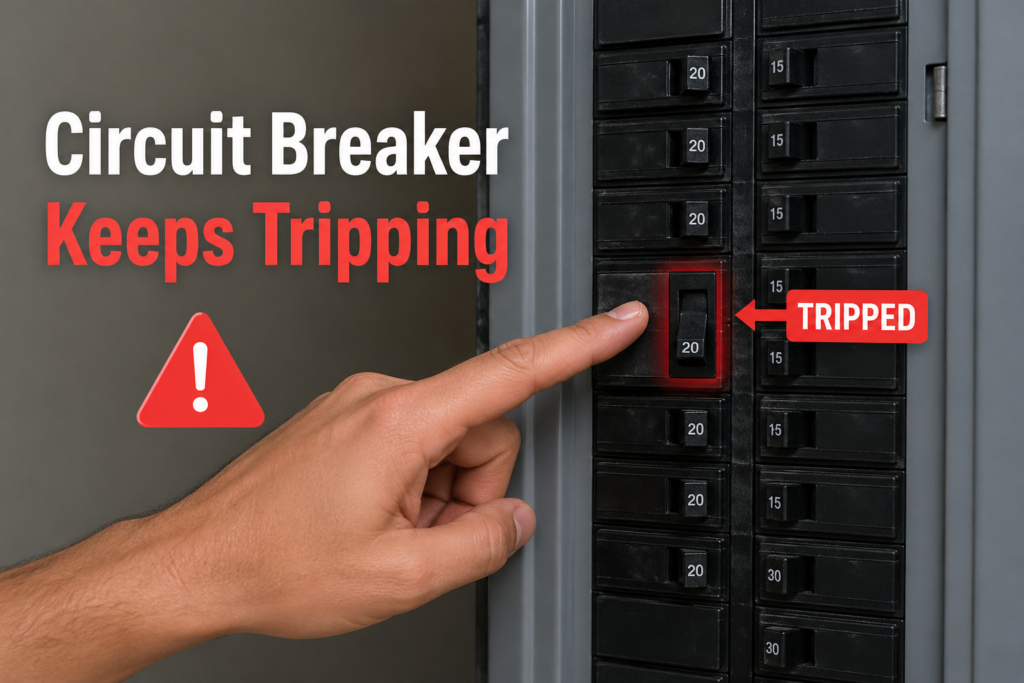
If your circuit breaker keeps tripping, you’re not alone—and it’s not something to ignore. A tripping breaker is your home’s warning system, cutting power to prevent electrical fires, equipment damage, and shock hazards. This comprehensive guide explains exactly why breakers trip, how to troubleshoot safely, and when to call a licensed electrician before a small problem becomes a dangerous emergency
.If your circuit breaker keeps tripping with nothing plugged in,
you may have a more serious electrical issue.
Table of Contents
- What It Means When Your Breaker Keeps Tripping
- Top 8 Reasons Your Circuit Breaker Keeps Tripping
- How to Troubleshoot a Tripping Breaker Step-by-Step
- Is a Tripping Breaker Dangerous? Fire & Shock Risks
- DIY Fixes vs. When to Call an Electrician
- Circuit Breaker Replacement Cost in 2026
- How to Prevent Future Breaker Trips
- FAQ
What It Means When Your Breaker Keeps Tripping what-it-means}
A circuit breaker is designed to protect your home by cutting power when something isn’t right. Normally, breakers trip because you’ve plugged in too many devices—this is called an overload. But when your circuit breaker keeps tripping repeatedly, even after you reset it, the problem lies deeper in your electrical system .
Your breaker is actually doing its job—but the underlying fault needs immediate attention. Unlike a one-time trip where you simply unplug a device and reset, frequent tripping signals one of these serious issues:
- A short circuit in your wall wiring
- A ground fault causing current leakage
- A faulty or worn-out breaker
- Damaged or aging electrical wiring
- Loose connections in outlets, switches, or the panel
According to electrical safety experts, “A tripping breaker without visible loads usually signals a hidden electrical problem” . The key difference: occasional trips are normal; repeated trips are a cry for help from your electrical system.
Top 8 Reasons Your Circuit Breaker Keeps Tripping top-reasons}
1. Overloaded Circuit (Most Common)
An overloaded circuit occurs when electrical demand exceeds the breaker’s rated capacity—typically 15 or 20 amps for residential circuits . This happens when too many devices draw power simultaneously, causing the breaker to heat up and trip as a protective measure.
Common overload scenarios:
- Running a microwave (10 amps), toaster oven (8 amps), and coffee maker (6 amps) on the same 15-amp circuit
- Using space heaters, hair dryers, or air conditioners with other high-draw devices
- Daisy-chaining power strips and extension cords
- Home offices with computers, printers, and monitors on a single circuit
Think of your circuit breaker like a traffic control system. Each circuit can handle a specific amount of electrical “traffic.” When you plug in that space heater while the microwave and coffee maker are already running, you’ve created an electrical traffic jam .
Signs of overload:
- Breaker trips only when specific devices operate together
- The breaker feels warm but resets normally after cooling
- Lights dim slightly when appliances start
- Problems occur during high-use periods (mornings, meal prep times)
2. Short Circuit
A short circuit occurs when a hot wire comes into direct contact with a neutral wire, creating a low-resistance path that causes massive current flow . Unlike overloads that develop gradually, short circuits happen suddenly and dramatically.
Warning signs of short circuits:
- ⚠️ Burning or acrid smell near outlets or switches
- ⚠️ Visible scorch marks or blackening around electrical components
- ⚠️ Breaker trips immediately upon reset
- ⚠️ Buzzing or crackling sounds from outlets
- ⚠️ Warm or hot outlet covers
Short circuits commonly result from damaged wire insulation, whether from age, pests, physical damage, or poor installation. In older homes, brittle insulation crumbles away, allowing bare conductors to touch. Rodents chewing through wiring create similar hazards, particularly in attics and wall cavities .
3. Ground Fault
Similar to a short circuit, a ground fault occurs when a hot wire touches a grounded part of the system—like the metal housing of an appliance or the ground wire itself . These faults are especially dangerous in wet areas like kitchens, bathrooms, and outdoor spaces.
Why ground faults are dangerous:
- Electricity finds an unintended path to ground through water or moisture
- Can cause severe electrical shock
- GFCI outlets and breakers detect these faults and shut off power within milliseconds
Many circuits are protected by Ground Fault Circuit Interrupters (GFCIs), which offer added protection in these situations .
4. Arc Fault
Arc faults develop when loose connections or damaged wire insulation create electrical arcing between conductors . These dangerous arcs generate excessive heat and pose significant fire hazards.
Modern protection:
- Arc Fault Circuit Interrupters (AFCIs) detect these conditions
- Required by code in most living areas since 1999
- “Listen” for the electrical signature of dangerous arcing
5. Faulty or Worn-Out Breaker
Sometimes the breaker itself is the problem. Circuit breakers are mechanical devices that wear out over time—especially if they’ve been tripping frequently .
Signs of a bad breaker:
- Trips even with minimal or no load
- Feels warm or hot to the touch
- Buzzing or humming sound from the panel
- Won’t stay in the ON position
- Breaker is more than 20-30 years old
Important: Never replace a breaker with a higher amperage rating than the wire can handle. For example, if you have 14-gauge wire, you must use a 15-amp breaker. Using a 20-amp breaker on 14-gauge wire is a code violation and fire hazard .
6. Damaged or Aging Wiring
If your home is more than 30 years old and hasn’t had an electrical upgrade, your wiring may be deteriorating .
Types of problematic wiring in older homes:
- Knob-and-tube wiring (pre-1950s): No ground wire, brittle insulation
- Aluminum wiring (1960s-1970s): Prone to loose connections and overheating
- Cloth-insulated wiring: Deteriorates and becomes a fire hazard
Signs of bad wiring:
- Flickering lights throughout the house
- Outlets that feel warm
- Discolored outlet covers
- Burning plastic smell
- Frequent breaker trips with no apparent cause
7. Loose Electrical Connections
Loose connections create electrical resistance, which generates heat. Your breaker detects this heat and trips as a safety measure .
Where loose connections occur:
- Inside the electrical panel (breaker terminals)
- At outlet back-stab connections
- Wire nuts in junction boxes
- Switch terminals
8. Faulty Appliances
Sometimes the culprit is a single malfunctioning appliance. Frayed cords, internal shorts, or old components can cause a trip every time you try to use them .
How to identify:
- Unplug all devices and reset the breaker
- Plug devices back in one at a time
- If a specific appliance causes the trip, that device is faulty
How to Troubleshoot a Tripping Breaker Step-by-Step {#troubleshooting}
⚠️ SAFETY FIRST: If you smell burning, see sparks, or the breaker trips immediately upon resetting, stop and call a licensed electrician. Do not open your electrical panel unless you are trained.
Step 1: Unplug Everything
Disconnect every device, appliance, and charger from all outlets on the tripping circuit. This includes “invisible” loads like hardwired fixtures.
Step 2: Reset the Breaker
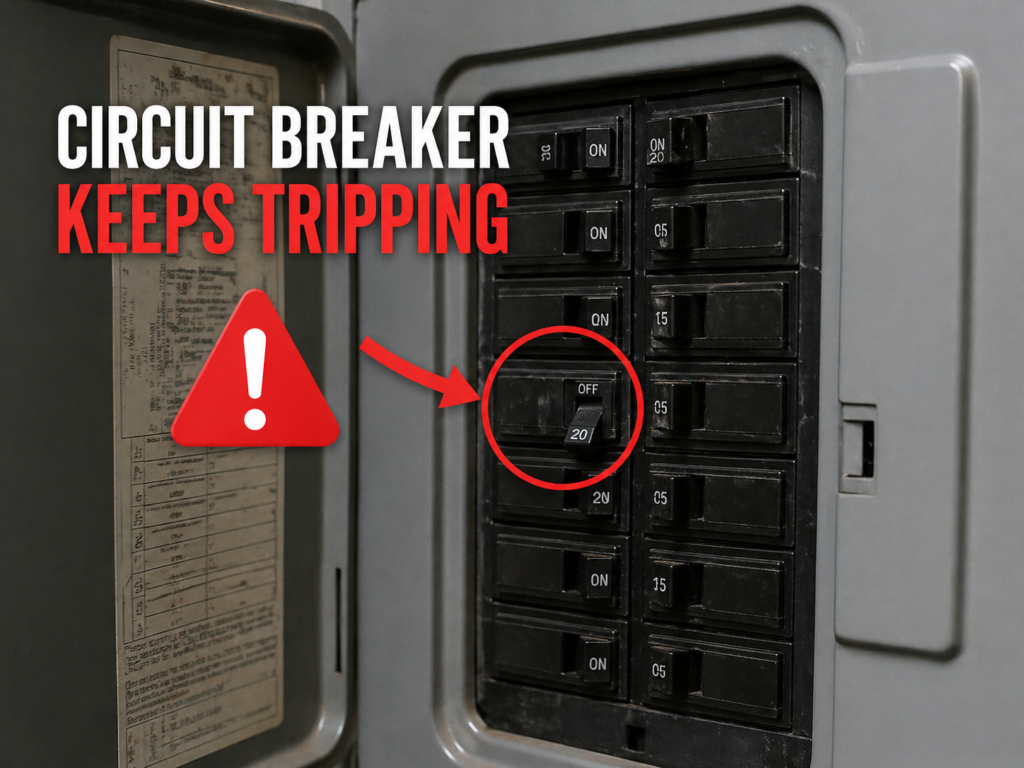
Find your electrical panel, usually in the basement, garage, or utility room. Identify the tripped breaker—it’s typically in the middle position or clearly marked “OFF.” Firmly push it to the “OFF” position first, then flip it back to “ON” .
Step 3: Test One Device at a Time
If the breaker stays on, plug devices back in one at a time. If a specific device causes the trip, that appliance is faulty.
Step 4: Check for Visible Damage
Inspect outlets and switches for:
- Burn marks or discoloration
- Warm or hot surfaces
- Buzzing sounds
- Loose outlet covers
Step 5: Calculate Your Electrical Load
Add up the wattage of devices on the circuit. A typical 15-amp circuit can safely handle about 1,440 watts (80% of its 1,800-watt capacity) . If you’re exceeding this, redistribute devices to other circuits.
Step 6: Know When to Stop
Never open your breaker panel or attempt wiring repairs unless you’re trained. Electrical troubleshooting is best left to a pro when there’s any doubt .
Is a Tripping Breaker Dangerous? Fire & Shock Risks {#is-it-dangerous}
Yes, a repeatedly tripping breaker can be dangerous. Here’s why:
| Risk | Cause | Consequence |
|---|---|---|
| Electrical Fire | Overheated wires from overloads or short circuits | 51,000 building fires annually from electrical failures |
| Electrocution | Ground faults in wet areas | Severe injury or death |
| Equipment Damage | Power surges from short circuits | Destroyed appliances and electronics |
| System Failure | Aging panel or breakers | Complete loss of power |
Warning signs that require immediate professional attention:
- Burning smell from outlets or panel
- Scorch marks or discoloration
- Breaker feels hot to the touch
- Buzzing, crackling, or humming sounds
- Breaker trips immediately after resetting
If you notice any of these signs, don’t wait. Continuing to reset a tripping breaker without addressing the cause can increase the risk of shock, fire hazard, or further damage .
DIY Fixes vs. When to Call an Electrician {#diy-vs-pro}
✅ Safe DIY Steps:
- Unplug devices and reset the breaker
- Redistribute electrical loads across circuits
- Identify and remove faulty appliances
- Test GFCI outlets monthly
❌ Never DIY:
- Opening the electrical panel
- Replacing breakers or wiring
- Handling burning smells or sparks
- Working on circuits that trip immediately
🚨 Call an Electrician Immediately If:
- The breaker trips immediately after being reset
- There’s a burning smell, warmth, or discoloration near outlets or the panel
- You’ve unplugged everything, and it still trips
- You hear buzzing, crackling, or see sparks
- Your home has aluminum or cloth wiring
- The breaker has already been replaced and still trips
Why hire a professional?
Licensed electricians have the tools and training needed to find and fix the issue safely. They use infrared scanners to detect heat buildup behind walls, voltage and load testers to measure current flow, and insulation testers to check for damaged wires .
Circuit Breaker Replacement Cost in 2026 {#cost-2026}
Understanding costs helps you budget for electrical repairs. Here’s what to expect:
| Service | Cost Range | When Needed |
|---|---|---|
| Diagnostic Visit | $150-$200 | Initial inspection and troubleshooting |
| Standard Repair | $200-$350 | Minor wiring fixes, outlet replacement |
| Breaker Replacement | $150-$300 per breaker | Faulty or worn-out breaker |
| Panel Upgrade | $1,500-$4,000 | Outdated or undersized panel |
| Full Rewiring | $3,000-$10,000+ | Old or damaged wiring throughout home |
Factors affecting cost:
- Home size and age
- Panel location and accessibility
- Local permit requirements
- Extent of wiring damage
- Number of circuits needed
Pro tip: Get 3 estimates from licensed electricians. The cheapest option isn’t always the safest .
How to Prevent Future Breaker Trips {#prevention}
1. Balance Your Electrical Load
- Spread high-demand appliances across multiple circuits
- Avoid running space heaters, microwaves, and hair dryers simultaneously
- Use dedicated circuits for large appliances (washer, dryer, AC)
2. Upgrade Outdated Systems
- Replace fuse boxes with modern circuit breaker panels
- Install AFCI and GFCI protection where required
- Add circuits if your panel has room
3. Regular Maintenance
- Test GFCI outlets monthly using the test/reset buttons
- Schedule electrical inspections every 3-5 years
- Replace aging breakers before they fail
4. Avoid Common Mistakes
- Don’t daisy-chain power strips
- Never use extension cords as permanent wiring
- Don’t ignore frequent trips—address the root cause
FAQ
Why does my circuit breaker keep tripping?
When your circuit breaker keeps tripping, it often points to an overloaded circuit, short circuit, or ground fault. It can also indicate faulty appliances or wiring that needs attention. Ignoring repeated trips can lead to more serious electrical hazards .
Is it dangerous if a circuit breaker keeps tripping?
Yes, it is dangerous. Frequent trips can be a sign of overheating or electrical faults, which could lead to fires if not addressed. A licensed electrician can safely diagnose and resolve the problem .
How do I reset a tripped breaker?
Locate your electrical panel and identify the switch that’s in the off position or middle. Firmly push it to the off position before flipping it back on. If it trips again immediately, call an electrician .
Can I fix a tripping breaker myself?
You may be able to fix simple overloads by redistributing devices. However, you should never attempt wiring repairs or panel work on your own. These require professional expertise to ensure safety .
How much does it cost to fix a breaker that keeps tripping?
The cost ranges from $150 for a simple diagnostic visit to $350 for standard repairs. If you need a full electrical panel replacement, costs can range from $1,500 to $4,000 depending on your home’s size and location.
Should I upgrade my electrical panel if breakers keep tripping?
You should consider upgrading if your panel is old, undersized, or if you’ve added major appliances. A licensed electrician can assess whether your current system meets your home’s needs .
When to Call a Professional
If your circuit breaker keeps tripping despite following these troubleshooting steps, don’t risk your family’s safety by continuing to reset it repeatedly. A licensed electrician can provide a comprehensive evaluation, identifying whether the issue is a simple fix or indicative of a deeper concern .
For 24/7 emergency electrical service, call a licensed electrician in your area. Don’t wait until a small problem becomes a dangerous emergency.
Internal Links (Placeholders — Create These Articles Next):
Why does my circuit breaker keep tripping?
Is it dangerous if a circuit breaker keeps tripping?
How do I reset a tripped breaker?
Can I fix a tripping breaker myself?
How much does it cost to fix a breaker that keeps tripping?
- Why Is My Circuit Breaker Hot to Touch? — Learn the warning signs of overheating breakers and when to call an electrician.
- Circuit Breaker Replacement Cost Guide — Detailed pricing for breaker and panel upgrades in 2026.
- Signs of a Faulty Electrical Panel — How to identify when your entire panel needs replacement.
- Emergency Electrician Near Me — Find licensed electricians available 24/7 for urgent repairs.
- GFCI Outlet Keeps Tripping — Troubleshooting ground fault issues in kitchens and bathrooms.