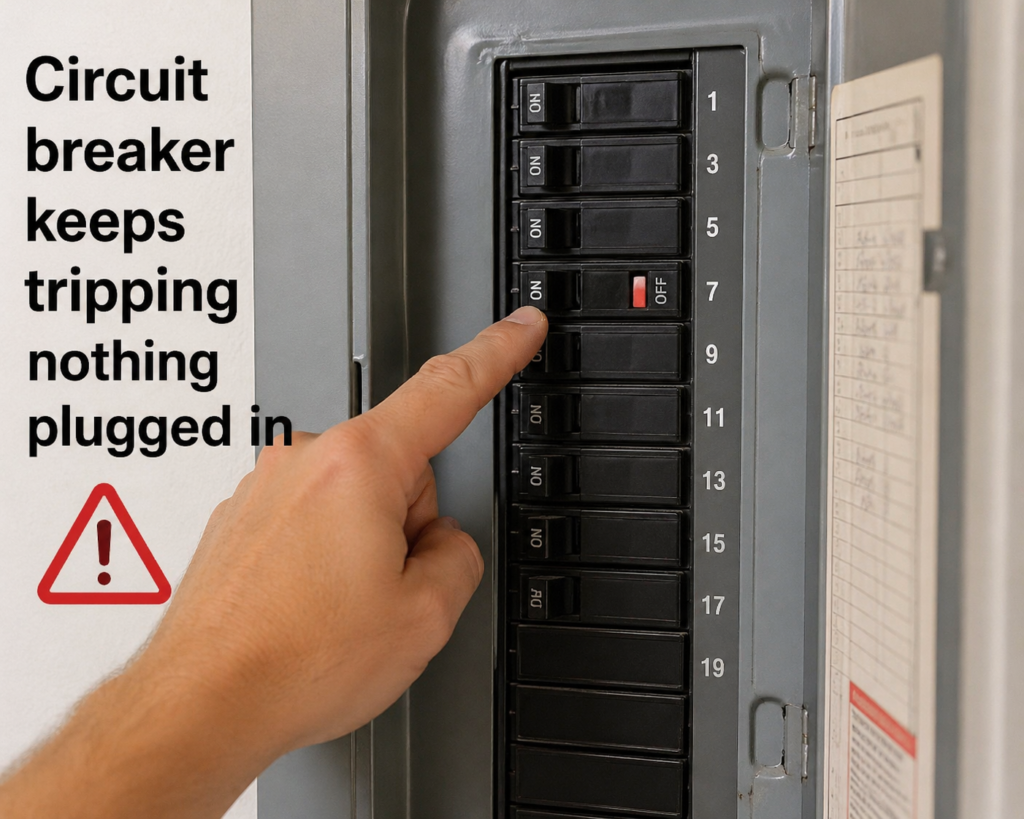
If your circuit breaker keeps tripping with nothing plugged in, you’re dealing with a hidden electrical fault—not an overload. This comprehensive guide explains the real causes, how to troubleshoot safely, and when to call a licensed electrician before it becomes a fire hazard.
What It Means When Your Breaker Trips With Nothing Plugged In {#what-it-means}
A circuit breaker is designed to protect your home by cutting power when it detects an electrical fault. Normally, breakers trip because you’ve plugged in too many devices—this is called an overload. But when your circuit breaker keeps tripping with nothing plugged in, the problem lies deeper in your electrical system .
This is not a normal situation. Unlike an overload where you simply unplug a device and reset the breaker, a “no-load” trip signals one of these serious issues:
A short circuit in your wall wiring
A ground fault causing current leakage
A faulty or worn-out breaker
Damaged or aging electrical wiring
Loose connections in outlets, switches, or the panel
According to electrical safety experts, “A tripping breaker without visible loads usually signals a hidden electrical problem” . Your breaker is actually doing its job—but the underlying fault needs immediate professional attention.
Top 8 Reasons Your Breaker Keeps Tripping With Nothing Plugged In {#top-reasons}
1. Short Circuit in the Wiring
A short circuit occurs when the hot wire (black) touches the neutral wire (white) or a ground wire. This creates a massive surge of electricity that your breaker detects instantly.
Why it happens with nothing plugged in:
Rodents chewing through wire insulation in walls
Damaged insulation from age or heat
Nails or screws piercing wires during renovations
Faulty outlet or switch wiring
Warning signs:
Breaker trips immediately after resetting
Burning smell near outlets or the panel
Black scorch marks around outlets
Popping sound when you reset the breaker
Short circuits are one of the leading causes of electrical fires in U.S. homes. If you suspect a short circuit, do not keep resetting the breaker .
2. Ground Fault
A ground fault happens when electricity escapes its intended path and flows directly to the ground—often through a person, which is why it’s so dangerous .
Common causes:
Moisture in outlets (bathrooms, kitchens, outdoors, basements)
Damaged wire insulation exposing conductors
Faulty appliances with internal wiring issues
GFCI vs. Regular Breaker: If your tripping breaker is a GFCI breaker or connected to GFCI outlets, it’s specifically designed to detect ground faults. These are required by the National Electrical Code (NEC) in wet locations throughout the U.S.
“Ground faults usually happen because of moisture, damaged insulation or faulty wiring”
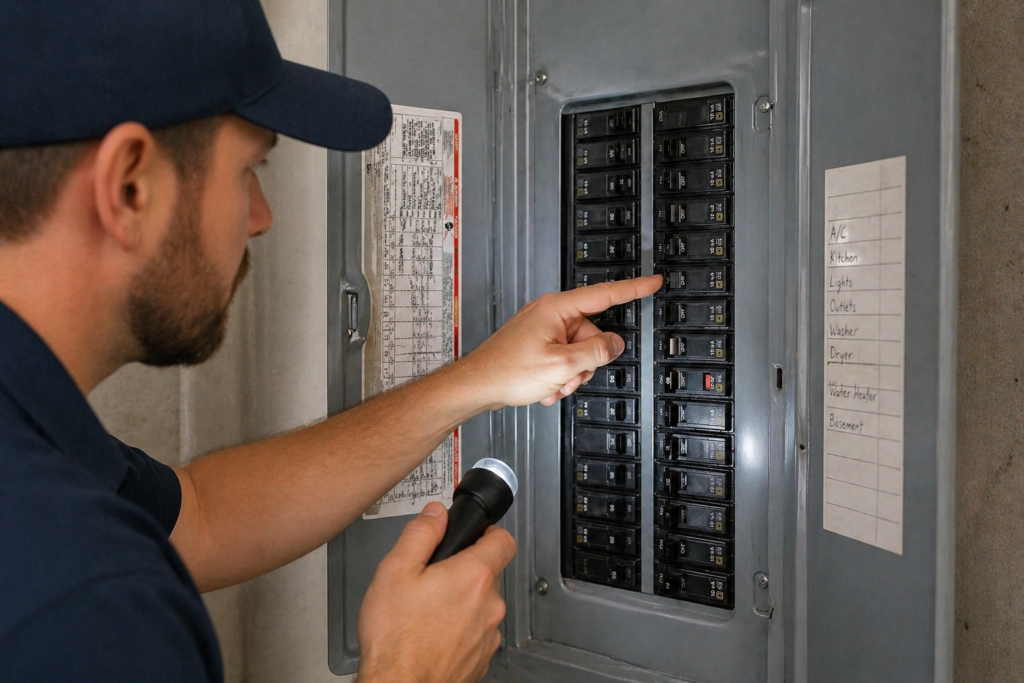
A licensed electrician inspecting a circuit breaker panel to diagnose why the breaker keeps tripping with nothing plugged in. Call for emergency electrical service.
3. Faulty or Worn-Out Circuit Breaker
Sometimes the breaker itself is the problem. Circuit breakers are mechanical devices that wear out over time—especially if they’ve been tripping frequently .
Signs of a bad breaker:
Trips even with zero load
Feels warm or hot to the touch
Buzzing or humming sound from the panel
Won’t stay in the ON position
Breaker is more than 20-30 years old
Important: Never replace a breaker with a higher amperage rating than the wire can handle. For example, if you have 14-gauge wire, you must use a 15-amp breaker. Using a 20-amp breaker on 14-gauge wire is a code violation and fire hazard .
4. Damaged or Aging Wiring
If your home is more than 30 years old and hasn’t had an electrical upgrade, your wiring may be deteriorating .
Types of problematic wiring in older U.S. homes:
Knob-and-tube wiring (pre-1950s): No ground wire, brittle insulation
Aluminum wiring (1960s-1970s): Prone to loose connections and overheating
Cloth-insulated wiring: Deteriorates and becomes a fire hazard
Signs of bad wiring:
Flickering lights throughout the house
Outlets that feel warm
Discolored outlet covers
Burning plastic smell
Frequent breaker trips with no apparent cause
According to North Lakes Electrical, “If your home is more than 20 years old and hasn’t had an electrical upgrade, there’s a chance your wiring may be outdated or deteriorating” .
5. Loose Electrical Connections
Loose connections create electrical resistance, which generates heat. Your breaker detects this heat and trips as a safety measure .
Where loose connections occur:
Inside the electrical panel (breaker terminals)
At outlet back-stab connections
Wire nuts in junction boxes
Switch terminals
The “Back-Stab” Problem: Many U.S. homes built from the 1970s-1990s used “back-stab” outlets where wires are pushed into spring clips rather than wrapped around screws. These connections loosen over time and are a leading cause of arc faults .
“AFCIs were originally required in bedrooms to detect electric-blanket fires. Turns out, they’re also fantastic at detecting backstabs”
6. Hidden Electrical Loads
You might think nothing is plugged in, but your circuit may power fixtures or devices you forgot about :
How to check: Turn off the breaker and see what loses power. Walk through your home and test lights, outlets, and appliances to map the full circuit.
7. AFCI Breaker Detecting Arc Faults
Since 1999, the NEC has required Arc Fault Circuit Interrupters (AFCIs) in bedrooms, and requirements have expanded to most living areas. AFCI breakers “listen” for the electrical signature of dangerous arcing .
What causes arc faults:
Damaged or frayed cords
Loose connections in outlets or switches
Wires punctured by nails or screws
Overheated outlets
Why your AFCI trips with nothing plugged in: The arc fault could be inside your wall wiring, not at an outlet. AFCIs are specifically designed to detect these hidden dangers.
8. Environmental Factors
External conditions can cause breaker trips even with no load :
High humidity causing moisture in outlets
Lightning strikes creating power surges
Extreme heat affecting panel performance
Rodent activity in attics or crawl spaces
If you live in Florida, Louisiana, or other high-humidity states, moisture-related ground faults are especially common.
How to Troubleshoot Step-by-Step {#troubleshooting}
⚠️ SAFETY FIRST: If you smell burning, see sparks, or the breaker trips immediately upon resetting, stop and call a licensed electrician. Do not open your electrical panel unless you are trained.
Step 1: Unplug Everything
Disconnect every device, appliance, and charger from all outlets on the tripping circuit. This includes “invisible” loads like hardwired fixtures.
Step 2: Reset the Breaker
Turn the breaker fully OFF, then back to ON. If it trips immediately with nothing connected, you have a wiring or breaker fault—not an overload.
Step 3: Check GFCI Outlets
Look for GFCI outlets with TEST/RESET buttons. Press RESET. If the GFCI won’t reset or trips again, you likely have a ground fault .
Step 4: Test One Device at a Time
If the breaker stays on, plug devices back in one at a time. If a specific device causes the trip, that appliance is faulty.
Step 5: Inspect for Visible Damage
Check outlets and switches for:
Burn marks or discoloration
Warm or hot surfaces
Buzzing sounds
Loose outlet covers
Step 6: Check the Breaker Panel
Look for:
Burn marks around breakers
Buzzing or humming sounds
Breakers that feel
FAQ
Why does my circuit breaker keep tripping with nothing plugged in?
When your circuit breaker keeps tripping with nothing plugged in, it usually indicates a short circuit, ground fault, or faulty wiring inside your walls. Unlike an overload, this problem requires immediate attention from a licensed electrician to prevent fire hazards.
Is it dangerous if my breaker trips with no load?
Yes, it can be dangerous. A tripping breaker with no load often signals a short circuit or ground fault, which are leading causes of electrical fires. You should stop resetting the breaker and call a licensed electrician immediately.
How much does it cost to fix a breaker that keeps tripping?
The cost to fix a circuit breaker that keeps tripping ranges from $150 for a simple diagnostic visit to $350 for standard repairs. If you need a full electrical panel replacement, costs can range from $1,500 to $4,000 depending on your home’s size and location.
Can I fix a tripping breaker myself?
You should never attempt to repair a tripping breaker yourself unless you are a licensed electrician. Working with electrical panels without proper training can result in severe injury, electrocution, or fire. Always call a professional for electrical panel issues.
How do I know if my breaker is bad or if it’s a wiring issue?
If your breaker trips immediately after resetting with nothing plugged in, the problem is likely a short circuit or bad breaker. If it trips after some time, it may be an overload or ground fault. A licensed electrician can diagnose the exact cause safely.
Why does my circuit breaker keep tripping with nothing plugged in?
When your circuit breaker keeps tripping with nothing plugged in, it usually indicates a short circuit, ground fault, or faulty wiring inside your walls. Unlike an overload, this problem requires immediate attention from a licensed electrician to prevent fire hazards.
Is it dangerous if my breaker trips with no load?
Yes, it can be dangerous. A tripping breaker with no load often signals a short circuit or ground fault, which are leading causes of electrical fires. You should stop resetting the breaker and call a licensed electrician immediately.
How much does it cost to fix a breaker that keeps tripping?
The cost to fix a circuit breaker that keeps tripping ranges from $150 for a simple diagnostic visit to $350 for standard repairs. If you need a full electrical panel replacement, costs can range from $1,500 to $4,000 depending on your home’s size and location.
Can I fix a tripping breaker myself?
You should never attempt to repair a tripping breaker yourself unless you are a licensed electrician. Working with electrical panels without proper training can result in severe injury, electrocution, or fire. Always call a professional for electrical panel issues.
How do I know if my breaker is bad or if it’s a wiring issue?
If your breaker trips immediately after resetting with nothing plugged in, the problem is likely a short circuit or bad breaker. If it trips after some time, it may be an overload or ground fault. A licensed electrician can diagnose the exact cause safely.