
As a Master Electrician with over a decade of hands-on experience serving homeowners across Alabama, I have seen my fair share of electrical nightmares. From the historic districts of Birmingham to the rapidly expanding neighborhoods of Huntsville, one hidden danger consistently keeps me awake at night: outdated aluminum wiring. If your home was built between 1965 and 1973, there is a high probability that the very veins carrying electricity through your walls are made of single-strand aluminum. The Ultimate Guide to Aluminum Wiring Replacement Cost in Alabama (2026 Edition)
Over the past ten years, my team and I have responded to countless emergency calls involving flickering lights, burning smells, and even scorched outlets—all tracing back to failing aluminum connections. The reality is that aluminum wiring is not just an inconvenience; it is a significant fire hazard that insurance companies in Alabama are increasingly refusing to cover. In this comprehensive guide, I will break down everything you need to know about aluminum wiring replacement costs in Alabama, the science behind why it fails, and the most cost-effective, code-compliant solutions available to protect your family and your investment.
One of the most terrifying moments for any homeowner is noticing a strange odor near their electrical fixtures. If you ever detect a burning smell from an outlet in Alabama, you must treat it as a critical emergency. In homes with older aluminum wiring, this scent often indicates that a connection is actively failing and could ignite a fire at any second.”
Why Aluminum Wiring is a Hidden Danger in Alabama Homes
To understand the cost of fixing the problem, you first need to understand why the problem exists. During the copper shortage of the mid-1960s to early 1970s, builders across the United States, including major developers in Mobile and Montgomery, turned to aluminum as a cheaper alternative for residential wiring. At the time, it seemed like a brilliant cost-saving measure. However, decades later, the physical properties of aluminum have proven disastrous for home electrical systems.
The Science of Aluminum Degradation
Aluminum is fundamentally different from copper in how it behaves under electrical load. There are three primary reasons why aluminum wiring becomes a severe fire hazard over time:
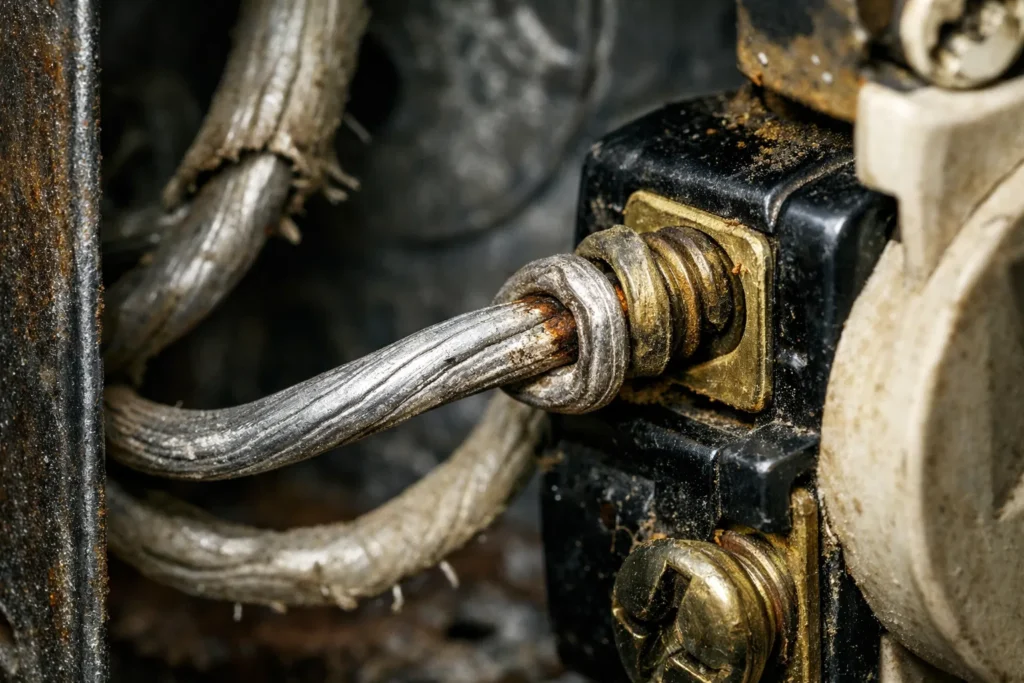
First, aluminum has a higher coefficient of thermal expansion than copper. This means that when electricity flows through the wire and generates heat, the aluminum expands significantly. When the current stops, it cools and contracts. This constant expansion and contraction—often referred to as “creep”—causes the connections at outlets, switches, and breaker panels to loosen over time. A loose connection creates electrical arcing, which generates intense heat and can easily ignite surrounding building materials.
Second, aluminum oxidizes rapidly when exposed to air. Unlike copper oxide, which remains electrically conductive, aluminum oxide is an insulator. As the exposed ends of the wire oxidize at the connection points, the resistance increases. Higher resistance leads to higher temperatures, further accelerating the degradation process and increasing the risk of a catastrophic electrical fire.
Finally, aluminum is a softer metal than copper. When electricians or homeowners unknowingly tighten screws on aluminum wire using standard techniques meant for copper, the wire can easily be crushed or nicked. These micro-fractures create localized hot spots, turning a simple wall receptacle into a ticking time bomb.
Recognizing the Warning Signs in Your Home
Before discussing the financial investment required for remediation, it is crucial to identify whether your home is at risk. Many homeowners in Alabama are completely unaware that their property contains aluminum wiring until a home inspector flags it during a real estate transaction or an insurance agent demands an electrical certification.
If your home was constructed during the critical window of 1965 to 1973, you should be hyper-vigilant. Look for the word “ALUMINUM” or the initials “AL” stamped on the plastic jacket of the visible wiring in your attic, basement, or electrical panel. However, even without visual confirmation of the wire itself, your home will often give you warning signs.
Pay close attention to faceplates on outlets or switches that feel unusually warm to the touch. If you notice a faint smell of burning plastic near receptacles, or if your lights flicker inexplicably when major appliances turn on, you must act immediately. Furthermore, if you find that certain circuits frequently trip without a clear overload, or if you see visible scorch marks or discoloration around outlet covers, these are red flags that your aluminum connections are actively failing.
Breaking Down the Aluminum Wiring Replacement Cost in Alabama
When clients call me asking, “How much does aluminum wiring replacement cost in Alabama?” the honest answer is that it depends entirely on the approach we take. There is no one-size-fits-all price, as the cost is dictated by the size of your home, the accessibility of the wiring, and the specific remediation method chosen. Generally speaking, homeowners have two primary options: complete rewiring or specialized remediation.
Option 1: Complete Copper Rewiring (The Gold Standard)
The most definitive and permanent solution is to completely remove the existing aluminum wiring and replace it with modern, code-compliant copper wiring. This is the “Gold Standard” approach and the one I recommend for homeowners planning extensive renovations or those who want absolute peace of mind.
However, complete rewiring is a major construction project. It involves cutting into drywall, navigating through attics and crawlspaces, and pulling new wire to every single outlet, switch, and fixture in the house. Because of the intense labor involved, this is the most expensive option.
In Alabama, the cost for a complete copper rewire typically ranges from $8,000 to $15,000 for a standard 1,500 to 2,000 square foot home. If you live in a larger, multi-story home in areas like Mountain Brook or Vestavia Hills, the cost can easily exceed $20,000. It is also important to factor in the secondary costs; you will likely need to hire a drywall contractor and a painter to repair the walls once the electrical work is finished, which can add an additional $2,000 to $4,000 to the total project budget.
Option 2: Aluminum Wiring Remediation (The Cost-Effective Alternative)
For many families, tearing open walls and spending upwards of $15,000 is simply not feasible. Fortunately, the Consumer Product Safety Commission (CPSC) recognizes specific remediation methods that make aluminum wiring safe without the need for a complete tear-out. This process involves addressing the danger at the connection points—the outlets, switches, and junction boxes—where the fires actually start.
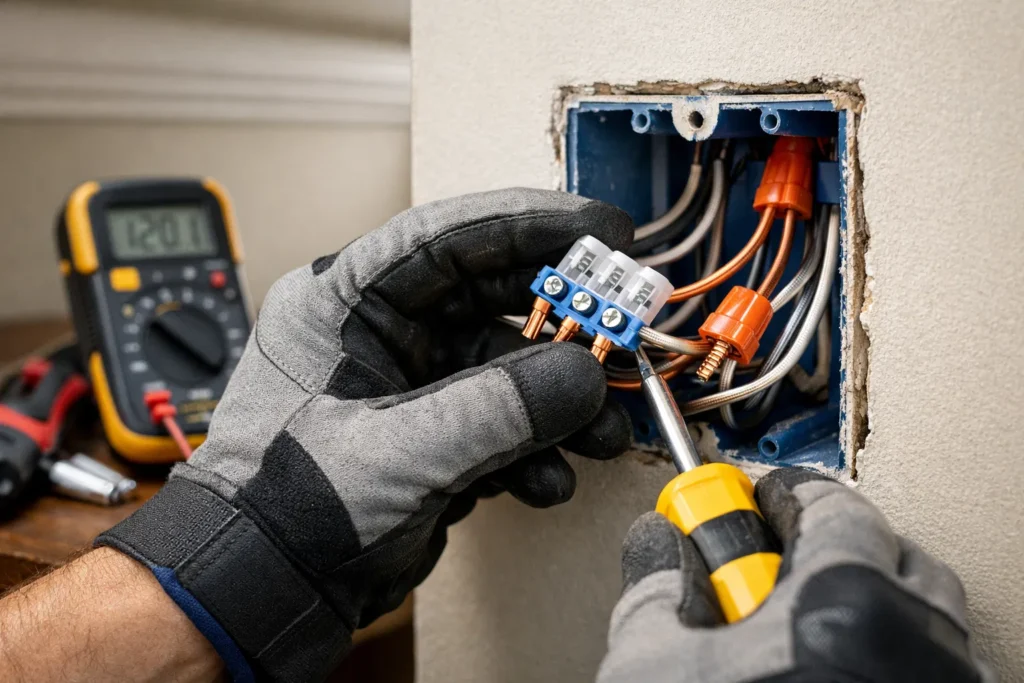
The most widely accepted and reliable remediation method is the use of COPALUM crimps or AlumiConn connectors. This technique, often referred to as “pigtailing,” involves attaching a short piece of copper wire to the end of the existing aluminum wire using a specialized, high-pressure crimping tool or a specific lug connector. The copper end is then connected to the outlet or switch. This eliminates the expansion, contraction, and oxidation issues associated with bare aluminum connections.
The cost of aluminum wiring remediation in Alabama is significantly lower than a full rewire. On average, you can expect to pay between $300 and $500 per circuit, or roughly $35 to $55 per receptacle and switch. For a typical three-bedroom home, the total cost for complete remediation usually falls between $3,500 and $6,000. This method is far less invasive, requires no drywall repair, and is generally accepted by major insurance carriers operating in Alabama.
The Impact of Location: Costs Across Major Alabama Cities
While the general pricing guidelines hold true across the state, my experience has shown that local market dynamics, permitting fees, and the age of the housing stock can influence the final estimate. Here is a breakdown of what you can expect in Alabama’s major metropolitan areas.
Birmingham and Surrounding Suburbs
Birmingham has a rich history, and many of its established neighborhoods, such as Homewood and Hoover, feature homes built right in the middle of the aluminum wiring era. Because the housing stock is older and often features complex architectural details, complete rewiring projects here tend to lean toward the higher end of the spectrum, often averaging $12,000 to $18,000. Remediation via pigtailing remains a popular choice, typically costing around $4,500 for a standard home.
Huntsville and Madison County
Huntsville is experiencing explosive growth, but the city still has a substantial number of mid-century homes, particularly near the downtown core and older aerospace development neighborhoods. The competitive contractor market in Huntsville sometimes yields slightly better pricing for remediation, averaging $3,000 to $5,000. However, due to the high demand for skilled tradesmen in the area, scheduling a full rewire might require booking months in advance.
Mobile and the Gulf Coast
In Mobile and Baldwin County, the humid, salt-heavy air of the Gulf Coast accelerates the oxidation process of aluminum wiring. I have seen connections degrade much faster here than in the northern part of the state. Consequently, insurance companies in coastal areas are incredibly strict about aluminum wiring. Remediation is almost always mandatory to secure a policy. Costs in Mobile are comparable to the state average, but the urgency is often much higher due to the environmental factors accelerating the risk.
Montgomery and Central Alabama
Montgomery’s historic districts contain a mix of very old knob-and-tube wiring and 1970s aluminum installations. Electricians in this area often have to navigate complex, multi-generational electrical patches. Remediation costs in Montgomery generally range from $3,500 to $5,500, depending on how many previous, non-compliant “fixes” need to be undone before the proper AlumiConn or COPALUM connectors can be installed.
The Hidden Cost of Inaction: Insurance and Real Estate Implications
When homeowners hesitate at the cost of aluminum wiring replacement or remediation, I always remind them of the hidden financial penalties of doing nothing. The electrical industry and the insurance sector are acutely aware of the statistics regarding aluminum wiring fires.
If you are attempting to buy or sell a home in Alabama, aluminum wiring will almost certainly become a major sticking point during the inspection phase. Buyers will routinely demand that the seller either completely rewire the home or pay for professional remediation before closing. If the seller refuses, the buyer will likely walk away, or demand a massive price reduction that far exceeds the actual cost of the electrical work.
Furthermore, securing homeowners insurance for a property with unmitigated aluminum wiring is becoming increasingly difficult in Alabama. Many major carriers will outright deny coverage, while others will charge exorbitant premium penalties. In some cases, an insurance company will issue a policy but mandate that the wiring be remediated by a licensed electrician within 30 to 60 days of closing. Failing to comply results in immediate cancellation of the policy. Investing $4,000 in remediation today can save you from a canceled insurance policy or a collapsed real estate deal tomorrow.
Why You Must Hire a Licensed Master Electrician
I cannot stress this enough: aluminum wiring remediation is not a weekend DIY project, nor is it a job for a general handyman. The techniques required to safely bond aluminum to copper require specialized training, specific tools, and a deep understanding of electrical theory.
If a handyman attempts to “fix” your aluminum wiring by simply twisting a copper wire and an aluminum wire together with a standard wire nut, they are actually creating a more dangerous situation. The dissimilar metals will react, the connection will loosen rapidly, and the risk of fire will increase exponentially. The CPSC explicitly states that standard wire nuts—even those marketed specifically for aluminum-to-copper connections—are prone to failure and are not a permanent solution.
When hiring a professional in Alabama, you must verify that they hold an active electrical contractor’s license with the state board. Ask them specifically about their experience with aluminum wiring and which remediation methods they use. A reputable electrician will only use CPSC-approved methods, such as AlumiConn lugs or COPALUM crimps, and they will pull the necessary permits to ensure the work is inspected by the local municipality.
Making the Right Choice for Your Alabama Home
Dealing with aluminum wiring can feel overwhelming, but it is a manageable problem when approached with the right information and the right professionals. As an electrician who has spent over ten years safeguarding homes across Alabama, my advice is simple: do not ignore the warning signs, and do not let the fear of the cost paralyze you.
Whether you choose the comprehensive route of a complete copper rewire or the cost-effective, CPSC-approved method of pigtailing remediation, the most important step is taking action. The safety of your family and the security of your home are worth far more than the cost of the repair. If you suspect your home has aluminum wiring, reach out to a licensed, experienced electrical contractor in your area today to schedule a comprehensive evaluation. Peace of mind is the best investment you can make.