
Are you tired of your circuit breakers tripping every time you turn on the microwave and the AC? Do your lights flicker when the refrigerator kicks in? You might be facing a hidden danger in your walls: An unbalanced electrical load.
In the modern American home, we are plugging in more devices than ever before. From electric vehicle (EV) chargers to high-end home theaters and smart appliances, our electrical systems are being pushed to their absolute limits. If your home’s electrical panel isn’t properly balanced, you aren’t just dealing with a minor annoyance—you are sitting on a potential fire hazard.
In this comprehensive guide, we’ll explain everything you need to know about Circuit Load Balancing, why it’s the secret to a safe home, and when you need to call a professional electrician to protect your property.
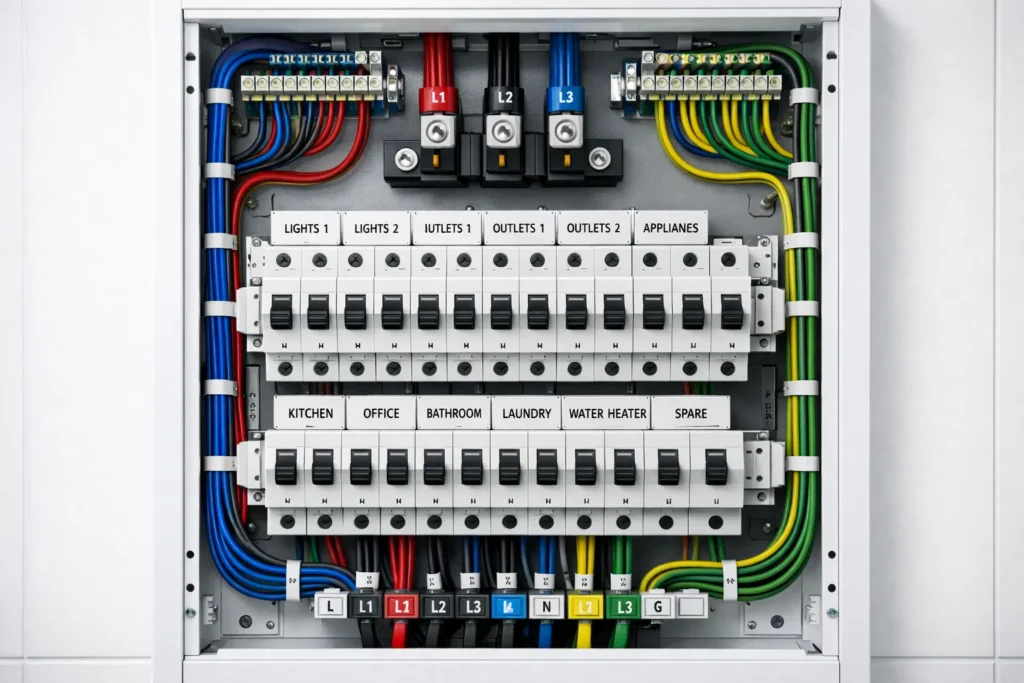
What Exactly is Circuit Load Balancing?
To understand Circuit Load Balancing, think of your electrical panel as the “brain” of your home. Power comes from the utility company into your panel, where it is split into two “legs” of 120 volts each. These legs feed the various circuits that run to your kitchen, bedrooms, and garage.
Circuit Load Balancing is the process of ensuring that the electrical demand is distributed evenly between these two legs.
If one side of your panel is carrying 80% of the load while the other side is only carrying 20%, you have an unbalanced system. This causes:
•Excessive Heat: Overloaded wires get hot, melting insulation and causing fires.
•Voltage Drops: Your appliances won’t get the steady power they need, leading to “brownouts” and damage to sensitive electronics.
•Inefficiency: An unbalanced panel wastes energy, which shows up as a higher monthly utility bill.
⚠️ WARNING: If you smell burning plastic or see sparks near your outlets, do not finish this article. Call a licensed electrician immediately. Your safety is the priority.
5 Red Flags That Your Circuits Are Overloaded
Most homeowners in the U.S. ignore the early warning signs of an electrical issue until it’s too late. If you notice any of the following, your home is crying out for a Professional Load Study:
1. Frequent Breaker Tripping
Your circuit breakers are safety switches. If they trip, it means the circuit is overloaded. If you find yourself resetting the same breaker once a week, you don’t just have a “sensitive” breaker—you have a load balancing problem.
2. Flickering or Dimming Lights
Do your lights dim for a split second when the air conditioner or vacuum cleaner starts? This is a classic sign of “Voltage Sag.” It means that specific circuit is struggling to provide enough amperage to all the devices connected to it.
3. Buzzing or Humming Noises
Your electrical panel should be silent. If you hear a faint buzzing or humming sound coming from the breaker box, it’s a sign of a high-resistance connection or a breaker that is struggling under a heavy load.
4. Hot Switch Plates or Outlets
Touch your light switches and outlets. If they feel warm to the touch, it’s a sign that the wiring behind the wall is overheating. This is a major fire risk that requires immediate professional attention.
5. Discolored Outlets (Char Marks)
Look for any brown or black discoloration around the plug-in holes of your outlets. This indicates that “arcing” has occurred—a mini-spark that generates intense heat.
Why You Can’t “DIY” Circuit Load Balancing
While many homeowners love a good weekend DIY project, Circuit Load Balancing is not one of them. Working inside a live electrical panel is extremely dangerous and requires specialized tools like a Clamp-on Ammeter and a deep understanding of the National Electrical Code (NEC).
A professional electrician will perform a “Peak Demand Analysis.” They will measure the amperage draw on every single circuit while your major appliances are running. They then physically rearrange the breakers in your panel to ensure that the “Phase A” and “Phase B” legs are perfectly balanced.
Trying to do this yourself can lead to:
•Fatal Electrocution: Even with the main breaker off, the incoming service lines are still live.
•Code Violations: Incorrectly balanced panels will fail a home inspection, making it impossible to sell your house later.
•Voided Insurance: If an electrical fire occurs and it’s discovered that unlicensed work was done, your insurance company may deny your claim.
The Modern Home: EV Chargers and Smart Appliances
The rise of the “Smart Home” has changed the game for electrical safety. Ten years ago, the average home didn’t have a 50-Amp EV charger in the garage or a high-end smart refrigerator that stays on 24/7.
When you add a high-draw appliance like an EV charger, it creates a massive “spike” in demand. If that charger is added to a panel that is already leaning heavily on one side, it can cause the entire system to fail. This is why Professional Circuit Load Balancing is essential whenever you upgrade your home’s technology.
How to Save Money on Energy Bills with Load Balancing
Did you know that an unbalanced electrical panel is actually costing you money? When circuits are overloaded, they create resistance. Resistance generates heat, and that heat is essentially wasted energy that you are paying for on your monthly utility bill.
By balancing your panel, you ensure that electricity flows as efficiently as possible. Not only does this protect your home, but it can also lead to a noticeable decrease in your energy costs over time. It’s an investment that pays for itself.
📞 Need Help Now? Speak to a Licensed Electrician!
Don’t leave your home’s safety to chance. If you are experiencing tripping breakers or flickering lights, our team of certified specialists is standing by 24/7 to help you.
•Fast Response Times
•Licensed & Insured Professionals
•Comprehensive Load Balancing Studies
•Safety Inspections for Older Homes
[CALL NOW: (Insert Phone Number)]
Get a free consultation and ensure your home is protected today.
Frequently Asked Questions (FAQ)
How long does it take to balance a circuit load?
A professional load study and balancing usually take between 2 to 4 hours, depending on the size of your home and the complexity of your electrical panel.
Can I just upgrade to a larger breaker?
NO. Never replace a 15-Amp breaker with a 20-Amp breaker unless the wiring behind the wall is also upgraded. Doing so is a major fire hazard because the wires will overheat before the breaker trips.
Is circuit load balancing required by law?
While not always required for older homes, the National Electrical Code (NEC) has strict guidelines for new constructions and major renovations. Balancing is essential to pass any professional home inspection.
Final Thoughts: Peace of Mind for Your Family
Your home is likely your biggest investment. Protecting it starts with the electrical system. By ensuring your panel is properly balanced, you are preventing fires, protecting your electronics, and saving money on energy bills.
Don’t wait for a spark to turn into a fire. Take action today and ensure your home’s electrical “heart” is beating strong and steady.
[CLICK HERE TO CALL A PROFESSIONAL ELECTRICIAN NOW]
Available 24/7 for all your electrical emergencies.