
What Exactly Is a Smart Electrical Panel and Why I Wanted One
The Day I Realized My Breaker Box Was Dumber Than My Toaster
I stood in my basement in Crestwood last summer, staring at my brand new 200-amp panel. Don’t get me wrong—I was proud of the upgrade. No more dimming lights, no more calculating whether I could run the dryer and the AC at the same time. But something bugged me. This panel, this metal box with switches, was basically the same technology my grandfather had in his house in the 1960s. Meanwhile, my thermostat was learning my schedule, my doorbell was talking to my phone, and my fridge was judging my grocery choices. Why was my electrical panel still stuck in the Stone Age?
That’s when I started researching smart electrical panels. And let me tell you, once you see what’s possible, you can’t unsee it.
Breaking Down the Tech: What Makes a Panel “Smart”
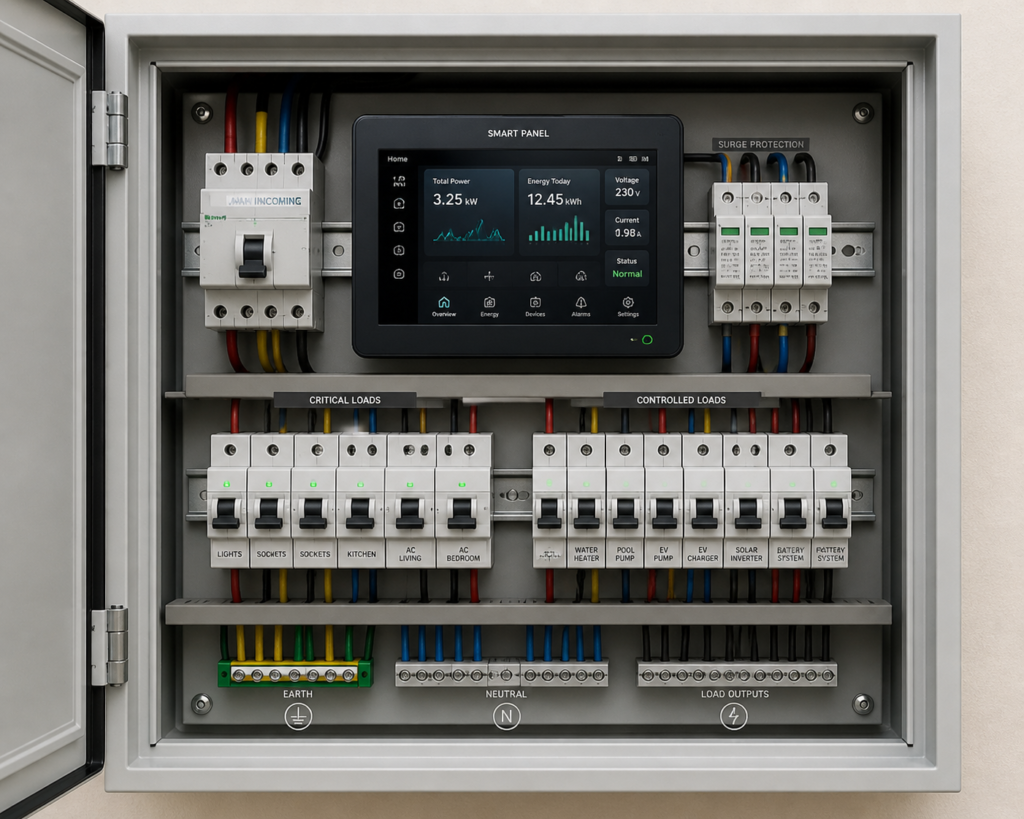
A smart electrical panel isn’t just a bigger box with more breakers. It’s a fundamentally different approach to managing your home’s electricity. Here’s what separates it from the dumb panel I had before:
Real-Time Monitoring: Every circuit in your home gets its own digital sensor. You can see exactly how much power your bedroom outlets are using, your garage door opener, your washing machine—down to the watt. Not guesswork. Actual data.
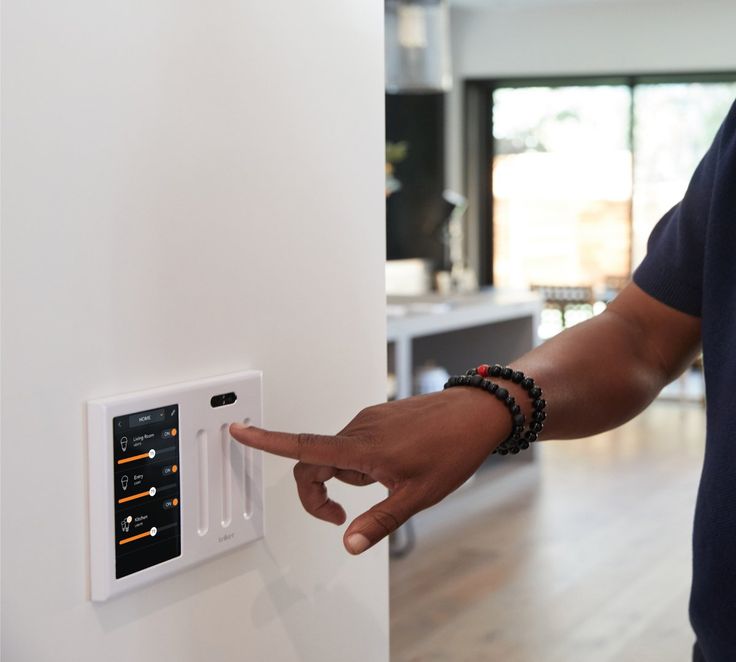
Remote Control: Through an app on your phone, you can turn circuits on and off from anywhere. Left the house and can’t remember if you turned off the space heater? Check the app. Tap. Done.
Load Management: This is the big one. The panel can automatically shed non-essential loads during peak rate periods or when you’re approaching your capacity limit. In Birmingham, where Alabama Power’s rates can spike during summer afternoons, this matters.
Integration: Smart panels talk to other smart devices. Solar inverters, battery storage systems, EV chargers, smart thermostats—they all coordinate through the panel.
Predictive Alerts: The system learns your usage patterns and warns you before problems happen. Circuit drawing more power than usual? You’ll know before the breaker trips.
My First Encounter With a Smart Panel at a Friend’s House in Mountain Brook
My buddy Mike in Mountain Brook had his smart panel installed in 2024. He’s the kind of guy who geeks out on home automation—has a Tesla, solar panels, the whole nine yards. He showed me his app, and I was genuinely shocked. He could see that his pool pump was drawing 1,200 watts, his EV charger was pulling 7,200 watts, and his HVAC was cycling at 4,500 watts. All in real time. All with cost calculations.
“Last month,” he told me, “the panel caught my water heater failing. The resistance was dropping, current was climbing, and the app flagged it before it burned out completely. Saved me a $1,200 emergency replacement.”
That conversation stuck with me. I started wondering if my “perfectly fine” new 200-amp panel was actually a missed opportunity.
Why Birmingham Homes Are Perfect Candidates for Smart Panels
Birmingham has a unique combination of factors that make smart panels especially valuable:
Aging Housing Stock: So many homes in Crestwood, Avondale, Forest Park, and Southside were built in the 1950s through 1980s. Even with a standard 200-amp upgrade, you’re still managing electricity blindly. A smart panel gives you visibility into wiring that might be 50+ years old.
Severe Weather: Alabama storms are no joke. When tornado warnings hit Jefferson County, power fluctuations and surges are common. Smart panels with integrated surge protection and automatic load shedding can protect your electronics better than standalone surge protectors.
Rising Electricity Rates: Alabama Power’s rates have climbed steadily. Smart panels help you optimize usage, time your heavy loads for off-peak hours, and actually understand where your money is going.
Growing EV Adoption: Birmingham’s EV charging infrastructure is expanding, but most charging happens at home. A smart panel manages EV charging intelligently, coordinating with your solar (if you have it) and avoiding peak rate periods.
Hot Summers: From June through September, your AC runs constantly. A smart panel shows you exactly what that costs and helps you find inefficiencies—like an aging compressor drawing more current than it should.
How Much Does a Smart Electrical Panel Cost in Birmingham?
The Sticker Shock: What I Paid vs. What I Expected
I’ll be straight with you. When I first looked at smart panels, I experienced serious sticker shock. My standard 200-amp panel upgrade cost $2,850. A smart panel system? We’re talking $4,500 to $8,000 installed. That’s a big jump.
I ended up paying $6,200 for a complete smart panel installation in my Crestwood home. Here’s how that broke down:
Panel Hardware ($2,800):
- Span Drive smart panel: $2,200
- Individual smart breakers (12 circuits): $480
- Main breaker with integrated monitoring: $120
Installation Labor ($2,400):
- Removal of my 2-year-old standard panel (painful, but necessary)
- Installation of smart panel with proper clearances
- Configuration and app setup
- Integration with my existing circuits
- Two electricians, two days
Electrical Work ($600):
- Adding a few dedicated circuits I hadn’t done during the first upgrade
- Improving grounding (smart panels are sensitive to ground quality)
- Labeling and mapping every circuit properly
Permits and Inspection ($400):
- Jefferson County permit for panel modification: $200
- Re-inspection fee: $100
- Additional permit for circuit additions: $100
Total: $6,200. Ouch. But let me explain why I don’t regret it.
Comparing Smart Panel Brands: What Birmingham Electricians Actually Install
I researched three main options available in the Birmingham market:
Span Drive: This is what I chose. It’s the most established smart panel, with robust app functionality, excellent load management, and solid integration with solar and EVs. The app is polished, updates are frequent, and the company has good support. Downside: it’s the most expensive.
Schneider Electric Square D Energy Center: A newer entry that integrates with their existing Square D panels. If you already have a Square D panel (like many Birmingham homes), this can be a more cost-effective upgrade path. Less flashy app but very reliable hardware.
Lumin Smart Panel: Focused heavily on energy management and solar integration. Good for tech-forward homeowners but has a steeper learning curve. Fewer Birmingham electricians are familiar with it, which concerned me for future service.
My electrician had installed five Span panels and three Schneider systems. He recommended Span for my situation because of my planned EV purchase and the complexity of my usage patterns. His experience mattered—installation quality is critical with smart panels.
Why Prices Vary Between Downtown Birmingham and Suburban Homes
The same location factors that affect standard panel upgrades apply here, plus some smart-specific considerations:
WiFi Signal Strength: Smart panels need reliable internet connectivity. In downtown Birmingham lofts with concrete walls or in basement installations with poor signal, you might need WiFi extenders or ethernet runs. My Crestwood basement needed a mesh node added ($80 extra).
Integration Complexity: Homes with existing solar, batteries, or multiple smart systems require more configuration time. Mike’s Mountain Brook home took three days because of his Tesla Powerwall and solar inverter integration.
Electrician Familiarity: Not every Birmingham electrician has smart panel experience. The ones who do charge more because of the specialized knowledge. I paid a premium for an electrician who had completed Span certification training.
Permit Complexity: Jefferson County inspectors are still learning smart panel codes. My inspection took longer because the inspector wanted to verify the remote disconnect functionality. This added a half-day of labor.
Hidden Costs I Didn’t See Coming
WiFi Infrastructure: My old router couldn’t handle the constant data stream from 12 smart breakers. I upgraded to a mesh system: $200.
Subscription Fees: Some smart panel features require cloud subscriptions. Span includes basic monitoring free, but advanced analytics cost $10/month. Budget for this.
Future Breaker Replacements: Smart breakers cost $40-$80 each vs. $8-$15 for standard breakers. If one fails, it’s not a Home Depot run.
Integration Updates: When I added my EV charger six months later, the electrician had to update the panel configuration. $150 service call.
What a Smart Electrical Panel Actually Does for Your Birmingham Home
Real-Time Energy Monitoring Changed How I Think About Electricity
Before the smart panel, my monthly Alabama Power bill was a mystery. $180 in July. $95 in March. Why? No idea. I’d shrug and pay it.
Now? I can tell you exactly what every circuit costs me per hour. My AC uses about $2.40 per hour during peak summer afternoons. My dryer costs $0.85 per load. My home office setup—dual monitors, PC, printer—runs about $0.12 per hour.
This visibility changed my behavior in ways I didn’t expect. I started running the dishwasher at 9 PM instead of 6 PM because rates are lower. I discovered my old chest freezer in the garage was drawing $18 per month—more than my refrigerator. I replaced it with an efficient model that pays for itself in two years.
The smart panel didn’t just monitor my usage. It educated me.
Automatic Load Management During Peak Rate Periods
Alabama Power has time-of-use rates in some plans, where electricity costs more during peak afternoon hours. Even if you’re not on time-of-use pricing, reducing peak demand helps the grid and can qualify you for certain programs.
My smart panel automatically manages this. I set priorities:
- Always on: Refrigerator, security system, medical devices
- High priority: AC (but at reduced capacity if needed), lights
- Medium priority: Washer, dryer, dishwasher
- Low priority: EV charger, pool equipment, space heaters
During peak periods, the panel can delay or reduce lower-priority loads. My EV charger might drop from 40 amps to 20 amps for two hours. I don’t notice the difference in my daily routine, but my peak demand drops significantly.
Integration With Solar, Batteries, and EV Chargers
I don’t have solar yet, but I’m planning it. The smart panel is ready. When I add panels and a battery, the panel becomes the brain of the whole system.
Here’s how it works: Solar generates power during the day. The panel directs excess to the battery. When rates peak, it pulls from the battery instead of the grid. When the battery is full and solar is still producing, it might pre-cool the house or charge the EV. All automatic, all optimized.
My friend Mike with the Tesla setup showed me his “storm mode.” When Birmingham weather alerts trigger, his panel automatically charges the battery to 100%, reduces non-essential loads, and prepares for potential outages. During the last severe thunderstorm, his house stayed powered for 8 hours after the grid went down.
Predictive Maintenance Alerts That Actually Prevent Problems
This feature saved me twice:
First alert: My kitchen circuit was drawing 18 amps consistently—higher than normal. The app flagged it. I traced it to a failing garbage disposal that was seizing and drawing excess current. Replaced it for $200 before it caused a short.
Second alert: My HVAC compressor startup current was climbing over three weeks. From 45 amps to 62 amps. The app warned me. I called my HVAC tech, who found a failing capacitor. $150 repair instead of waiting for a $2,000 compressor replacement.
These aren’t hypothetical benefits. They’re real savings that are already covering part of my investment.
Is a Smart Panel Worth It? My Honest Assessment After 18 Months
The Financial Math: When Does It Pay Off?
Let’s be real. At $6,200, a smart panel isn’t a quick financial win. Here’s my calculation after 18 months:
Direct savings from behavior changes: $340/year
- Optimized dishwasher and laundry timing: $120
- Identified and replaced inefficient freezer: $216
- Reduced standby loads: $40
Prevented maintenance costs: $1,850 over 18 months
- Garbage disposal before failure: $200
- HVAC capacitor before compressor damage: $150
- Water heater element replacement (predicted by pattern, not yet failed): $1,200 estimated
- One circuit that was overloaded and would have eventually caused damage: $300
Insurance and home value: Harder to quantify, but my agent noted the modern system in my renewal. Appraisal impact unknown until I sell.
Total quantified benefit: ~$2,190 in 18 months. At this pace, payback is roughly 4-5 years. Not amazing, but reasonable for infrastructure.
The Convenience Factor: Living With a Smart Panel
This is where the value gets personal. Some things you can’t put a dollar figure on:
- Checking if I left the iron on… from my office downtown
- Turning on the porch lights before my wife gets home… from anywhere
- Seeing that my teenage daughter’s room is using 800 watts at 2 AM… and having a conversation about it
- Getting an alert that my sump pump circuit lost power during a storm… and calling my neighbor to check
The peace of mind is genuine. I know my home’s electrical health in real time. That’s worth something.
When a Smart Panel Makes Sense vs. When It’s Overkill
Definitely makes sense if:
- You have or plan to have solar and battery storage
- You own an EV or plan to buy one soon
- Your home has complex electrical needs (pool, hot tub, workshop, home theater)
- You’re on time-of-use electricity rates
- You love data and optimization (the “energy nerd” factor)
- Your home has aging wiring where monitoring prevents disasters
Probably overkill if:
- You live in a small apartment or condo
- Your electrical usage is simple and low
- You don’t have reliable internet (smart panels need connectivity)
- You’re planning to sell within 2 years (you won’t see payback)
- Budget is tight and a standard 200-amp upgrade covers your needs
My Biggest Frustration: The App Isn’t Perfect
I’ll be honest about the downsides. The app has glitched twice, showing false alerts that sent me panicking home for no reason. Customer support was responsive but not instant—emailed them at 10 PM, got a response by 10 AM the next day.
The initial setup took longer than promised. My electrician estimated 4 hours of configuration; it took 8 because of integration issues with my existing smart thermostat.
And sometimes, the data can be overwhelming. Do I really need to know that my bathroom exhaust fan uses 0.3 amps? Probably not. I’ve learned to focus on the circuits that actually matter and ignore the noise.
Choosing a Smart Panel Installer in Birmingham
Why You Need a Specialist, Not Just Any Electrician
Smart panels require skills beyond standard electrical work. My original panel upgrade electrician was excellent, but he didn’t install smart panels. I had to find someone different.
Here’s what to look for:
Manufacturer Certification: Span, Schneider, and Lumin all offer installer certification programs. Ask to see the certificate. Mine showed me his Span Drive certification card.
Integration Experience: Has this electrician worked with solar inverters, battery systems, and EV chargers? The panel is just one piece of a potential ecosystem.
Local References in Birmingham: Ask for addresses of completed smart panel installations in your area. I drove past two homes in Crestwood and Avondale to see the exterior work quality.
App Configuration Skills: The hardware installation is only half the job. Configuring the app, setting up load priorities, and teaching you to use it is the other half. My electrician spent 90 minutes walking me through everything.
Questions I Asked Before Hiring
- “How many smart panels have you installed?” (Answer: 12 Span, 8 Schneider—good experience)
- “What happens if the app stops working?” (Answer: panel functions as normal panel, just without smart features)
- “Do you handle firmware updates?” (Answer: yes, included in first year, then $150/year optional)
- “What if I add solar later?” (Answer: they’ll coordinate with solar installer, no reconfiguration charge)
- “What’s your warranty on smart-specific work?” (Answer: 1 year on configuration, 2 years on electrical installation)
Birmingham Companies That Know Smart Panels
I won’t name specific companies because I want this article to stay useful over time, but here’s how to find them:
- Search “smart panel installation Birmingham AL” and check for manufacturer certification badges
- Call Span, Schneider, or Lumin directly—they maintain lists of certified installers by city
- Ask on Birmingham-area Facebook groups or Nextdoor for recent smart panel experiences
- Check with local solar installers—they often partner with smart panel electricians
The Installation Process: What to Expect
Day 1: Assessment and Planning
My installer spent two hours before any work started. He mapped every circuit, tested loads, checked my WiFi signal strength in the basement, and discussed my priorities. We decided on circuit groupings and load management preferences.
He also identified that two of my circuits from the previous upgrade weren’t properly balanced across phases. Fixed that during installation at no extra charge.
Day 2: Physical Installation
Similar to a standard panel upgrade, but more careful. Smart panels have delicate electronics that don’t like rough handling. The installation took longer because of precise breaker placement and cable routing for clean data connections.
Power was out for about 6 hours. We stayed with family again.
Day 3: Configuration and Testing
This was the different part. The electrician spent hours configuring the app, calibrating sensors, testing every circuit’s monitoring accuracy, and setting up my account. Then we tested scenarios: turn on the dryer, watch the app. Start the AC, see the load spike. Simulate an overload, verify the alert.
I spent another hour learning the app interface. It’s intuitive but has depth—took me a week to really understand all features.
The Jefferson County Inspection Experience
Smart panels are still new enough that inspectors are learning. Mine had never inspected a Span panel before. He spent extra time verifying that the remote disconnect feature worked correctly and that the panel met all NEC requirements for both standard and smart functionality.
We passed, but it took 45 minutes instead of the usual 30. Be patient with inspectors on cutting-edge technology.
Future-Proofing Your Birmingham Home
Preparing for Alabama’s Changing Energy Landscape
Alabama Power is gradually modernizing its grid. Time-of-use rates will likely expand. Distributed solar and battery storage are growing, even in conservative Birmingham. EV adoption is accelerating, especially among younger professionals moving to Avondale and Crestwood.
A smart panel positions you for all of this. It’s not just about today—it’s about being ready for the next 10-15 years of energy evolution.
Integration With Smart Home Ecosystems
My panel now talks to:
- My Ecobee thermostat (pre-cooling before peak rates)
- My Tesla Wall Connector (charging optimization)
- My Ring security system (power monitoring for cameras)
- My Alexa (voice queries: “How much power is the house using?”)
This isn’t science fiction. It’s my Tuesday morning routine.
The Day I Realized This Wasn’t Just a Gadget
Last August, Birmingham hit 102 degrees. Alabama Power issued a voluntary conservation request. My smart panel automatically reduced my AC to 80% capacity, delayed my EV charging until 11 PM, and shifted my water heater to overnight heating. I barely noticed the difference in comfort.
But I checked my app later. My peak demand that day was 40% lower than it would have been. If enough homes had this technology, we could prevent grid strain and avoid rolling blackouts. That’s when it clicked: this isn’t just about my convenience or my savings. It’s about being part of a smarter, more resilient energy system.
Final Thoughts: My Recommendation for Birmingham Homeowners
Who Should Buy a Smart Panel Today
If you’re already planning a panel upgrade or replacement, and you have the budget, strongly consider going smart. The incremental cost over a standard 200-amp panel is $2,000-$3,500, but you’re getting capabilities that will matter more every year.
If you have solar, an EV, or complex electrical needs, it’s almost a no-brainer. The integration and optimization pay for themselves faster.
If you’re a tech enthusiast who loves data and control, you’ll enjoy it immensely. I check my app daily, not because I need to, but because it’s genuinely interesting.
Who Should Wait
If your current panel is fine and you’re not adding major electrical loads, wait. Smart panel technology is improving rapidly and prices will likely drop. In 3-5 years, smart features might be standard on mid-range panels.
If budget is tight, prioritize a safe, properly sized standard panel. A smart panel is a luxury, not a necessity.
If you’re selling your home soon, don’t bother. You won’t see the return, and buyers might not value it.
The Honest Bottom Line
After 18 months with a smart panel in my Birmingham home, I’m glad I did it. Not because it saved me a fortune—though it has saved me money and prevented problems. Not because it’s cool—though it is genuinely cool. But because it changed my relationship with my home’s energy.
I understand it now. I control it intelligently. I catch problems before they become expensive disasters. And I’m ready for whatever the future of home energy looks like.
For a Birmingham homeowner in an older home, dealing with Alabama heat, thinking about an EV, and wanting to optimize every dollar spent on electricity? A smart panel is one of the best investments you can make.
This article reflects my personal experience with smart panel installation in Birmingham, Alabama. Technology and pricing change rapidly—always get current quotes from certified installers before making decisions. Electrical work should only be performed by licensed professionals.