
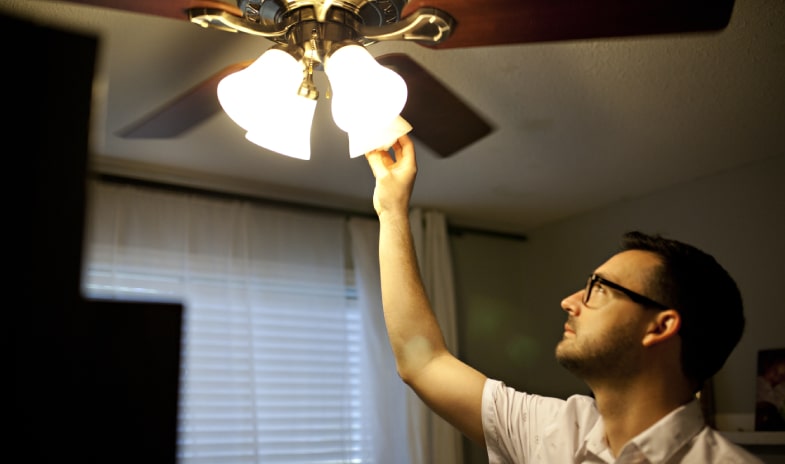
Hey there. I’m Mike. I’ve been pulling wire and troubleshooting electrical problems across the Midwest for going on 18 years now. Started out as an apprentice right out of high school, worked my way up to journeyman, then master electrician. These days I run my own small shop—just me and two other guys. We handle everything from new construction to service calls in about a 40-mile radius.
You know what question I get more than almost any other? “Why are my lights flickering in the house?” Sometimes it’s a nervous homeowner who noticed it for the first time last night. Sometimes it’s somebody who’s been living with it for months and finally decided to call. Either way, it’s one of those problems that can range from “no big deal, here’s a five-dollar fix” to “we need to talk about your entire electrical panel before something catches fire.”
I’m going to walk you through everything I know about flickering lights. No fancy language, no textbook definitions unless we need them. Just straight talk from somebody who’s been in hundreds of homes and seen pretty much every cause there is.
Why Are My Lights Flickering in the House? Let’s Start with the Basics
Before we get into the weeds, let’s talk about what “flickering” actually means. Because people use that word for a lot of different things.
Some folks mean their lights dim for a split second when the AC kicks on. Others mean a constant, rapid blinking like a strobe light. Some people mean one specific fixture that flickers randomly throughout the day. And then you’ve got the people whose whole house seems to pulse with light, like somebody’s messing with a dimmer switch somewhere.
All of these fall under “why are my lights flickering in the house,” but they point to very different problems. That’s why the first thing I do on a service call is ask a bunch of questions. When does it happen? Which lights? How long has it been going on? Did anything change recently?
Here’s something most homeowners don’t realize: your electrical system is like the circulatory system in your body. It’s all connected. A problem in one room can be caused by something happening three rooms away, or even out at the street where your power comes in. That’s why troubleshooting flickering lights sometimes takes me on a tour of your entire house.
The Simple Stuff First: Why Are My Lights Flickering in the House Because of the Bulb?
I always start with the easiest possible explanation. About thirty percent of the time, the answer to “why are my lights flickering in the house” is sitting right there in the socket.
Loose Bulbs
This sounds almost too simple, but you’d be amazed. A bulb that isn’t screwed in all the way makes poor contact with the metal tab at the bottom of the socket. That poor contact creates resistance, and resistance creates heat and intermittent connection. Result? Flickering.
I can’t tell you how many times I’ve pulled up to a house, the homeowner shows me the problem light, and I just reach up and tighten the bulb. Problem solved. Five-second fix, no charge. The homeowner feels a little silly, but I tell them don’t—I’ve seen licensed electricians miss this because we’re trained to look for complicated problems.
If you’ve got a flickering light, turn it off, let it cool, and give the bulb a firm clockwise turn. Not so tight you break it, but snug. If that fixes it, great. If not, keep reading.
The Wrong Type of Bulb
This is a big one since everybody switched to LEDs. Here’s the thing: not every LED bulb plays nice with every fixture, and not every LED bulb works with dimmer switches.
Old dimmer switches were designed for incandescent bulbs. They work by cutting off part of the electrical wave—called “phase cutting” if you want to get technical. Incandescent bulbs don’t care; they just get less power and dim down. But LEDs are electronic devices. They need a steady, clean power supply. Put a cheap LED on an old dimmer, and you’ll get flickering, buzzing, or the light just won’t dim properly.
I had a call last summer, nice house in the suburbs. The homeowner had replaced every bulb in the house with LEDs from a big box store. Looked great, saved money on the electric bill. But every single dimmer in the house made the lights flicker like a horror movie. She was convinced she had major electrical problems.
Turns out she bought basic LEDs that weren’t dimmable, and her dimmer switches were fifteen years old. I replaced the dimmers with LED-compatible models—about forty bucks each—and suddenly everything worked perfect. She’d spent three months worrying about her house burning down for a problem that cost a couple hundred to fix.
If you’re asking “why are my lights flickering in the house” and you’ve got LEDs on dimmers, check the bulb package. It should say “dimmable” right on it. And if your dimmer is more than ten years old, it probably needs replacing anyway.
Cheap Bulbs
I hate to say it, but you get what you pay for with LEDs. Those ten-packs for five dollars? They’re using the cheapest possible driver circuits inside. The driver is what converts your house current to what the LED needs, and cheap ones fluctuate. You’ll see flickering, especially when the bulb warms up or when the voltage in your house dips even slightly.
I keep a stash of quality bulbs in my truck—brands like Philips, Cree, or Sylvania. When I suspect a cheap bulb is the culprit, I swap in a good one. If the flickering stops, I tell the homeowner to replace the rest themselves. It’s not worth my hourly rate to change light bulbs, but I’ll sell them a box at cost if they want.
Fluorescent and CFL Quirks
If you’ve still got fluorescent tubes or compact fluorescents (CFLs) anywhere, they flicker for their own reasons. Fluorescents need a ballast to regulate current, and old ballasts start failing. You’ll see a slow, rhythmic pulsing. CFLs can flicker when they’re cold or when they’re reaching end of life.
Honestly, my advice is just replace them with LEDs. The technology’s mature now, the prices are reasonable, and you’ll save money long-term. But if you’re stuck with fluorescents for now, a flickering tube usually means either the tube is dying or the ballast is going bad.
Why Are My Lights Flickering in the House? It Might Be the Switch or the Fixture
Okay, so you tightened the bulb and maybe even swapped in a quality LED. Still flickering? Time to look at the switch and the fixture itself.
Worn-Out Switches
Light switches are mechanical devices. Every time you flip that switch, tiny metal contacts come together or separate. Over years—sometimes decades—those contacts get pitted, corroded, or loose. A bad connection means intermittent power, and intermittent power means flickering.
I can usually tell a bad switch just by feel. Does it feel crunchy when you flip it? Does it sit crooked in the wall plate? Does the flickering change when you wiggle the switch? All signs of a worn switch.
Replacing a switch is a pretty basic DIY job if you’re comfortable turning off the breaker and working with wire nuts. But if you’re not sure, call a pro. I’ve seen homeowners create bigger problems trying to save twenty bucks on a switch replacement. Electricity doesn’t give second chances.
Dimmer Switch Problems
We touched on this with LEDs, but dimmer switches themselves can fail. The internal electronics wear out, especially if they’re overloaded—meaning you’ve got more wattage on the circuit than the dimmer is rated for. An old dimmer might have been fine with four 60-watt incandescents (240 watts total), but now you’ve got ten LEDs that draw almost nothing, and the dimmer can’t regulate such a small load properly.
Also, some dimmers just weren’t built well to begin with. I avoid the cheapest options at the hardware store. Lutron and Leviton make solid products that last. Yes, they cost more upfront. But how many times do you want to replace a dimmer?
Fixture Wiring Issues
Inside every light fixture, there’s a junction where the house wiring connects to the fixture’s own wires. Over time, especially with fixtures that vibrate (like ceiling fans with lights), these connections can loosen. Heat from the bulbs expands and contracts the wire nuts, and eventually you’ve got a loose connection.
Loose connections are bad news. They create resistance, which creates heat, which can start a fire. If I find a loose connection in a fixture, I don’t just tighten it and leave. I check the wire nuts, sometimes replace them, and make sure everything’s properly secured. It’s a five-minute job that could save your house.
Ceiling Fans with Lights
These are a special case. The vibration from the fan motor works every connection loose over time. Plus, the wiring has to pass through the fan’s mounting bracket, which is a tight space. I see more flickering light problems on ceiling fans than any other fixture type.
If your ceiling fan light is flickering, first make sure the bulbs are tight. Then check if the flickering happens when the fan is running versus when it’s off. If it’s only when the fan’s on, you’ve almost certainly got a loose wire somewhere in the assembly. Sometimes it’s in the light kit attachment, sometimes it’s up in the mounting bracket. Either way, it needs to be addressed.
Why Are My Lights Flickering in the House? Let’s Talk About Your Wiring
Now we’re getting into the stuff that makes homeowners nervous. But don’t panic—most of this is fixable, and knowing what you’re dealing with is half the battle.
Loose Connections in Junction Boxes
Your house is full of junction boxes—behind every switch, every outlet, every light fixture. Anywhere wires connect, there’s a junction box. And anywhere wires connect, those connections can loosen.
Aluminum wiring, common in houses built between 1965 and 1973, is especially prone to this. Aluminum expands and contracts more than copper with temperature changes, so connections loosen over time. It also corrodes differently than copper, creating a white oxide that doesn’t conduct electricity well.
If your house has aluminum wiring and you’re asking “why are my lights flickering in the house,” you need a professional inspection. I’m not saying aluminum wiring is automatically dangerous—it’s not, if properly maintained. But it requires special connectors (called AlumiConn or Copalum) and regular checking. Don’t let some handyman tell you it’s fine without actually looking at it.
Even with copper wiring, connections loosen. I’ve found wire nuts that were barely hanging on, connections that were hand-twisted instead of properly capped, and junction boxes so stuffed with wire that the connections were under constant stress. All of these cause flickering, and all of them are fire hazards.
Back-Stabbed Outlets
This is a pet peeve of mine. For years, electricians and DIYers used a shortcut called “back-stabbing” on outlets and switches. Instead of wrapping the wire around the screw terminal, they’d just push it into a little hole in the back. Quick, easy, and terrible.
Those back-stab connections rely on a tiny spring clip to maintain contact. Over time, the spring weakens, the connection gets loose, and you’ve got resistance. The outlet might still work, but poorly. And if that outlet is on the same circuit as your lights, guess what? Flickering.
I refuse to use back-stab connections. If I’m replacing an outlet and find them, I pull the wires out and connect them properly to the screw terminals. It takes an extra minute per outlet, but it’s the right way to do it. If you’ve got flickering lights and your house was wired with back-stabbed outlets, that’s probably your culprit.
Old or Damaged Wiring
Wiring doesn’t last forever. Insulation gets brittle, especially in hot attics. Mice chew through it (I see this more than you’d think). Previous homeowners do hack jobs that would make a real electrician cry.
I was in a house last year, built in the 1950s, where somebody had spliced new wiring to old knob-and-tube using nothing but electrical tape. No junction box, no wire nuts, just tape wrapped around bare wires in the wall. It’s amazing the house hadn’t burned down. The homeowner called because “why are my lights flickering in the house,” and yeah, no kidding—they were getting power through a connection that was basically held together with hope and tape.
If your house is more than 40 years old and hasn’t had an electrical update, flickering lights might be your warning sign that the wiring needs attention. I’m not trying to scare you into a full rewire—most of the time, targeted repairs and updates are sufficient. But you need to know what you’re working with.
Shared Neutral Wires
This gets a little technical, but it’s important. In modern wiring, each circuit has its own hot wire, neutral wire, and ground. But in some older installations—and in some multi-wire branch circuits even today—two circuits share a neutral wire.
When everything’s balanced, this works fine. But if one circuit is drawing a lot more power than the other, the shared neutral can get overloaded. You’ll see voltage fluctuations, which show up as flickering lights. This is especially common when high-draw appliances kick on.
Diagnosing shared neutral problems requires testing with a multimeter and sometimes tracing circuits back to the panel. It’s not a DIY fix unless you really know what you’re doing. But if your lights flicker when specific appliances run, mention this possibility to your electrician.
Why Are My Lights Flickering in the House? The Appliance Connection
Speaking of appliances, let’s talk about the heavy hitters. Your electrical system has a finite capacity, and when something big demands a lot of power quickly, everything else feels it.
Air Conditioners and Heat Pumps
This is the big one. Your AC compressor or heat pump outdoor unit draws a massive amount of current when it starts up—sometimes five to seven times its normal running current. That sudden demand causes a brief voltage drop throughout your house. Lights dim for a second, then recover.
A small dip when the AC starts is normal. But if your lights are flickering constantly while the AC is running, or if the dimming is severe enough that lights almost go out, that’s not normal. It could mean:
- Your AC compressor is failing and drawing even more startup current than it should
- Your electrical service is undersized for your home’s needs
- There’s a loose connection somewhere between the panel and the AC unit
- The capacitor in your AC unit is failing (the capacitor helps start the compressor, and a weak one makes the compressor struggle)
I had a call where the homeowner swore their electrical panel was failing because “why are my lights flickering in the house every time the AC comes on.” I checked the panel—fine. Checked the wiring to the AC—fine. Then I put my meter on the AC unit itself and watched the startup current. It was pulling nearly 90 amps on a 30-amp circuit. The compressor was locked up internally, trying to start but failing, then trying again. Each attempt caused a huge voltage sag.
They needed an HVAC tech, not an electrician. But the flickering lights were the symptom that told them something was wrong.
Electric Dryers and Water Heaters
These are 240-volt appliances that draw serious power. A typical electric dryer pulls 24 amps, a water heater 18-24 amps depending on size. If either of these is starting to fail—especially the heating elements—they can cause voltage fluctuations that affect your whole house.
Dryers are also notorious for loose connections at the outlet or in the terminal block inside the machine. I’ve opened up dryer terminal blocks that were literally burned black from loose connections. The homeowner usually complains about the dryer not working well, but sometimes the first symptom is flickering lights elsewhere in the house.
Microwaves and Space Heaters
These don’t draw as much as AC units, but they’re still significant loads. A microwave pulls 10-15 amps, a space heater 12-15 amps. If your lights flicker when you run the microwave, especially if it’s on the same circuit as the lights, that’s actually normal to a degree. The microwave is just demanding more power than the circuit can provide without some voltage drop.
But if lights on other circuits flicker when the microwave runs, that’s a sign of a bigger issue—likely a loose connection in your panel or an undersized service.
Space heaters are a special case because people plug them into whatever outlet is handy. If that outlet is on a 15-amp circuit that’s already running lights, a TV, and who knows what else, the space heater will max out the circuit. The breaker should trip, but sometimes you get flickering before that happens as the circuit struggles.
I tell people every winter: space heaters need dedicated circuits. If you don’t have one, don’t use a space heater, or use it on the lowest setting and turn off everything else on that circuit. It’s not just about flickering—it’s about not overloading your wiring.
Well Pumps
For folks on well water, the pump is another high-draw motor. When the pressure tank drops and the pump kicks on, you might see lights flicker. Like the AC, a small dip is normal. Constant flickering or severe dimming suggests pump problems or electrical issues.
Well pumps are also vulnerable to voltage problems because they’re often far from the house, connected by long wire runs. Voltage drop over distance is real, and a pump at the end of a long run might be getting less voltage than it needs, causing it to struggle and create fluctuations.
Why Are My Lights Flickering in the House? The Electrical Panel
Your electrical panel—breaker box, load center, whatever you call it—is the heart of your electrical system. Problems here affect everything downstream.
Loose Breaker Connections
Circuit breakers snap onto metal bars called bus bars inside the panel. Over years of heating and cooling, the connection between the breaker and the bus bar can loosen. Also, if the breaker was never fully seated during installation, you get a poor connection from day one.
A loose breaker connection creates resistance and heat. You’ll often see discoloration on the breaker or the bus bar—browning, blackening, or melting. Sometimes you can smell it before you see it, a sharp, acrid odor that’s not quite like anything else.
If a breaker connection is loose, everything on that circuit can flicker. And it’s a fire hazard. I’ve replaced panels where the bus bar was so damaged from a loose breaker that the whole panel had to go. Caught it in time, but barely.
Failing Breakers
Circuit breakers don’t last forever. The internal mechanism that detects overloads can wear out. A failing breaker might trip for no reason, or it might not trip when it should. Less commonly, a failing breaker can cause intermittent connection issues that show up as flickering.
If one specific circuit has flickering lights and you’ve ruled out everything else, try swapping the breaker with another one of the same rating from a different circuit. If the problem follows the breaker, you’ve found your culprit. Breakers are cheap—replace it.
One important note: breakers are brand-specific. You can’t put a Square D breaker in a Siemens panel, for example. The connection geometry is different, and forcing it creates a dangerous situation. Always use the correct breaker for your panel.
Undersized Service
This is becoming more common as houses use more electricity. A 100-amp service was standard for decades and is fine for many homes even today. But add central AC, electric dryer, electric water heater, and a garage workshop, and you might be pushing it.
An undersized service can’t deliver enough current when everything runs at once. The voltage drops, lights flicker, and you’re constantly at risk of overloading the main breaker. If your main breaker trips regularly, or if your lights flicker when multiple appliances run, you might need a service upgrade.
Upgrading from 100 amps to 200 amps is a significant job—new panel, new meter base, usually new wiring from the utility connection, permits, inspections. Costs vary by region but expect several thousand dollars. It’s not a DIY project.
Corroded or Damaged Bus Bars
The bus bars in your panel are solid copper or aluminum bars that distribute power to all the breakers. If they corrode—which can happen in humid environments or if the panel has been compromised—they don’t conduct electricity properly. You’ll see flickering, breaker problems, and eventually failure.
Lightning strikes can also damage bus bars, sometimes in ways that aren’t immediately obvious. I’ve opened panels after storms where the bus bar had microscopic cracks that were causing intermittent connections. The homeowner said “why are my lights flickering in the house after that storm last week,” and sure enough, the panel took a hit.
Federal Pacific and Zinsco Panels
If your house was built between 1950 and 1990, check your panel brand. Federal Pacific Electric (FPE) and Zinsco panels have well-documented safety issues. The breakers in FPE panels often fail to trip when they should, and the bus bar connections are prone to failure. Zinsco panels have breaker-to-bus-bar connection problems that can cause arcing and fires.
I won’t work on these panels except to replace them. It’s not worth the liability, and it’s not worth risking a customer’s safety. If you’ve got an FPE or Zinsco panel and you’re experiencing any electrical issues—including flickering lights—budget for a replacement. It’s not optional maintenance; it’s safety.
Why Are My Lights Flickering in the House? It Might Not Be Your House at All
Here’s something that surprises a lot of homeowners: sometimes the problem is outside your house entirely.
Utility-Side Voltage Fluctuations
The power company is supposed to deliver steady voltage to your house—120 volts per leg in a standard residential service, give or take 5%. But the reality is messier than that.
During peak demand—hot summer afternoons when everybody’s AC is running, or cold winter evenings when heaters are cranked—the utility grid gets strained. Voltage can sag below acceptable levels. Your lights dim or flicker, not because of anything in your house, but because the whole neighborhood is struggling.
There’s not much you can do about utility-side voltage issues except call the power company and report them. If enough people complain, they’ll investigate. Sometimes it’s a transformer issue, sometimes it’s aging infrastructure, sometimes it’s just that the grid wasn’t designed for modern demand.
I carry a voltage logger in my truck—a device that records voltage over time. If I suspect utility issues, I have the homeowner plug it in for a few days. It gives me a graph showing voltage fluctuations. If I see sags that correlate with flickering but nothing’s wrong in the panel, I tell them to call the utility.
Loose Utility Connections
The power comes into your house through a weatherhead on the roof or a conduit up the side of the house, down to the meter, and then into your panel. Every connection in that path can loosen.
The connection at the weatherhead, where the overhead lines attach to your house, is exposed to wind, temperature swings, and vibration. Over years, the lugs can loosen. The connection at the meter base can corrode, especially if water gets in. The main breaker in your panel connects to the utility feed, and that connection can loosen too.
These are all on the “line side” of your main breaker—meaning they’re energized even when you turn off your main breaker. Working on them is dangerous and often requires the utility to disconnect power. But if you’ve got whole-house flickering and can’t find a cause inside, this is where I look next.
Neighbor’s Heavy Loads
In some older neighborhoods, houses share transformers. If your neighbor has a heavy load—like a big shop with welding equipment, or they’re running grow lights (it happens more than you’d think), or they’ve got a failing AC unit—it can affect the transformer output for everyone on it.
This is tough to diagnose because it’s intermittent and depends on what your neighbor is doing. If you notice flickering at the same times every day, or only when a specific neighbor is home, mention it to your electrician. They might coordinate with the utility to check the transformer load.
Tree Branches on Lines
Overhead power lines and trees don’t mix well. A branch brushing against a line can cause intermittent shorts, which show up as voltage fluctuations in every house downstream. Wind makes it worse.
If your flickering correlates with windy weather, look at the lines between the pole and your house. Are there branches touching or very close? Call the utility—they’ll usually trim them for free because it’s in their interest too. Don’t do it yourself, obviously. Those lines are energized and can kill you.
Why Are My Lights Flickering in the House? Specific Patterns and What They Mean
After years of troubleshooting, I’ve noticed that the pattern of flickering tells you a lot. Here’s what different patterns usually mean:
Flickering When a Specific Appliance Turns On
This is usually normal, to a point. Motors draw high startup current, causing a brief voltage dip. If the flickering is brief and minor, don’t worry. If it’s severe or lasts more than a second or two, investigate the appliance and its circuit.
Constant, Rhythmic Flickering
A steady, metronome-like flicker suggests a cycling load somewhere. Could be a refrigerator compressor, a sump pump, or a water heater element that’s short-cycling. The load turns on, voltage drops, lights flicker. Load turns off, voltage recovers. Repeat every few minutes.
Find the cycling appliance and figure out why it’s short-cycling. A water heater element with scale buildup heats up too fast and shuts off, then cools and turns back on. A fridge with failing compressor start components struggles to start. Fix the appliance, fix the flickering.
Random, Intermittent Flickering
This is the hardest to diagnose because it’s unpredictable. Could be a loose connection somewhere that’s affected by vibration, temperature, or just random chance. Could be utility-side issues. Could be a failing breaker that only acts up sometimes.
For random flickering, I start with the most likely culprits—loose bulbs, switches, connections—and work my way toward the more complex possibilities. Sometimes I have to make an educated guess, fix what seems most likely, and tell the homeowner to call back if it continues.
Flickering During Storms
If your lights flicker during thunderstorms but are fine otherwise, it’s probably utility-related. Lightning strikes on the grid, wind moving branches into lines, or transformer issues from the storm. There’s not much to do except make sure your surge protection is adequate.
If you see actual brightening during storms—lights getting brighter, not dimmer—that’s a dangerous condition called a “neutral loss.” It means the utility neutral connection is compromised, and voltage is floating. Call the utility immediately and consider turning off your main breaker until they fix it. High voltage can destroy electronics and start fires.
Only LED Lights Flicker, Incandescents Are Fine
This points to an LED-specific issue. Either the LEDs are cheap or incompatible with your wiring, or there’s a voltage issue that LEDs are sensitive to but incandescents can ride through. Incandescent bulbs are basically just resistors—they don’t care much about voltage quality. LEDs have electronic drivers that are pickier.
Try quality dimmable LEDs. If the problem persists, you might have wiring issues that are marginal enough that old-style bulbs masked them.
The Whole House Flickers
Whole-house flickering means the problem is at or before your main panel. Could be the main breaker, the meter connections, the utility feed, or a major appliance that’s on its own circuit but affecting the whole service.
Start by calling the utility to check their side. If they say everything’s fine, call an electrician to check your panel and main connections. Don’t ignore whole-house flickering—it’s never “just a bulb.”
Why Are My Lights Flickering in the House? When to Worry About Fire
I need to be straight with you about this. Flickering lights are sometimes just an annoyance. But they’re sometimes a warning that something is getting hot enough to start a fire.
Here’s what I tell every homeowner: if you smell something burning—especially a sharp, acrid smell near your panel or any fixture—turn off the breaker and call an electrician immediately. Don’t wait. Don’t hope it goes away. Electrical fires start in walls where you can’t see them until it’s too late.
Other warning signs that flickering might be dangerous:
- Discoloration around outlets or switches (brown or black marks)
- Outlets or switches that are warm to the touch
- Buzzing or sizzling sounds from the panel or any fixture
- Breakers that trip repeatedly
- A single breaker that feels much hotter than the others
- Flickering that started suddenly and is getting worse
Trust your instincts. If something feels wrong, it probably is. I’ve had homeowners tell me they “had a feeling” about an outlet or a panel, and every time I’ve followed up on that feeling, I’ve found a real problem. Your brain picks up on subtle cues—smells, sounds, patterns—that you can’t consciously articulate.
Why Are My Lights Flickering in the House? The DIY Diagnostic Process
I want to give you a framework for figuring this out yourself, at least enough to know whether you need a pro and what to tell them.
Step 1: Map the Problem
Get specific. Which lights flicker? When? For how long? Is it every light or just some? Does it happen when specific things are running?
Write it down. Seriously, keep a log for a few days. “Tuesday, 3 PM, living room lights flickered for 10 seconds when AC kicked on.” The more specific you are, the faster an electrician can find the problem.
Step 2: Check the Easy Stuff
Tighten bulbs. Try different bulbs. Wiggle switches gently and see if that affects the flickering. Check if the flickering happens with the switch in a specific position.
If you’ve got LEDs on dimmers, try temporarily replacing them with incandescents or known-good LEDs. If the flickering stops, you know it’s a compatibility issue.
Step 3: Isolate Circuits
Go to your panel and figure out which breaker controls the flickering lights. Turn off everything else on that circuit. Does it still flicker? If yes, the problem is on that circuit. If no, something else on the circuit is causing interaction.
If multiple circuits are affected, the problem is likely upstream—shared neutral, panel issue, or utility side.
Step 4: Check the Panel
Look at your panel with the cover on (don’t open it unless you know what you’re doing). Any breakers that look discolored? Any buzzing sounds? Any smell? Is the panel warm?
If anything seems off, call an electrician. Panel work is not DIY territory for most people.
Step 5: Call the Utility
If you’ve done the above and can’t find an in-house cause, or if the whole house is affected, call your utility. They can check voltage at the meter and inspect their connections. Most utilities will do this for free because it’s cheaper than dealing with an outage or fire.
Step 6: Call an Electrician
If you’ve exhausted the easy stuff, or if you’ve found something that looks dangerous, call a licensed electrician. Not a handyman, not your cousin who “knows about electricity.” A licensed, insured electrician who pulls permits and stands behind their work.
When you call, describe what you’ve observed. A good electrician will ask questions and might be able to give you a rough idea of what to expect before they even show up.
Why Are My Lights Flickering in the House? Real Cases from My Career
I want to share a few actual jobs I’ve done. Not to scare you, but to show you how varied the causes can be.
The House with Three Different Problems
Got a call from a retired couple in a 1970s ranch. “Why are my lights flickering in the house? It’s been going on for months.” They’d lived with it because they thought it would be expensive to fix.
I walked in and immediately noticed the kitchen fluorescent fixture was strobing. Loose tubes, old ballast. Easy fix. Then I saw their dining room chandelier flickering randomly. Turned out to be a dimmer from 1985 that was failing. Replaced it. Then I checked the living room where they said lights dimmed when the AC ran.
Opened the panel and found a Federal Pacific panel with a bus bar that was visibly damaged. One breaker had been arcing against the bus bar for who knows how long. The panel was a fire waiting to happen.
They ended up needing a new panel, but the other fixes were cheap. Total bill was significant, but they told me they slept better knowing their house wasn’t going to burn down. Sometimes flickering is the symptom that saves your life.
The New Construction Nightmare
Got called to a house that was two years old. Custom build, high-end everything. Homeowner said lights flickered “all the time, everywhere.” Builder’s electrician couldn’t figure it out.
I started at the panel and found the main neutral connection was loose. Not just a little loose—barely hand-tight. In a new panel, that shouldn’t happen. Either the original electrician didn’t torque it properly, or it loosened over time. But it was creating voltage fluctuations across the whole house.
Tightened the connection, problem solved. Ten-minute fix, but it took me two hours of diagnostics to be sure that was the only issue. The homeowner was furious at the original electrician, and rightly so. That’s basic stuff you check on every job.
The Old Farmhouse
Beautiful 1890s farmhouse, updated over the years but still had some original knob-and-tube in the walls. Homeowner called because bedroom lights flickered, especially at night.
I traced the circuit and found it was still on knob-and-tube that had been spliced to modern wiring in the basement. The splice was wrapped in ancient cloth tape that had basically turned to dust. The wires were touching sometimes, not touching other times, depending on temperature and humidity.
I couldn’t legally leave it like that. We ended up running new Romex to replace that circuit, which meant cutting some drywall and fishing wire through walls. Not cheap, not fast, but necessary. The homeowner was actually relieved—she’d been worried about that old wiring for years.
The “It’s the Neighbor” Case
Homeowner swore “why are my lights flickering in the house every evening around 6 PM.” Nothing in his house correlated. Panel was fine, wiring was fine, utility said their voltage was steady.
I set up my voltage logger and sure enough, every evening there was a dip. But it was brief and regular, like clockwork. We started watching the neighborhood and noticed the house next door had a massive backyard workshop. Turned out the neighbor was running a commercial welder every evening for a side business. The transformer serving both houses couldn’t handle the load.
Utility ended up upgrading the transformer. Problem solved, but it took coordination between the homeowner, the utility, and eventually the neighbor to figure out.
Why Are My Lights Flickering in the House? Prevention and Maintenance
The best way to deal with electrical problems is to not have them in the first place. Here’s what I recommend to my customers.
Regular Panel Inspections
Every few years, have a licensed electrician open your panel and inspect it. Not just a visual with the cover on—a real inspection with the cover off, checking connections, looking for heat damage, verifying breaker function.
It costs a couple hundred bucks, which seems like a lot for “looking at something.” But I’ve found problems in panels that would have cost thousands in fire damage if they’d failed. It’s cheap insurance.
Don’t Overload Circuits
I know it’s tempting to plug everything into one outlet with a power strip. But every circuit has a limit—usually 15 or 20 amps. If you’re constantly pushing that limit, you’re stressing the wiring and connections.
Space heaters are the worst offenders. I’ve seen people plug them into power strips rated for 10 amps, on 15-amp circuits that already have a TV, game console, and lights. It’s a wonder the breaker trips before something melts.
Use Quality Components
When you replace switches, outlets, or bulbs, buy decent products. I’m not saying you need the most expensive option, but avoid the absolute cheapest. Name-brand electrical components cost maybe 20% more and last twice as long.
For LEDs, stick with established brands. The technology is mature enough that even mid-priced LEDs are reliable. The bargain-bin stuff is a gamble.
Address Problems Early
If you notice flickering, don’t wait six months to call somebody. Small problems become big problems. A loose connection that causes minor flickering today can become a burned junction box next year.
I’m not trying to drum up business—I’m booked solid anyway. But I’ve seen too many cases where a homeowner said “I noticed that a year ago but didn’t think it was a big deal.” It usually was.
Keep Trees Trimmed
If you’ve got overhead lines, keep trees trimmed back. Don’t wait for the utility to do it—sometimes they don’t get around to it until there’s an outage. If branches are close to lines, call the utility and ask them to trim. Most will do it promptly because it’s cheaper than repairing storm damage.
Consider Whole-House Surge Protection
Voltage fluctuations don’t just cause flickering—they damage electronics. A whole-house surge protector installed at your panel costs a few hundred dollars and protects everything in your house. It’s worth it, especially if you live in an area with frequent storms or utility issues.
Why Are My Lights Flickering in the House? Understanding Electrical Basics
I want to take a minute to explain some fundamentals, because understanding how your electrical system works helps you troubleshoot and communicate with electricians.
Voltage, Amperage, and Resistance
Think of electricity like water in a pipe. Voltage is the pressure, amperage is the flow rate, and resistance is friction in the pipe.
Your house is supposed to have steady pressure—120 volts. When something creates resistance (like a loose connection), it’s like a partial blockage in the pipe. The pressure drops downstream, and your lights get dim. When the connection is intermittent, the pressure fluctuates, and your lights flicker.
Amperage is how much current is actually flowing. A light bulb might draw half an amp. A space heater draws 12. Your whole house might draw 50-100 amps at peak. The wiring and breakers are sized for expected loads. When you exceed those loads, breakers trip to protect the wiring.
Series and Parallel Circuits
Your house wiring is almost entirely parallel—each outlet and light connects directly to the power source through its own path. This is why one burned-out bulb doesn’t turn off all the others.
But within a circuit, everything shares the same wires back to the panel. So a heavy load on one outlet affects the whole circuit. That’s why your lights dim when the vacuum cleaner is on the same circuit.
Grounding
Your electrical system has a ground wire that connects to the earth through a grounding electrode. Its job is safety—if something goes wrong and a hot wire touches a metal case, the ground wire provides a safe path for current to flow, tripping the breaker.
Grounding doesn’t directly affect flickering, but it’s essential for safety. If your house has ungrounded outlets (two-prong), that’s a separate issue you should address. It’s not causing your flickering, but it’s not safe either.
Why Are My Lights Flickering in the House? Cost Considerations
I know people worry about cost. Let me give you some ballpark numbers based on my experience in the Midwest. Prices vary by region, but this should give you an idea.
Simple Fixes
- Tightening a bulb: Free (do it yourself)
- Replacing a switch: $15-30 for the switch, $100-200 if you hire an electrician
- Replacing a dimmer: $25-50 for the dimmer, $150-250 installed
- Replacing a breaker: $20-50 for the breaker, $150-300 installed
Moderate Repairs
- Replacing a light fixture: $100-400 for the fixture, $200-500 installed
- Repairing loose connections in junction boxes: $200-500 depending on accessibility
- Replacing outlets with back-stab connections: $50-100 per outlet installed
- Running a new circuit: $500-1,500 depending on distance and difficulty
Major Work
- Electrical panel replacement: $1,500-4,000 depending on amperage and complexity
- Service upgrade (100A to 200A): $2,000-5,000
- Whole-house rewire: $8,000-20,000+ depending on house size
Diagnostic Fees
Most electricians charge a service call fee of $100-250, which often includes the first hour of labor. Some will credit this toward the repair if you hire them. Don’t be surprised by this—diagnostics take time and expertise, and we’re not going to work for free.
If an electrician quotes you over the phone without seeing the job, be skeptical. Unless it’s something truly standard like “replace this switch,” we need to see what we’re dealing with. Every house is different.
Why Are My Lights Flickering in the House? Final Thoughts
If you’ve read this far, you probably have a much better understanding of why lights flicker and what might be causing it in your house. Let me leave you with a few key takeaways:
Most flickering is not an emergency. A loose bulb, an old dimmer, a brief dim when the AC starts—these are normal issues that are easy to fix.
But some flickering is dangerous. Burning smells, hot panels, discolored breakers, or whole-house flickering that started suddenly need immediate attention.
Don’t ignore patterns. If your flickering happens at specific times, with specific appliances, or in specific weather, that’s valuable information. Write it down.
Quality matters. Cheap bulbs, cheap switches, and cheap breakers cause more problems than they’re worth. Spend a little more upfront.
Know when to call a pro. If you’re not comfortable working with electricity, don’t. A mistake can kill you or burn your house down. Licensed electricians are trained, insured, and accountable.
Get inspections. Every few years, have a professional look at your panel and major connections. It’s cheap peace of mind.
I’ve been doing this long enough to know that most electrical problems are preventable with basic maintenance and attention. The homeowner who calls when they first notice something wrong almost always has a cheaper, easier fix than the one who waits until something fails completely.
So if you’re sitting there wondering “why are my lights flickering in the house,” start with the simple stuff, pay attention to patterns, and don’t be afraid to call for help. A good electrician will explain what they find, give you options, and fix it right. That’s what we do.
Stay safe out there.
Mike is a licensed master electrician based in the American Midwest with 18 years of experience in residential and light commercial electrical work. He specializes in troubleshooting, service upgrades, and electrical safety inspections.